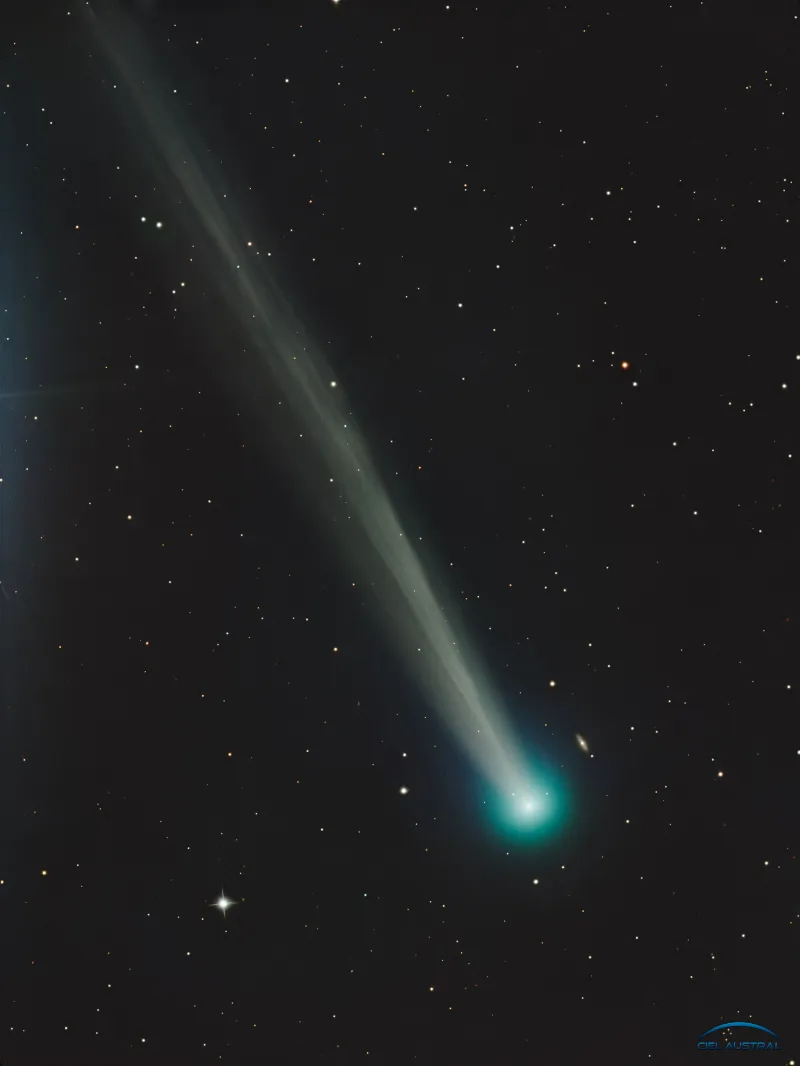
NASA’s PUNCH mission has commenced a detailed observation of Comet 2025 R2 (SWAN), offering unprecedented insight into solar wind interactions with cometary bodies. By tracking the comet’s trajectory and the behavior of its ionized tail, the mission aims to expand our understanding of heliophysics, space weather, and the dynamic interplay between comets and the Sun’s plasma environment. This initiative not only enhances scientific knowledge but also reinforces the strategic importance of advanced space observation infrastructure. The findings could inform satellite protection strategies, interplanetary mission planning, and broader astrophysical research.
PUNCH Mission: Advancing Heliospheric Research
The PUNCH (Polarimeter to Unify the Corona and Heliosphere) mission is designed to study the solar wind and its interactions with the broader solar system. Its observation of Comet 2025 R2 (SWAN) provides a rare opportunity to analyze how high-speed solar plasma affects the structure and dynamics of cometary ion tails. Equipped with high-resolution imaging polarimeters, PUNCH captures detailed visualizations of plasma behavior in real-time, enhancing predictive models of space weather.
Scientific Insights from Comet 2025 R2 (SWAN)
Comet 2025 R2 (SWAN) exhibits a distinctive ionized tail influenced by the Sun’s solar wind and magnetic fields. By observing fluctuations in the tail’s structure, scientists can infer solar wind velocity, density, and magnetic orientation. The mission also allows for comparative analysis with prior cometary events, improving understanding of the variability in comet-solar interactions. Researchers anticipate that this data will refine models of cometary evolution and contribute to the broader field of heliophysics.
Technological Innovations and Observational Capabilities
PUNCH’s suite of instruments represents a leap in space-based observation technology. Its wide-field polarimetric cameras enable continuous monitoring of the Sun’s corona and heliosphere, while advanced computational algorithms analyze the influence of charged particles on celestial objects. This technological sophistication ensures that real-time data can inform both scientific inquiry and practical applications, such as protecting satellites from solar radiation and optimizing mission planning for interplanetary probes.
Broader Implications for Space Science
The tracking of Comet 2025 R2 (SWAN) underscores the strategic value of missions like PUNCH in advancing our knowledge of the solar system. Beyond heliophysics, insights from this research can influence space navigation, satellite safety, and predictive models of interplanetary particle behavior. Analysts suggest that integrating observational data from comets and solar phenomena will enhance the resilience and efficiency of space infrastructure, highlighting the economic and strategic relevance of such missions.
Looking Forward
As PUNCH continues its observations, Comet 2025 R2 (SWAN) will provide an ongoing natural laboratory for studying solar-comet interactions. The mission exemplifies how targeted space research, coupled with advanced instrumentation, can generate actionable knowledge for both scientific advancement and technological innovation. By bridging the gap between astrophysical phenomena and practical applications, NASA’s PUNCH mission reinforces the critical role of space exploration in understanding—and navigating—the dynamic environment of our solar system.
Comments