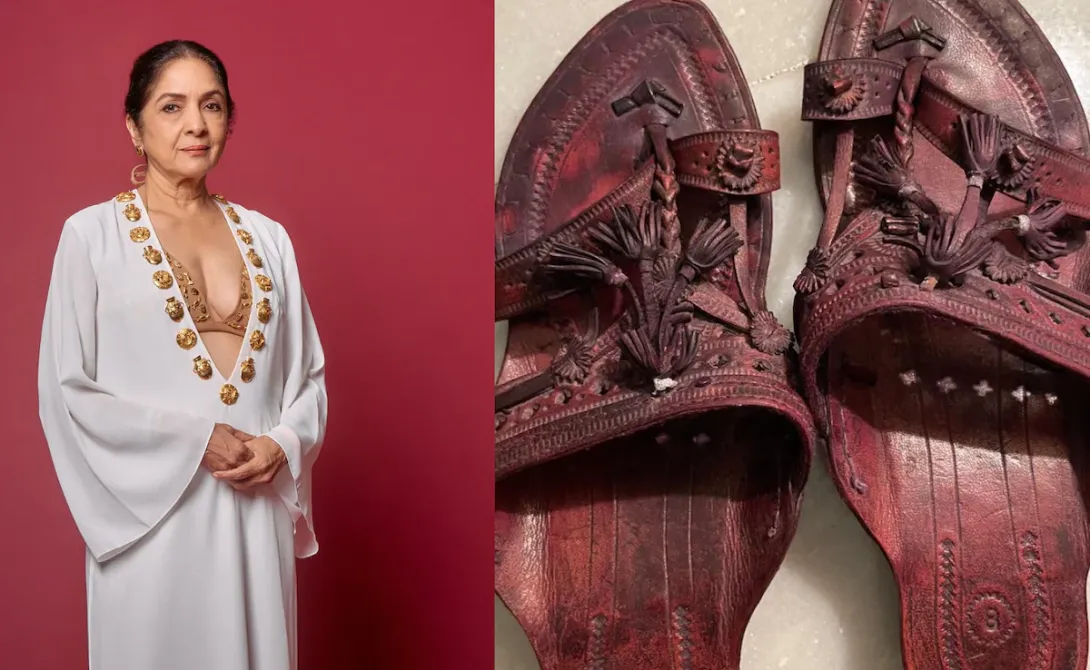
Bollywood actor Neena Gupta recently took a stand for India's artisanal legacy, spotlighting her treasured Kolhapuri chappals—handcrafted and gifted by late actor Laxmikant Berde—after a high-profile cultural appropriation controversy erupted around luxury label Prada. The fashion world was abuzz when Prada introduced sandals resembling traditional Kolhapuris at Milan Fashion Week, initially failing to credit the craft or its artisans. In the ensuing backlash, Prada acknowledged Indian roots and committed to collaborating with local makers. Gupta’s poignant showcase underlines the importance of cultural ownership and amplifies the call for recognition of long-standing craftsmanship amid globalization and high-end commerce.
Artisanal Footprints: Neena Gupta’s Personal Statement
Neena Gupta’s Instagram post intimately captured the essence of India’s homegrown heritage. Showcasing her Kolhapuri chappals—personal keepsakes from Marathi cinematic legend Laxmikant Berde—she underscored the emotional and cultural value of traditional craftsmanship. In her caption, she described them as “a piece of art, a piece of memory,” evoking a powerful narrative of authenticity and personal pride. By celebrating the humble yet profound artistry of Kolhapuri footwear, Gupta subtly critiques luxury brands that appropriate heritage without acknowledgment.
The Prada Incident: From Copycat to Collaboration
At Milan Fashion Week, Prada unveiled sandals eerily similar to Kolhapuri chappals, originally marketed simply as "leather flat sandals." The imagery ignited a storm online, with critics branding it “cultural theft” and pointing out the hefty ₹1.2 lakh tag attached to replicas of a ₹300–₹1,500 traditional craft. Social media erupted; influencers and officials—like Edelweiss’ Radhika Gupta—questioned the value systems that celebrate luxury while neglecting originators. Under pressure, Prada officially recognised its inspiration and pledged to engage with Indian artisans via the Maharashtra Chamber of Commerce.
Wider Reverberations: A Turning Point for Indian Craft
The episode has triggered momentum beyond drama. Indian brands like Ira Soles and Niira seized the moment to amplify homegrown Kolhapuri footwear, reporting up to a five-fold spike in sales. Media outlets and artisan collectives filed pleas—some in Bombay High Court—insisting on public apologies, compensation, and better legal safeguards under GI protection. Designers and policymakers have since engaged in public discourse, calling for equitable collaborations and ethical appropriation practices.
Craftsmanship in Focus: Stakes for Cultural Equity
Kolhapuri chappals have carried India’s artisan legacy since the 12th century, with around 7,000 craftsmen across Maharashtra and Karnataka still sustaining the craft. This controversy has surfaced crucial issues: fair remuneration, acknowledgment, and preserving intangible cultural heritage while integrating into global markets. Advocates underscore that credit alone is insufficient—partnerships and economic inclusion are essential to prevent exploitative appropriation.
Conclusion
Neena Gupta’s dignified gesture is more than celebrity endorsement—it is a reaffirmation of heritage-conscious modernity. In an era of globalized fashion, the Kolhapuri controversy is a valuable moment of reckoning. It calls for a shift from silent inspiration to shared recognition, from exploitation to equitable exchange. As Prada recalibrates its approach, the Indian artisan community stands to reclaim agency and, perhaps, secure long-term recognition—vindicating traditions that transcend fleeting trends.
Comments