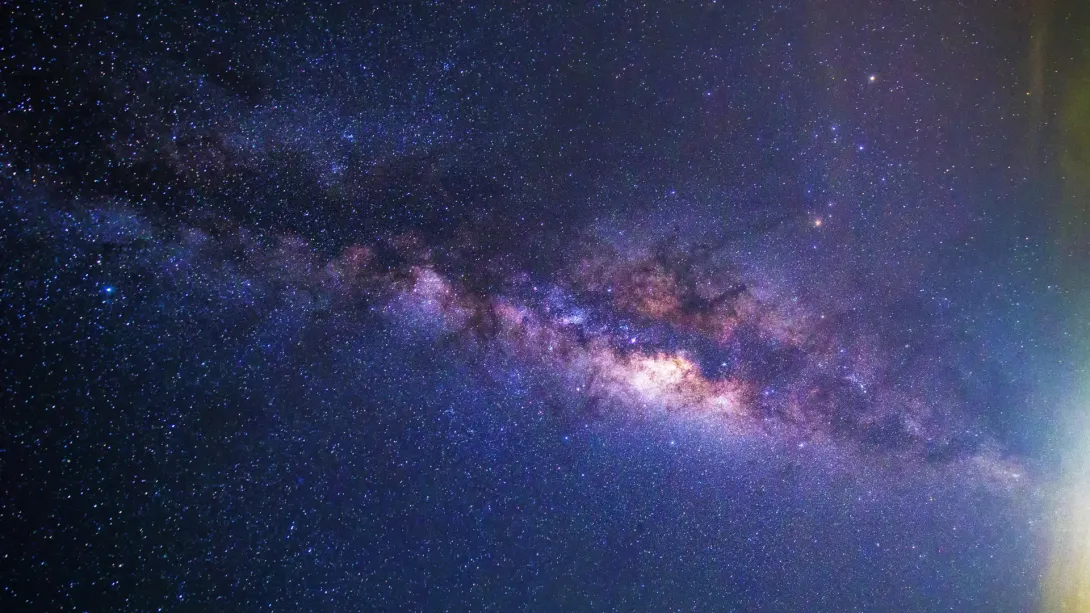
Recent astronomical research suggests that dark matter, the elusive substance thought to constitute a significant portion of the universe’s mass, may be directly detectable within the Milky Way. By analyzing stellar motions, gravitational effects, and cosmic background radiation, scientists have identified regions where dark matter is likely concentrated, influencing galactic dynamics and orbital patterns. These findings offer unprecedented opportunities to study dark matter’s properties locally, refining theoretical models of galaxy formation and evolution. Researchers emphasize that confirming its presence within our own galaxy could revolutionize particle physics, cosmology, and our understanding of the fundamental structure of the universe.
Understanding Dark Matter
Dark matter is an invisible form of matter that does not emit, absorb, or reflect light, making it detectable only through gravitational effects. While its existence has been inferred from galactic rotation curves and cosmic microwave background observations, direct evidence has remained elusive. Understanding its distribution in the Milky Way is critical to unlocking the physics underlying galaxy formation and large-scale cosmic structures.
Milky Way Observations
Researchers employed precise measurements of stellar velocities, orbital deviations, and gravitational lensing effects to infer the presence of dark matter. The study identifies dense regions where gravitational anomalies cannot be explained solely by visible matter. These areas provide a roadmap for targeted observations, potentially guiding future experiments designed to detect dark matter particles directly.
Implications for Astrophysics and Cosmology
Detecting dark matter within our galaxy has profound implications. It allows scientists to test competing theoretical models, including Weakly Interacting Massive Particles (WIMPs), axions, or alternative exotic candidates. Understanding local dark matter density improves simulations of galactic evolution and informs studies of star formation, orbital stability, and cosmic structure dynamics.
Future Research Directions
The findings encourage collaboration between observational astronomy, particle physics, and theoretical cosmology. Upcoming experiments using advanced detectors and space telescopes aim to confirm the particle nature of dark matter and map its spatial distribution in the Milky Way with high precision. The research may also influence strategies for detecting dark matter in other galaxies.
Conclusion
The prospect of detecting dark matter within the Milky Way represents a major leap in understanding the universe’s unseen architecture. By correlating stellar dynamics with theoretical models, scientists are closing in on one of the most profound mysteries of modern astrophysics. Confirming and characterizing dark matter locally could transform cosmology, particle physics, and our comprehension of the galaxy we inhabit.
Comments