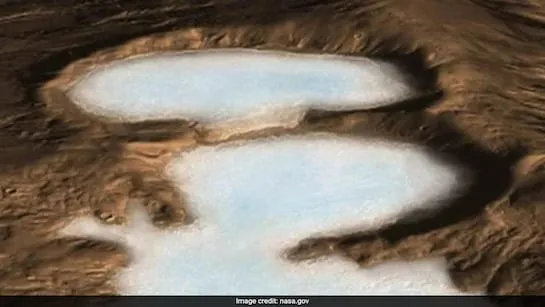
In a pivotal scientific breakthrough, researchers have confirmed that glaciers discovered on Mars consist predominantly of water ice, rather than the previously debated mix of frozen carbon dioxide and dust. This revelation marks a significant milestone in planetary science, offering renewed hope for future human exploration and potential colonization. Using advanced remote-sensing techniques and data analysis, scientists were able to verify the presence of massive subterranean ice reserves locked beneath the planet’s thin surface layer. The findings not only deepen our understanding of Martian geology but also highlight the Red Planet’s long-term potential as a sustainable destination for future missions.
A Cold Revelation: Water Ice Beneath the Martian Surface
For decades, scientists have suspected the presence of glacial formations beneath Mars' rugged terrain. While satellite imagery and orbital sensors hinted at ice flows, confirming their exact composition remained elusive. This new study provides concrete evidence that these formations are made primarily of water ice, layered beneath a thin blanket of dust and rock.
The research draws on data from high-resolution instruments aboard Mars orbiters, analyzing thermal and radar signatures to distinguish between carbon dioxide ice, dust, and water-based glaciers. The results consistently point toward expansive deposits of frozen H₂O, especially in mid-latitude regions where surface features mirror those of terrestrial glacial landscapes.
Why Martian Ice Matters: Implications for Space Exploration
This discovery has far-reaching consequences for the future of Mars exploration. Access to water is a critical determinant of mission viability. Transporting water from Earth is prohibitively expensive, making local sourcing a necessity for long-term habitation. Water ice can not only support drinking supplies but also be converted into breathable oxygen and rocket fuel through electrolysis.
Furthermore, the presence of stable water ice implies that Mars may have once supported a more hospitable climate—fueling scientific inquiry into ancient life on the planet and the history of its atmospheric evolution.
Methodology Behind the Findings
To determine the glacier composition, the study employed a combination of radar sounding, infrared spectroscopy, and visual imaging. Instruments such as SHARAD (Shallow Radar) and THEMIS (Thermal Emission Imaging System) were instrumental in measuring sub-surface density and thermal behavior, respectively. The contrast in absorption and reflectance values allowed scientists to differentiate between ice types and geological structures.
One key factor in the research was the identification of glacial flow features, including crevasses and moraine-like ridges. These characteristics closely resemble glacial formations on Earth, particularly in arid regions like Antarctica, lending further credence to the findings.
Looking Ahead: A Blueprint for Human Presence on Mars
The availability of water ice could play a foundational role in upcoming manned missions to Mars, such as those being considered by NASA and private space ventures. Establishing a self-sufficient habitat requires a sustainable water cycle—not just for consumption, but also for agriculture and waste recycling.
Moreover, the possibility of extracting and storing hydrogen fuel onsite opens new pathways for round-trip missions or even planetary hopping strategies in the broader vision of interplanetary travel.
Conclusion: A Planet More Promising Than Imagined
The confirmation of water-rich glaciers on Mars redefines the Red Planet's resource landscape. What was once considered a barren, frozen desert is now emerging as a complex, dynamic world with significant untapped potential. This finding not only elevates Mars in the hierarchy of planetary exploration but also strengthens the scientific case for investing in space infrastructure that could one day transform humanity into an interplanetary species.
With every revelation, Mars feels less alien and more like the next frontier of human innovation and survival.
Comments