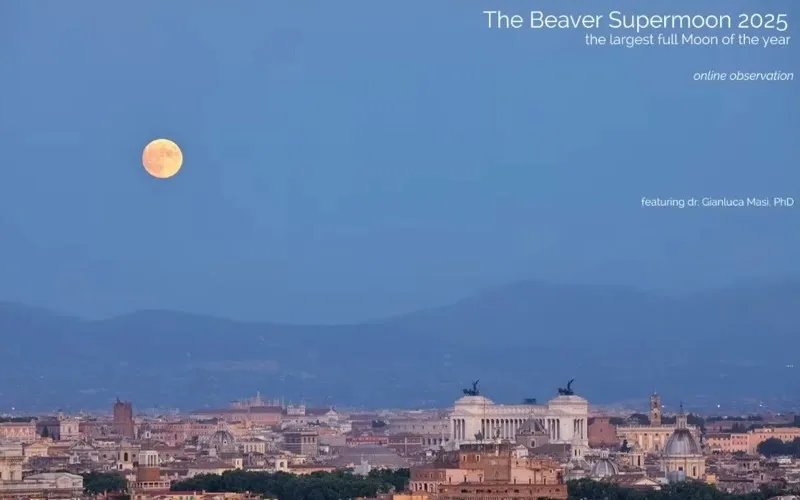
The night sky over Kazakhstan offered a breathtaking celestial display as the largest Moon of 2025 rose in full brilliance, captivating residents and sky-watchers alike. The phenomenon — popularly referred to as a “supermoon” — occurred when the Moon reached its closest point in orbit to Earth, appearing larger and brighter than usual. Astrophotographers and astronomy enthusiasts gathered across the country to witness the rare spectacle, sharing awe-inspiring images and observations. The lunar event not only delivered a visual feast, but also renewed public interest in astronomical phenomena, highlighting Kazakhstan’s growing enthusiasm for space science and natural cosmic wonders.
---
A Night Marked by Celestial Brilliance
Kazakhstan’s night sky transformed into a glowing panorama as the oversized Moon dominated the horizon, casting a radiant silver hue across urban skylines and remote landscapes. The Moon appeared noticeably larger to the naked eye, a result of its close approach to Earth during its orbital cycle.
Local observers described the display as “mesmerising” and “unreal,” with many stepping outdoors to take in the spectacle despite cold seasonal conditions. Social media platforms quickly filled with photographs, videos and commentary celebrating the cosmic event.
---
What Makes a ‘Supermoon’ Special
A supermoon occurs when the full Moon coincides with perigee — the point where the Moon is nearest to Earth in its elliptical orbit. This alignment increases its apparent size and luminosity.
Astronomers note that such events, while not exceedingly rare, remain compelling due to their visual impact. This particular occurrence marked the largest and most luminous lunar event of 2025, making it a significant moment for sky-watchers and researchers alike.
---
Public Enthusiasm and Scientific Engagement
Kazakhstan has steadily expanded its public interest in astronomy, supported by educational programs and rising community engagement in science-related activities. Planetariums and astronomy groups used the occasion to promote awareness about lunar cycles, gravitational effects and orbital mechanics.
Experts emphasised that events like this foster scientific curiosity among younger generations and strengthen appreciation for natural celestial rhythms. Many families reportedly spent the evening stargazing, demonstrating community-wide enthusiasm for space-related experiences.
---
Cultural and Scenic Significance
For many in Kazakhstan, the event carried cultural symbolism as well. Lunar phases have historically been associated with seasonal transitions, agricultural rhythms and poetic expression across Central Asia.
The full Moon illuminating snow-covered terrain created a visually striking contrast, enhancing the scenic beauty of mountains, steppe regions and urban skylines. Several photographers described the night as “a perfect canvas for lunar art.”
---
Looking Ahead: More Celestial Events in 2025
Astronomy experts anticipate additional noteworthy sky events throughout the year, including meteor showers and planetary alignments. While none are expected to rival the visual grandeur of this supermoon, enthusiasts can expect a dynamic year for stargazing.
For many in Kazakhstan, this luminous lunar moment offered both serenity and inspiration — a reminder of the enduring fascination humans hold for the universe above.
Comments