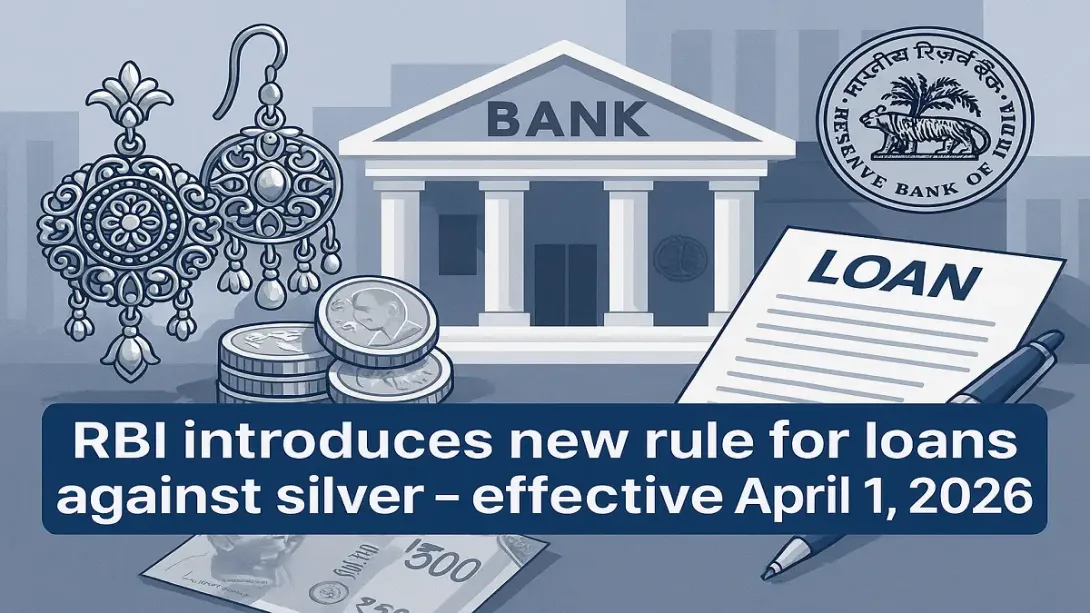
In a move aimed at strengthening financial inclusion while maintaining regulatory oversight, the Reserve Bank of India (RBI) has introduced new guidelines permitting Non-Banking Financial Companies (NBFCs) to offer loans against silver jewellery and ornaments, similar to the existing framework for gold-backed loans. This decision marks a significant development in India’s lending landscape, given the cultural and economic importance of precious metals. The RBI’s framework sets clear boundaries to prevent misuse, ensure fair valuation, and promote responsible lending practices, ultimately broadening access to credit for rural and small-scale borrowers who often rely on household silver as collateral.
---
Background: Expanding the Precious Metal Lending Framework
Until now, gold loans have dominated India’s collateral-based lending sector, with NBFCs and banks offering short-term financing secured against gold jewellery. Silver, despite its cultural and financial significance, remained largely excluded from formal lending structures.
Recognizing the untapped potential of silver assets, the RBI’s revised norms now allow regulated financial institutions to extend loans against silver, including jewellery, utensils, and other forms, provided that the metal’s purity and valuation meet prescribed standards. This expansion aims to bring informal lending activities into the regulated fold, offering small borrowers an alternative to local moneylenders who often charge exorbitant interest rates.
---
Key Features of the New RBI Rule
Under the RBI’s updated directive, NBFCs and select banks can now provide loans secured by silver, subject to stringent valuation, storage, and risk management criteria. Some of the key aspects of the policy include:
1. Valuation and Purity Verification:
Financial institutions must conduct purity testing and valuation through certified appraisers to ensure fair pricing.
2. Loan-to-Value (LTV) Ratio:
Similar to gold loans, the LTV ratio for silver loans is expected to be capped at 75%, ensuring that borrowers do not over-leverage their holdings and lenders remain protected from price volatility.
3. Secure Storage Requirements:
Institutions must store pledged silver in RBI-approved vaults or secure facilities until the loan is repaid, minimizing default and fraud risks.
4. Transparency and Recordkeeping:
All transactions must be documented, with full disclosure of charges, interest rates, and repayment schedules to prevent predatory lending practices.
5. Monitoring and Compliance:
The RBI will monitor compliance through regular audits and reporting obligations for participating NBFCs and banks.
---
Economic Implications: Empowering Small Borrowers
India’s rural and semi-urban households hold massive reserves of silver, often in the form of jewellery or utensils. Unlike gold, which has long been monetized through formal credit systems, silver has largely remained a dormant asset.
The RBI’s decision effectively democratizes access to credit, enabling individuals from lower-income segments to secure short-term funds by leveraging silver assets. This could particularly benefit farmers, artisans, and small traders who experience periodic cash-flow constraints.
Moreover, this move aligns with the government’s broader financial inclusion agenda by encouraging asset-backed borrowing instead of high-interest informal loans, thereby enhancing liquidity and fostering greater participation in the formal economy.
---
Risk Management and Market Impact
While the policy offers clear advantages, it also introduces certain challenges. Silver prices are more volatile than gold, making risk management a crucial component of the RBI’s framework. To address this, lenders are expected to maintain adequate capital buffers and adopt dynamic margining practices to protect against sharp price movements.
In addition, the RBI’s guidelines emphasize transparency and borrower awareness, ensuring that customers fully understand repayment obligations and the consequences of default. This level of oversight aims to curb unethical practices that have historically plagued the unregulated lending sector.
Industry analysts believe the rule could stimulate demand for silver, potentially boosting prices in the domestic market. At the same time, it will expand NBFCs’ lending portfolios, offering them a new avenue for business diversification while reducing dependence on gold-based loans.
---
A Step Toward a Broader Financial Ecosystem
The introduction of silver-backed loans underscores the RBI’s intent to broaden asset-backed credit mechanisms in India’s evolving financial ecosystem. It not only legitimizes an asset class long ignored by formal lenders but also supports the country’s rural economy by transforming household silver into a productive financial instrument.
By extending regulatory oversight and enforcing strict lending norms, the RBI seeks to strike a balance between accessibility and accountability—ensuring that the benefits of financial inclusion do not come at the cost of systemic stability.
---
Conclusion: A Progressive Move with Prudence
The RBI’s new rule on loans against silver marks a progressive step in India’s credit infrastructure, opening up new channels for liquidity and economic empowerment. It reflects the regulator’s commitment to fostering inclusive growth while safeguarding investor and institutional interests.
As financial institutions begin to operationalize these norms, borrowers across the country stand to gain from a more diverse and secure lending environment. Silver, once considered a passive store of value, now has the potential to become an active instrument of financial mobility and resilience in India’s evolving economy.
---
In short, the RBI’s silver loan regulation is more than a policy update—it’s a strategic leap toward financial empowerment, bringing untapped household wealth into the mainstream economy with responsibility and foresight.
Comments