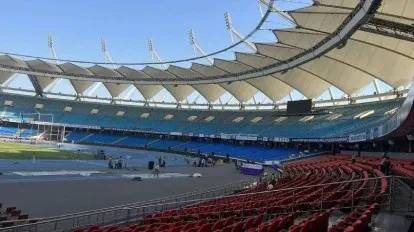
Delhi’s iconic Jawaharlal Nehru Stadium, which underwent a Rs. 961-crore revamp for the 2010 Commonwealth Games, is set to be demolished to make way for a state-of-the-art “sports city.” The ambitious redevelopment plan aims to create a multipurpose urban sports and entertainment complex equipped with modern infrastructure, training academies, commercial zones, and recreational facilities. This decision reflects India’s broader vision of transforming legacy infrastructure into sustainable, revenue-generating hubs that promote sports, tourism, and urban renewal while addressing the limitations of outdated facilities.
---
A Legacy Landmark Ready for Reinvention
Originally built in 1982 for the Asian Games and completely refurbished ahead of the 2010 Commonwealth Games, the Jawaharlal Nehru Stadium has long been a symbol of India’s sporting pride. With a seating capacity exceeding 60,000, it has hosted numerous national and international events, including football matches, athletic meets, and concerts.
However, more than a decade after the Commonwealth Games, authorities have recognized that the existing infrastructure no longer meets the evolving standards required for global sporting and entertainment events. The stadium’s maintenance costs have also risen significantly, making the redevelopment project both an economic and strategic necessity.
---
Blueprint for the New Sports City
The proposed “sports city” will be an integrated complex designed to serve as a world-class hub for athletics, leisure, and commerce. The redevelopment plan includes:
Modern athletic and training facilities aligned with international standards.
High-performance academies for emerging athletes.
Multi-sport arenas to host domestic and global tournaments.
Commercial spaces, such as hotels, retail outlets, and restaurants, to ensure financial sustainability.
Public recreational zones, including parks, walking tracks, and fitness areas, to encourage community engagement.
The project aims to blend athletic excellence with economic vitality—transforming the stadium from a single-purpose venue into a dynamic ecosystem that serves both athletes and citizens year-round.
---
Economic and Urban Development Impact
Urban planners view the redevelopment as a major infrastructure renewal initiative that aligns with India’s broader sports economy goals. The new complex is expected to create employment opportunities, attract private investment, and boost tourism in the national capital.
By incorporating public-private partnerships (PPP), the government intends to ensure efficient execution, minimize public spending, and foster long-term commercial viability. The plan also includes sustainable design measures such as energy-efficient architecture, water conservation systems, and green mobility networks.
---
Balancing Heritage with Progress
While the decision to demolish the Nehru Stadium has stirred nostalgia among sports enthusiasts, policymakers argue that modernization is essential to maintain India’s competitive edge in international sports. Officials have emphasized that the redevelopment will preserve certain historical elements and incorporate commemorative spaces honoring the stadium’s legacy.
The new project, therefore, seeks to strike a balance between preserving cultural memory and embracing technological advancement—a reflection of India’s transition toward future-ready urban sports infrastructure.
---
Conclusion
The transformation of Delhi’s Jawaharlal Nehru Stadium into a modern sports city marks a turning point in India’s approach to sports infrastructure. Once a showpiece of the Commonwealth Games, the stadium will now evolve into a multifunctional, sustainable, and globally relevant urban complex.
As India positions itself as an emerging force in sports and entertainment, this redevelopment signifies more than just architectural change—it represents the country’s commitment to building an ecosystem where legacy meets innovation.
Comments