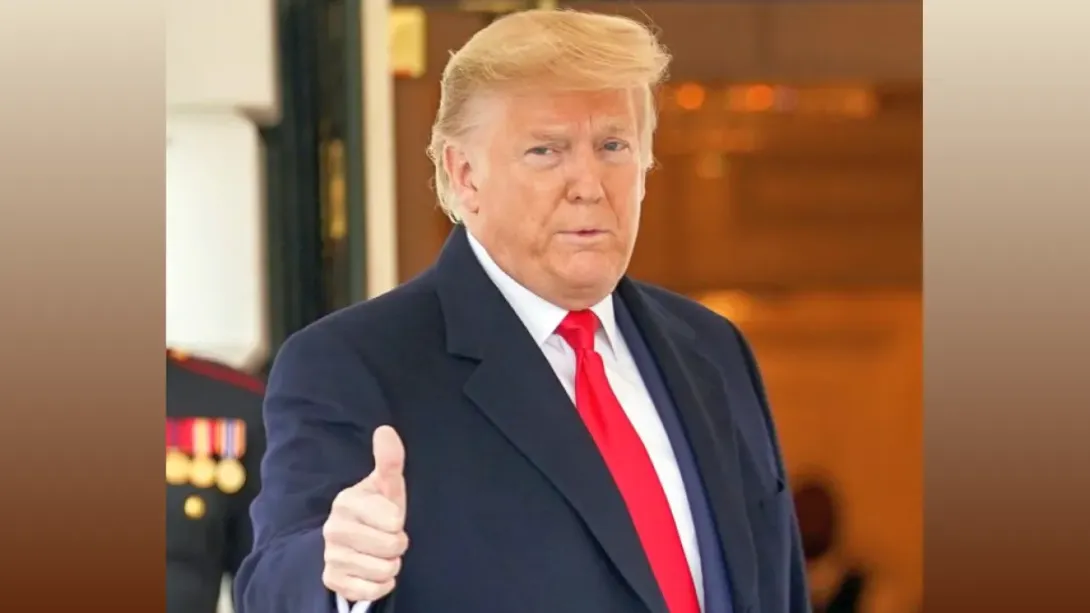
The United States and India are reportedly on the verge of finalizing a landmark trade agreement that could reshape bilateral economic relations. U.S. President Donald Trump has indicated that Washington is preparing to roll back the steep tariffs imposed on Indian exports, citing New Delhi’s substantial reduction in Russian oil imports as a major breakthrough in talks. The move marks a strategic recalibration of trade policy aimed at deepening commercial engagement and strengthening geopolitical alignment in the Indo-Pacific region, where economic cooperation is increasingly intertwined with security interests.
Tariff Rollbacks Signal a Thaw in Relations
President Donald Trump announced that his administration is “very close” to concluding a new trade agreement with India—one that he described as “much different” from previous arrangements. Speaking at the White House during the swearing-in of Ambassador Sergio Gor, Trump emphasized that the current tariff structure, introduced as a response to India’s high imports of Russian crude, is now under review.
“The tariffs are very high on India because of the Russian oil, which has been reduced very substantially,” Trump said. “We’re going to be bringing those tariffs down.”
The United States had previously imposed punitive duties of up to 50 percent on select Indian goods, including a 25 percent levy linked to India’s energy purchases from Moscow. A reversal of these measures would signify a critical policy shift—transforming a period of economic strain into one of renewed cooperation.
Expanding Trade Potential
Commerce experts suggest the forthcoming deal could unlock an era of unprecedented trade growth between the two nations. Bilateral trade currently stands at around USD 191 billion (approximately Rs. 15.9 lakh crore), with ambitions to exceed USD 500 billion by 2030. The agreement is expected to cover sectors such as manufacturing, digital services, agriculture, and energy, while providing a framework for greater market access and regulatory transparency.
From Washington’s standpoint, tariff relaxation would not only enhance export opportunities but also strengthen supply-chain diversification away from China—a key strategic objective in the Indo-Pacific. For India, the benefits lie in regaining preferential access to the U.S. market and restoring investor confidence dampened by years of tariff disputes.
Strategic Context and Timing
The deal’s timing is significant. India’s decision to scale back its Russian oil imports—a major irritant in Washington’s policy circles—has helped clear a path for renewed engagement. This adjustment aligns India more closely with Western energy markets while signaling diplomatic flexibility amid shifting global power dynamics.
Furthermore, the appointment of Sergio Gor as U.S. Ambassador to India underscores Washington’s renewed emphasis on its partnership with New Delhi. Analysts believe that the trade accord, once sealed, could form the economic backbone of a broader strategic alignment in the Indo-Pacific, counterbalancing China’s growing influence in the region.
Challenges That Remain
Despite optimism on both sides, key challenges persist. Negotiators continue to navigate sensitive issues, including India’s protective import duties, intellectual property norms, agricultural subsidies, and market access for U.S. dairy and medical devices.
Indian Commerce Minister Piyush Goyal has maintained that while “a great deal of progress” has been achieved, “many sensitive and serious issues” still require careful calibration. Both governments are reportedly exploring a phased approach—beginning with tariff reductions on non-sensitive goods before expanding to broader sectors.
Implications for Global Markets
A finalized U.S.–India trade accord could carry ripple effects across global markets. The easing of tariffs is expected to bolster India’s export competitiveness, attract U.S. investment in manufacturing, and reinforce the country’s position as a key player in global supply chains. For U.S. companies, access to India’s rapidly expanding consumer base offers a powerful growth opportunity, particularly in technology, clean energy, and defense.
Investors are watching closely, as the deal could signal a broader shift in Washington’s trade policy toward emerging economies. Reduced uncertainty in U.S.–India trade relations is also likely to strengthen market sentiment and enhance bilateral capital flows.
Outlook: A Defining Moment for Economic Diplomacy
If implemented effectively, the U.S.–India trade deal could redefine the contours of economic diplomacy in the 21st century. Beyond its immediate commercial implications, the accord symbolizes a convergence of strategic and economic interests between two of the world’s largest democracies.
The coming months will reveal the contours of this agreement—whether it becomes a catalyst for deep economic integration or another incremental step in a long and complex negotiation. For now, both nations appear ready to move past their trade frictions and embrace a more collaborative future—anchored in shared interests, mutual trust, and a recognition of their growing interdependence in a rapidly changing global order.
Comments