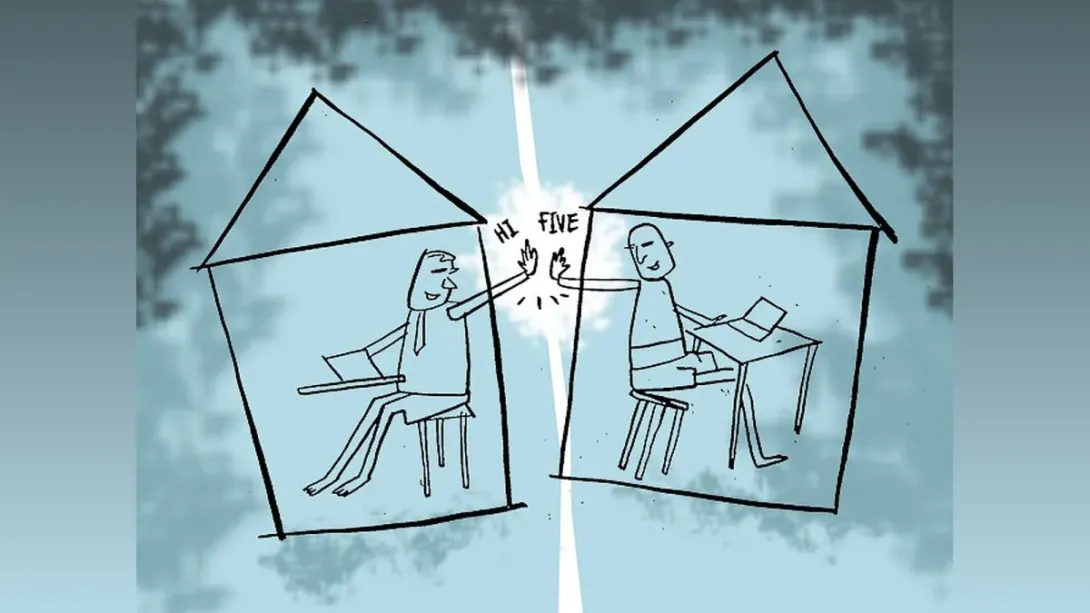
The global workforce is undergoing a profound transformation, driven by rapid technological progress, shifting employee expectations, and the redefinition of traditional work models. The emphasis today is on adaptability, continuous learning, and experimentation with new workstyles that prioritize flexibility, collaboration, and digital fluency. Organizations are increasingly adopting hybrid structures, fostering skill-based ecosystems, and integrating emerging technologies to sustain productivity and engagement. This evolution signals a departure from rigid hierarchies toward more dynamic, human-centered work environments that empower employees to innovate, learn, and thrive amid constant change.
Evolving Paradigms: The Rise of Adaptability
The modern workplace no longer functions within fixed boundaries of time, place, or routine. Adaptability has become a core competency—both for individuals and organizations—enabling resilience in an environment characterized by economic uncertainty and technological disruption.
Businesses now prioritize agility in decision-making and workforce management, aligning strategies to the rapid evolution of automation, artificial intelligence, and data-driven operations. Employees, in turn, are redefining success through autonomy, lifelong learning, and meaningful engagement. This cultural shift reflects a growing realization that flexibility is not merely a benefit—it is a necessity for sustained relevance in an unpredictable future.
Experimental Workstyles: From Routine to Reinvention
One of the defining features of the emerging work ecosystem is the rise of experimental workstyles. Companies are testing innovative approaches to structure, collaboration, and productivity, often blending remote and in-person models. Hybrid work has transitioned from a pandemic-driven contingency to a deliberate strategy fostering both creativity and efficiency.
Forward-thinking organizations are also reimagining the 9-to-5 structure, introducing flexible hours, results-only work environments (ROWEs), and four-day workweeks. These models emphasize outcomes over attendance, reflecting a broader societal shift toward well-being and performance balance. As a result, the workplace has evolved into a dynamic laboratory of innovation—where policies, technology, and human behavior are continuously fine-tuned.
Technology as the Enabler of Transformation
Technology sits at the center of this transformation. From cloud collaboration tools to AI-powered analytics, digital infrastructure has become the backbone of modern work. Artificial intelligence is enhancing talent acquisition, automating administrative processes, and enabling predictive insights into workforce behavior.
Yet, technology’s influence extends beyond efficiency—it is redefining relationships between employers and employees. Digital platforms now facilitate borderless workforces, enabling global collaboration without physical presence. The emergence of the metaverse office, immersive training environments, and augmented reality meetings signal a future where digital presence is as authentic as physical interaction.
However, the challenge lies in balance. The overuse of technology can lead to burnout, necessitating human-centered approaches that preserve well-being while leveraging innovation.
Reskilling and Continuous Learning: A Strategic Imperative
As automation reshapes industries, the need for reskilling and upskilling has become more urgent than ever. Organizations are investing in digital academies, AI literacy programs, and cross-functional learning to ensure their workforces remain future-ready. According to global HR insights, employees with adaptive learning capabilities are 40% more likely to remain employable through technological shifts.
This reskilling movement represents a democratization of opportunity—empowering individuals to reinvent themselves irrespective of age, role, or geography. It also reflects a broader corporate mindset shift: treating learning not as a one-time investment but as an ongoing strategic function integrated into business continuity.
Human-Centric Leadership and Culture
Leadership in the new work era demands empathy, inclusivity, and adaptability. The future workplace thrives on psychological safety—a culture where experimentation is encouraged, mistakes are treated as learning opportunities, and diverse perspectives are valued.
Progressive organizations are fostering trust through transparent communication, purpose-driven initiatives, and well-being-centric policies. As Gen Z enters the workforce, cultural values are shifting toward sustainability, authenticity, and social responsibility—forcing companies to realign their missions with employee expectations.
The workplace, once a site of conformity, is now an ecosystem of co-creation where leaders act as facilitators rather than controllers.
Conclusion: Embracing the Future with Agility and Purpose
The future of work is not a destination but an evolving continuum shaped by adaptability, experimentation, and human ingenuity. As organizations navigate this transformation, success will hinge on the ability to blend technology with empathy, flexibility with structure, and innovation with inclusivity.
Those that embrace adaptability as a core value—and experiment boldly with workstyles—will not only thrive in the digital economy but also redefine what meaningful work looks like in the 21st century.
Comments