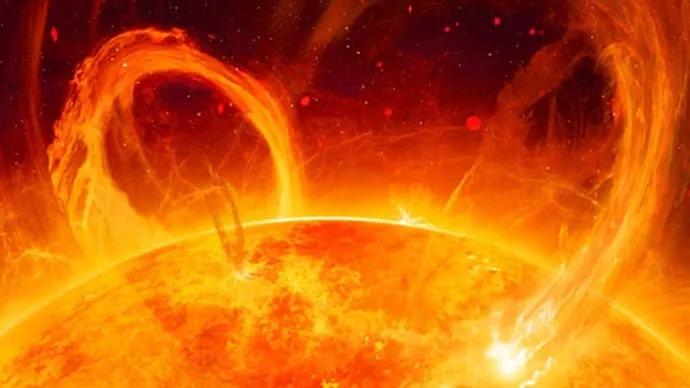
A powerful solar explosion has struck Earth, sending shockwaves through the planet’s atmosphere and disrupting key technological systems. The intense geomagnetic storm, triggered by a coronal mass ejection (CME) from the Sun, caused temporary malfunctions in satellites, communication networks, and power infrastructure across several regions. Mid-air flights reported navigational difficulties, while space agencies closely monitored the heightened radiation levels threatening orbiting satellites. Experts warn that such solar events, though rare in magnitude, may become more frequent as the Sun approaches its peak activity cycle. The incident underscores the urgent need for global preparedness against space weather–induced disruptions.
---
Solar Storm Strikes with Unprecedented Force
In a dramatic celestial event, Earth was bombarded by an exceptionally strong solar flare and coronal mass ejection, unleashing charged particles that collided with the planet’s magnetic field. The impact triggered a G4-level geomagnetic storm, one of the most severe classifications, according to space weather analysts.
The massive burst of energy from the Sun’s surface caused spectacular auroras visible as far as mid-latitude regions, but also brought widespread disruptions. Satellite operators reported anomalies in orbit stabilization systems, while power grids in several countries implemented precautionary shutdowns to prevent transformer damage.
---
Impact on Satellites and Communication Systems
Satellites orbiting Earth bore the brunt of the geomagnetic surge, which interfered with GPS accuracy, radio frequencies, and Earth-observation sensors. Communication blackouts were recorded in some parts of North America and Europe, affecting both civilian and defense systems.
Space agencies reported elevated radiation levels, forcing temporary adjustments in satellite trajectories to mitigate exposure. Commercial satellite operators also issued alerts to clients regarding possible interruptions in navigation and broadcasting services.
Experts emphasize that the event highlights the fragility of space-based infrastructure, which forms the backbone of modern communication, navigation, and surveillance networks.
---
Aviation and Power Systems Under Pressure
Airlines operating polar and transcontinental routes experienced intermittent disruptions in high-frequency radio communication, forcing several flights to alter their flight paths. Pilots were instructed to rely on alternate navigation systems as solar interference affected GPS reliability.
Meanwhile, power grid operators across multiple regions, particularly in high-latitude areas, took precautionary measures to minimize the risk of large-scale blackouts. In previous extreme solar storms, similar disturbances have caused voltage irregularities and transformer failures, underscoring the potential for significant economic losses if such phenomena intensify.
---
Scientific Context: Understanding the Solar Cycle
The Sun operates in roughly 11-year activity cycles, alternating between periods of calm and heightened turbulence. The current cycle, known as Solar Cycle 25, is nearing its peak, which explains the surge in solar flare intensity observed in recent months.
Solar storms occur when massive bursts of plasma and magnetic fields erupt from the Sun’s corona, traveling through space at millions of kilometers per hour. When these charged particles reach Earth, they interact with the planet’s magnetic field, generating geomagnetic currents that can interfere with electrical systems and communications.
---
Global Response and Monitoring Efforts
In response to the escalating solar activity, space agencies and scientific observatories around the world have intensified monitoring operations. The NOAA Space Weather Prediction Center and other global networks continue to issue real-time alerts to governments and industries dependent on satellite technology.
Experts stress the importance of enhancing space weather resilience, which includes reinforcing power grid infrastructure, improving satellite shielding, and updating aviation protocols. Advanced forecasting technologies are also being developed to provide earlier warnings of incoming solar storms, allowing for faster protective measures.
---
Potential Economic and Technological Consequences
Economists estimate that a prolonged geomagnetic storm of this magnitude could inflict billions of rupees in economic losses globally. Telecommunications, energy, and transport sectors remain the most vulnerable, with cascading effects on financial systems and emergency response networks.
In an era where digital connectivity underpins nearly every industry, a disruption of satellite or power services can cause ripple effects across the global economy. This event serves as a stark reminder that space weather is not merely a scientific curiosity but a real-world economic and security risk.
---
Conclusion: A Wake-Up Call for the Modern World
The latest solar storm is a powerful reminder of humanity’s dependence on technology—and its vulnerability to natural cosmic forces. While Earth’s magnetic field shields us from the most devastating solar radiation, the interconnected digital age magnifies the consequences of even moderate geomagnetic disturbances.
As the Sun continues its volatile phase, scientists urge governments and corporations to treat space weather preparedness as a strategic priority. Strengthening global coordination, upgrading infrastructure resilience, and investing in predictive systems could prove vital in protecting the world from the next major solar assault.
Comments