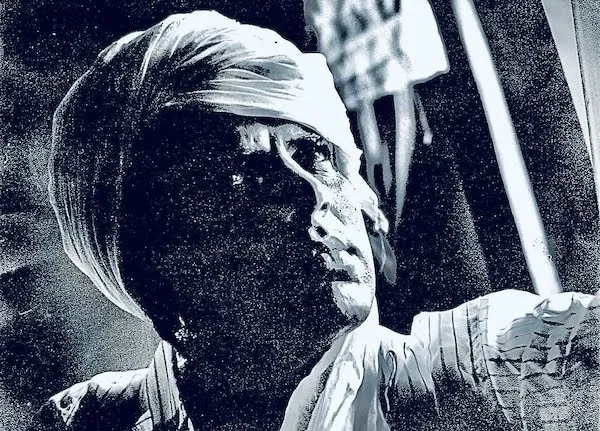
Dharmendra’s ascent from a small-town aspirant to one of Hindi cinema’s most celebrated icons is a story deeply intertwined with the shifting financial and creative landscape of Bollywood’s formative years. His debut, unusually financed by not one but three different producers, reveals a fascinating chapter in film-industry economics—one shaped by risk-sharing arrangements, competitive bidding, and an industry betting on emerging talent. The unconventional payment structure not only launched Dharmendra’s career but also highlighted how producers strategically collaborated to manage financial exposure while securing a promising newcomer. This moment ultimately marked the beginning of an illustrious journey that redefined the screen hero archetype.
A Curious Start to a Legendary Career
Dharmendra, often hailed as the “He-Man” of Bollywood, entered the film industry under circumstances that remain as compelling as his on-screen persona. Unlike the typical debut trajectory of a single-producer launch, his first film involved a rare arrangement in which three producers jointly contributed to his introductory project. This unusual collaboration reflected both the uncertainty surrounding new talent and the rising competitive tension among studios seeking fresh faces.
At the time, Dharmendra’s popularity as a newcomer was soaring, backed by his win in a national talent contest. Producers recognized his potential but sought to mitigate financial risk through shared investment.
The Three-Producer Payment Puzzle
According to accounts from industry insiders, Dharmendra received payments from three separate producers for the same film—an unprecedented move in the era. Each producer contributed a portion of his introductory fees, creating a collective financial arrangement that distributed costs while retaining shared control over the film’s direction.
This model mirrored strategies used in early film financing, where collaboration served as a mechanism for lowering individual exposure. The unified investment also allowed the production to scale up, ensuring sufficient funding for casting, sets, and marketing.
Why Producers Were Willing to Share a Newcomer
The unexpected multi-producer arrangement stemmed from the growing recognition of Dharmendra’s screen promise. As demand for charismatic male leads intensified, studios became more aggressive in securing talent. Rather than losing him to a competitor, the three financiers chose a cooperative structure—an unusual but strategically sound decision.
This approach allowed each producer to retain partial rights while fostering a sense of collective ownership over a budding star. It also provided Dharmendra with broader industry backing, strengthening his foothold in cinema’s competitive environment.
Risk Management and the Economics of Early Bollywood
Bollywood in the early 1960s frequently operated on unpredictable financial cycles. Films depended heavily on box-office performance, and producers often balanced creative ambition with cautious budgeting. Sharing Dharmendra’s debut cost among three investors reflected an early form of modern co-production, now common in the industry.
By distributing expenses—often measured in thousands of rupees at the time—producers reduced the potential financial downside while increasing a film’s production capacity. The arrangement set a precedent that talent investment could be diversified without diluting creative output.
A Launch That Altered Stardom’s Trajectory
Dharmendra’s debut ultimately served as a launchpad for one of Bollywood’s most enduring careers. While his payment structure was unconventional, the outcome validated the producers’ strategic foresight. He went on to redefine masculine heroism, blending charm, action, and emotional depth in a manner rarely witnessed before.
The collaborative financing model, once considered a gamble, proved to be a lucrative decision—both artistically and commercially.
Legacy of a Unique Industry Decision
Today, Dharmendra’s early career continues to be studied as a case of innovative risk-sharing in Indian cinema. What began as a pragmatic financial arrangement became the foundation for a star who would influence decades of mainstream storytelling.
The three-producer payment model stands as a reminder that even simple decisions—rooted in financial prudence and artistic optimism—can shape the trajectory of an entire industry.
Comments