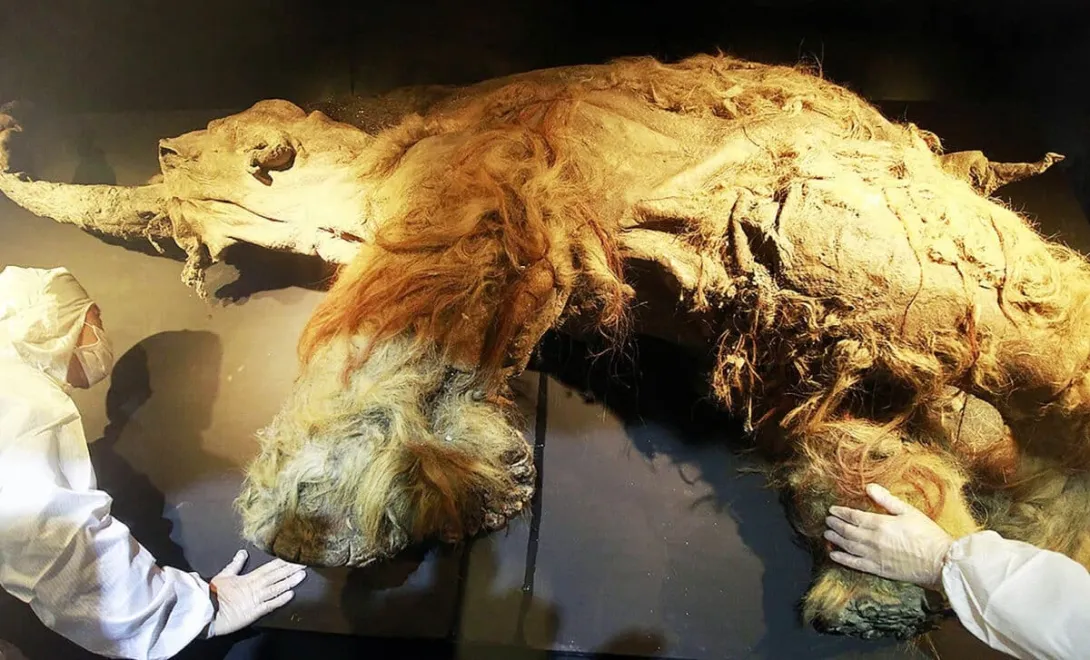
In an extraordinary leap for molecular research and ancient DNA science, scientists have successfully retrieved the oldest RNA ever documented—from a woolly mammoth preserved in Siberian permafrost for nearly 39,000 years. This achievement marks a transformative moment in paleogenomics, offering unprecedented insight into the biology, evolution, and cellular functions of long-extinct species. Unlike DNA, which provides a static genetic blueprint, RNA reveals how genes operated during an organism’s lifetime. The discovery not only opens new avenues for understanding mammoth physiology and adaptation but also strengthens the scientific foundation for studying ancient ecosystems and exploring the possibility of species revival.
A Monumental Breakthrough in Ancient Molecular Science
The retrieval of RNA from a mammoth frozen since the Ice Age represents one of the most significant advancements in ancient biomolecular research. While DNA has been successfully extracted from numerous prehistoric organisms, RNA has remained elusive due to its fragile structure and rapid degradation. Its successful recovery in this study indicates that permafrost conditions may preserve cellular material far better than previously assumed.
This breakthrough provides researchers with a rare opportunity to examine which genes were active when the mammoth was alive, creating a dynamic portrait of its biology rather than a static genome sequence.
Why RNA Matters More Than Genetic Blueprints
DNA outlines the genetic code an organism inherits, but RNA reveals how that code is expressed—how tissues functioned, how cells communicated, and how the creature responded to its environment. For extinct species, this level of detail has been nearly impossible to obtain.
The newly recovered RNA provides insight into:
- Tissue-specific activity, such as muscle fiber regeneration or fat metabolism
- Adaptation mechanisms enabling survival in extreme cold
- Disease vulnerability or immune responses
- Comparisons with modern elephant species to understand evolutionary divergence
Such data can reshape scientific understanding of prehistoric life and potentially guide future studies aiming to reconstruct ancient physiology.
Preservation Through Ice: How the Sample Survived
The mammoth specimen was preserved in Siberian permafrost, a natural deep-freeze that has shielded organic matter from decomposition for tens of thousands of years. Sub-zero temperatures, frozen sediments, and minimal oxygen exposure created the ideal environment for preserving delicate molecular structures such as RNA.
Researchers isolated tissue samples, applied advanced sequencing technologies, and validated the authenticity of the RNA fragments. The success suggests that other ancient organisms stored in permafrost may also hold intact RNA, expanding the possibilities for future discoveries.
A Window Into Ice Age Biology
The findings offer granular insight into Ice Age ecosystems. By analyzing RNA, scientists can better understand how mammoths regulated body temperature, stored fat, and maintained energy levels in hostile climates. These biological clues help reconstruct environmental conditions of the time, including food availability, climate fluctuations, and predator–prey dynamics.
Such comprehensive analysis deepens the narrative of how megafauna adapted—or failed to adapt—to the rapidly changing conditions that preceded their extinction.
Potential Pathways Toward De-Extinction Research
Although the concept of reviving extinct species remains complex and deeply debated, recovering functional RNA strengthens the scientific foundation for such discussions. RNA provides an operational map of how genes functioned, giving researchers a more complete understanding of mammoth biology than DNA alone.
This does not imply immediate de-extinction, but it enhances the precision of ongoing genetic engineering research involving mammoth–elephant hybridization, which aims to recreate certain mammoth-like traits.
A New Era for Paleogenomics
The extraction of the world’s oldest RNA signals a new frontier in ancient molecular science. It demonstrates that vital biological information can survive far longer than previously believed and encourages scientists to revisit frozen specimens with modern tools.
As techniques improve, researchers may unlock even deeper genetic and molecular histories, transforming our understanding of long-lost species and the environments that shaped them. This discovery, rooted in both technological innovation and scientific perseverance, marks a defining moment in the study of Earth’s ancient past.
Comments