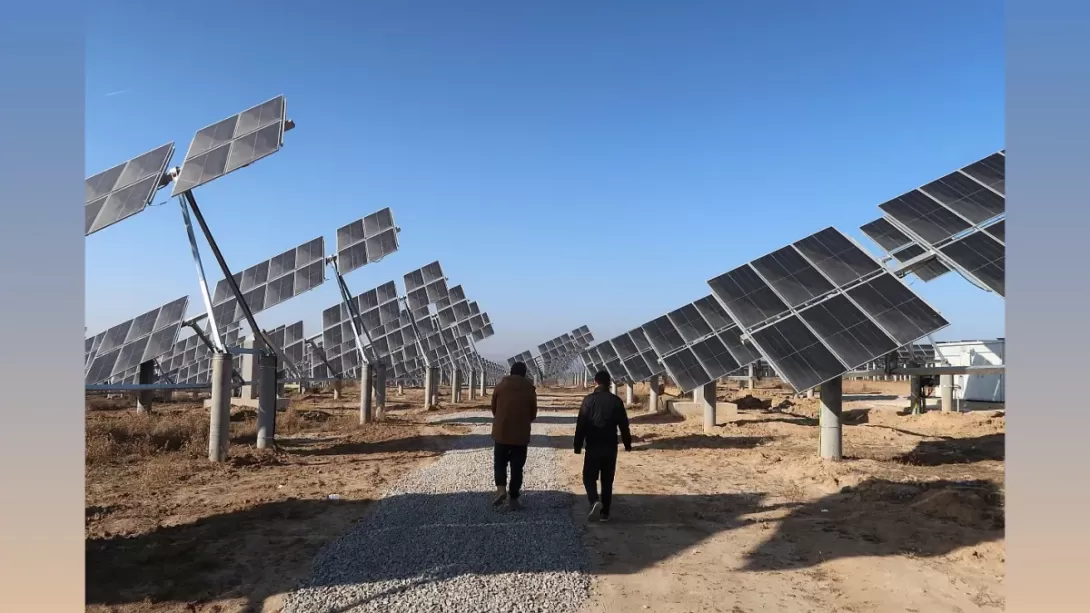
Reliance Industries Ltd, India’s most diversified conglomerate, has achieved a critical milestone in its transition to clean energy by commissioning its first solar PV module manufacturing line. This development marks a major step in the company’s Rs. 82,000 crore green energy strategy announced in 2021. With ongoing projects in battery storage, green hydrogen, and solar power, Reliance is positioning itself at the forefront of India’s renewable energy transformation. Through vertically integrated giga factories and strategic acquisitions, the company aims to reduce reliance on imports, accelerate decarbonization, and ultimately become one of the world’s most influential energy and materials players.
A Strategic Shift Toward Clean Energy
Reliance Industries Ltd (RIL), led by Chairman Mukesh Ambani, has significantly deepened its commitment to India’s renewable future. At the core of its transformation is a Rs. 82,000 crore (USD 10 billion) investment plan, unveiled in 2021, aimed at achieving net-zero carbon emissions by 2035. Central to this vision is the company’s solar initiative, which has now moved from planning to execution with the commissioning of its first photovoltaic (PV) module production line.
The manufacturing line is located in Jamnagar, Gujarat, where Reliance is developing a sprawling green energy complex on a 5,000-acre site. Designed to house vertically integrated giga factories, the complex will produce solar PV modules, battery storage systems, hydrogen electrolysers, and fuel cells—all pivotal to the clean energy value chain.
Solar Manufacturing: A Domestic Leap Forward
With its newly launched solar PV module line, Reliance joins a select group of Indian manufacturers, including Adani, Tata Power, Waaree Energies, and Vikram Solar. This move is both timely and strategic, as India mandates the use of domestically produced solar PV modules and cells in clean energy projects starting June 2026. The policy is aimed at reducing dependence on Chinese imports and enhancing domestic manufacturing.
Reliance’s solar modules are built to generate up to 720 watts at peak, among the highest in the industry, demonstrating the company’s commitment to advanced technology and production efficiency. According to Chief Financial Officer V. Srikanth Venkatachari, the company’s 10-gigawatt annual capacity can be doubled to 20 GW rapidly due to its modular design.
Battery Storage and Hydrogen: Scaling the Energy Chain
Beyond solar power, Reliance is developing 30 gigawatt-hours (GWh) of battery manufacturing capability, with 20 GWh planned in its first phase. Battery storage is a critical component in stabilizing grid supply and enabling intermittent renewable sources like solar and wind.
Meanwhile, the company is aggressively expanding into green hydrogen—a sector poised to reshape industrial energy usage. In Kandla, Gujarat, Reliance is building a fully integrated green hydrogen and green chemicals complex across 2,000 acres. The site will include large-scale electrolyser production, essential for converting renewable electricity into hydrogen fuel.
Joint ventures and strategic tie-ups are enabling the company to bring advanced electrolyser technologies into India, aligning with national goals for hydrogen leadership and energy security.
Broader Renewable Vision: Biogas and Power Generation
Complementing its core solar and hydrogen projects, Reliance is also investing in compressed biogas (CBG). By 2025, the company plans to commission 55 CBG plants, expanding significantly from the current base of 10. These initiatives collectively support the government’s target of achieving 500 gigawatts of renewable capacity by 2030.
Additionally, the company has begun work on land acquisition and transmission infrastructure to support the generation of 150 billion units of renewable electricity annually. Much of this will be powered by solar energy captured in the high-radiation zones of the Kutch region.
A Global Energy Powerhouse in the Making
Through its green energy subsidiary, Reliance New Energy, the company is executing one of the most ambitious energy manufacturing initiatives globally. With a USD 7.2 billion (approximately Rs. 59,000 crore) investment in a next-generation facility, Reliance aims to bring the entire clean energy production value chain—PV modules, battery cells, electrolysers, semiconductor components, and power electronics—under one roof.
The acquisition of REC Group in 2021 has been instrumental, granting Reliance access to cutting-edge solar technology and manufacturing processes developed by the Singapore-headquartered firm. These synergies are expected to accelerate Reliance’s vertical integration and cost competitiveness.
Market Implications and Strategic Outlook
Reliance’s aggressive push into renewables is more than just a pivot—it’s a structural evolution of its business model. With a diversified energy portfolio that balances fossil fuels, telecom, retail, and now clean tech, the company is positioning itself to lead not only in India but globally.
For investors, this transformation signals a long-term strategic opportunity. As India’s energy policy shifts toward sustainability and self-reliance, Reliance is poised to benefit from regulatory support, economies of scale, and early-mover advantage in green technology.
While execution risks remain—particularly in high-capex, tech-intensive sectors like hydrogen and battery storage—Reliance’s financial strength, engineering depth, and policy alignment place it in a uniquely favorable position.
Final Thoughts
Reliance Industries is no longer just an oil-to-telecom giant—it is actively reinventing itself as a clean energy titan. The commissioning of its first solar PV module line is symbolic, yet deeply strategic: it is the first tangible step in a vision that seeks to redefine India’s energy future. As the company expands its green energy footprint, it is not only embracing the global decarbonization imperative but also reshaping the contours of industrial power in South Asia.
Comments