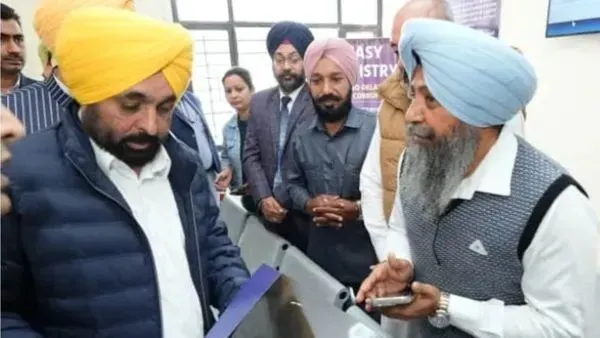
The Punjab government has introduced a streamlined property registration system aimed at improving transparency, reducing bureaucratic delays, and ensuring a smoother experience for citizens. Announced by Chief Minister Bhagwant Singh Mann, the initiative seeks to modernize an area long criticized for its complexity and susceptibility to irregularities. The revised framework focuses on reducing documentation hurdles, accelerating approvals, and integrating digital tools to curb inefficiencies. By offering a more accessible and citizen-friendly mechanism, the state aims to enhance public trust, stimulate real estate activity, and create a more accountable administrative environment that supports sustainable economic growth.
A Landmark Reform for Property Transactions
Chief Minister Bhagwant Singh Mann has launched a simplified property registration system designed to eliminate longstanding procedural bottlenecks and enhance the integrity of land-related transactions. The initiative marks a major policy intervention meant to tackle issues such as delays, inconsistent documentation requirements, and the lack of transparency in previous processes.
Officials emphasized that the updated system prioritizes clarity and accountability, with a focus on providing citizens with a predictable and uniform experience during property registration.
Streamlined Procedures for Citizens
Under the new structure, applicants will be required to follow a significantly simplified set of steps for property registration. Redundant paperwork—historically one of the most cumbersome aspects of the process—has been minimized to ensure faster approvals and fewer administrative touchpoints.
By offering a more direct and user-friendly approach, the government aims to ensure that citizens can complete registrations without navigating unnecessary complexity. The intention is to reduce dependence on intermediaries and mitigate opportunities for procedural inconsistencies.
Technology as the Foundation of Transparency
A key component of the revamped system is the increased reliance on digital tools. The government has prioritized the integration of secure, technology-driven platforms that allow for efficient documentation handling, automated verification, and real-time updates.
This digital shift is expected to reduce manual errors, discourage malpractice, and create a verifiable audit trail of all transactions. The technology-forward approach aligns with broader efforts to modernize administrative systems and reinforce trust between the government and its citizens.
Enhancing Transparency and Accountability
The newly implemented system is intended to curb irregularities often associated with property dealings. By mandating clearly defined procedures and greater oversight, the government aims to significantly reduce disputes and ensure fairness for all stakeholders.
Authorities have highlighted that transparent land transactions are essential not only for individual property owners but also for attracting investment and fostering sustainable urban development.
Economic Implications for the State
A more reliable registration process can have far-reaching economic benefits. Experts believe that streamlined procedures will encourage more people to formalize property holdings, boost real estate activity, and improve revenue generation for the government.
Greater transparency also enhances the state’s reputation as a stable environment for investment. As property-related sectors often serve as economic multipliers, Punjab’s reforms are expected to support broader economic development efforts.
A Step Toward Citizen-Centric Governance
By introducing this transparent and efficient registration mechanism, Punjab positions itself as a state committed to reducing bureaucratic friction and improving public service delivery. The reform also reflects the administration’s broader emphasis on citizen empowerment and administrative modernization.
Comments