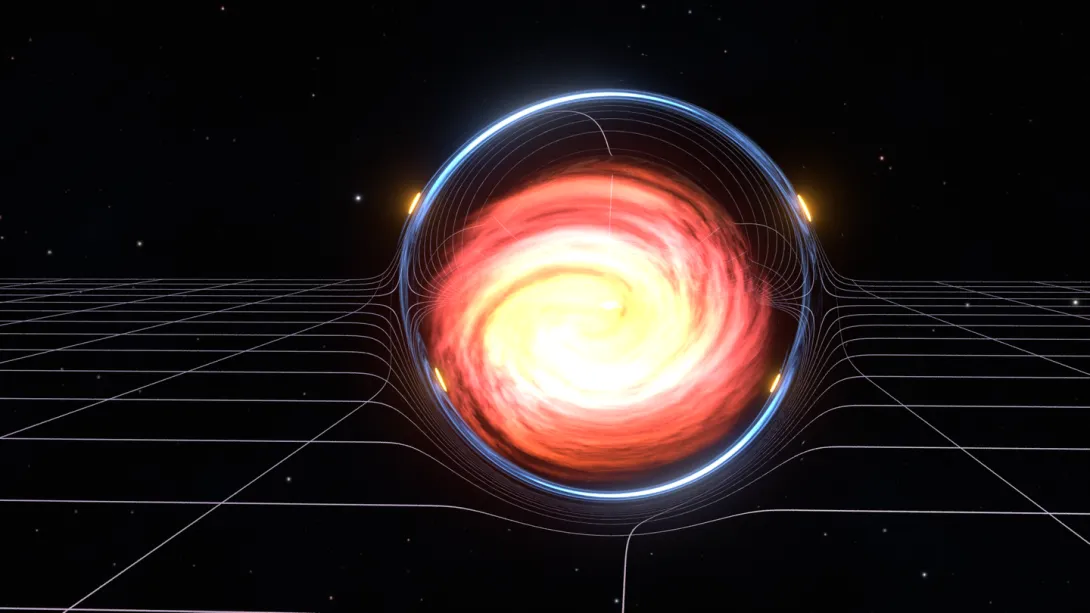
The recent discovery of the superluminous supernova SN 2025wny has captured the attention of the astrophysics community, offering unprecedented insights into stellar evolution and cosmic energetics. Observed to emit brightness hundreds of times that of typical supernovae, SN 2025wny provides researchers with a natural laboratory to study high-energy processes, nucleosynthesis, and interstellar medium enrichment. Beyond pure science, the observation underscores technological advances in telescope instrumentation, data analysis, and international collaboration. For the scientific community and aerospace sector, such discoveries inform both theoretical modeling and applied research, with implications for astrophysics, space observation technologies, and even investment in scientific infrastructure.
Discovery and Observation
SN 2025wny was identified by an array of ground-based and space telescopes using multi-wavelength imaging and spectroscopic techniques. Its peak luminosity, measured at several billion solar luminosities, positions it among the rare class of superluminous supernovae.
Astrophysicists note that such events are crucial for understanding the late-stage evolution of massive stars, particularly those exceeding 30 solar masses, which undergo explosive core-collapse or pair-instability mechanisms.
Scientific Significance
Superluminous supernovae like SN 2025wny challenge existing models of stellar death and nucleosynthesis. Early spectroscopic data indicate the presence of heavy elements and energetic outflows, offering clues about the formation of neutron stars, black holes, and exotic isotopes.
Researchers emphasize that detailed study of SN 2025wny can refine cosmological distance measurements and inform the calibration of supernovae as standard candles in mapping the universe’s expansion.
Technological and Collaborative Implications
The observation of SN 2025wny highlights advances in observational technology, including high-sensitivity detectors, rapid-response survey telescopes, and real-time data processing pipelines. International collaboration among observatories enabled continuous monitoring across multiple continents, enhancing data resolution and temporal coverage.
Such coordination demonstrates the potential for cross-disciplinary innovation in aerospace instrumentation, computational astrophysics, and big data analytics.
Economic and Strategic Considerations
While primarily a scientific discovery, SN 2025wny indirectly influences sectors such as satellite technology, telescope manufacturing, and scientific research funding. Governments and private investors may allocate resources toward observatories, instrumentation development, and space-based monitoring programs, recognizing both prestige and long-term technological spillovers.
Broader Cosmic Context
Superluminous supernovae are exceptionally rare, occurring perhaps once per several thousand years per galaxy. SN 2025wny provides a snapshot of extreme stellar physics and a window into the early universe, where similar phenomena may have played a role in galactic chemical enrichment and star formation.
Outlook
The study of SN 2025wny promises to deepen understanding of extreme cosmic events, refine astrophysical models, and drive technological innovation in observation and data analysis. For scientists, investors, and technologists alike, this supernova exemplifies the intersection of discovery, infrastructure development, and knowledge-driven economic opportunity, reinforcing humanity’s pursuit of cosmic understanding.
Comments