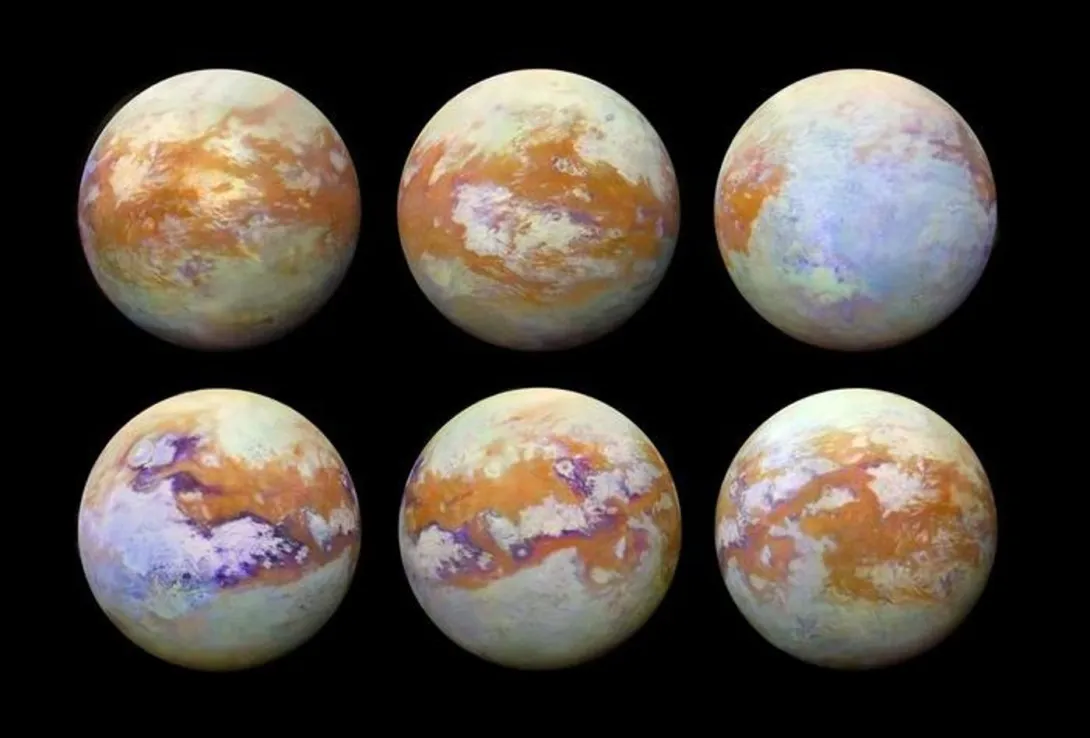
A recent scientific study of Titan, Saturn’s largest moon, has delivered fresh insights into one of the most intriguing bodies in the solar system. Researchers have deepened understanding of Titan’s dense atmosphere, hydrocarbon-rich surface and subsurface ocean, reinforcing its status as a prime candidate for studying prebiotic chemistry. The findings highlight complex interactions between atmospheric processes and surface features, offering parallels to early Earth. Beyond pure science, the research strengthens the strategic case for future missions to Titan, positioning the moon as a focal point for planetary science, astrobiology and long-term space exploration planning.
Why Titan Continues to Fascinate Scientists
Titan stands apart from other moons due to its thick, nitrogen-rich atmosphere and stable liquid bodies on its surface—albeit composed of methane and ethane rather than water. Scientists consider it a natural laboratory for studying chemical processes that may resemble those that occurred on early Earth.
The latest study builds on decades of observations, refining models of Titan’s climate cycles and surface evolution.
Key Findings From the Latest Research
Researchers found new evidence that Titan’s atmospheric chemistry actively shapes its surface over long timescales. Organic molecules formed high in the atmosphere gradually settle, contributing to complex surface deposits.
Data also support the existence of a subsurface ocean beneath Titan’s icy crust, raising important questions about internal heat, chemical exchange and long-term stability.
Implications for Astrobiology
From an astrobiological perspective, Titan offers something rare: active chemistry combined with environmental diversity. While conditions are extreme by Earth standards, the presence of complex organic compounds makes Titan a compelling target in the search for life’s building blocks.
Scientists stress that Titan is not expected to host life as we know it, but it may illuminate alternative pathways through which chemistry evolves toward biological complexity.
Technology and Mission Strategy
The study underscores the value of advanced instrumentation and long-duration missions. Improved spectrometry, radar mapping and atmospheric sampling have significantly enhanced data quality.
These advances are shaping mission concepts that emphasize mobility, autonomous systems and long-term data collection—technologies with broader applications across space exploration and Earth-based industries.
Strategic and Economic Relevance
Beyond science, Titan research reinforces the economic rationale for investing in deep-space exploration. Technological spin-offs from planetary missions often benefit sectors such as materials science, robotics and data analytics.
For space agencies and private partners, Titan represents a high-impact target that combines scientific return with innovation potential.
Comments