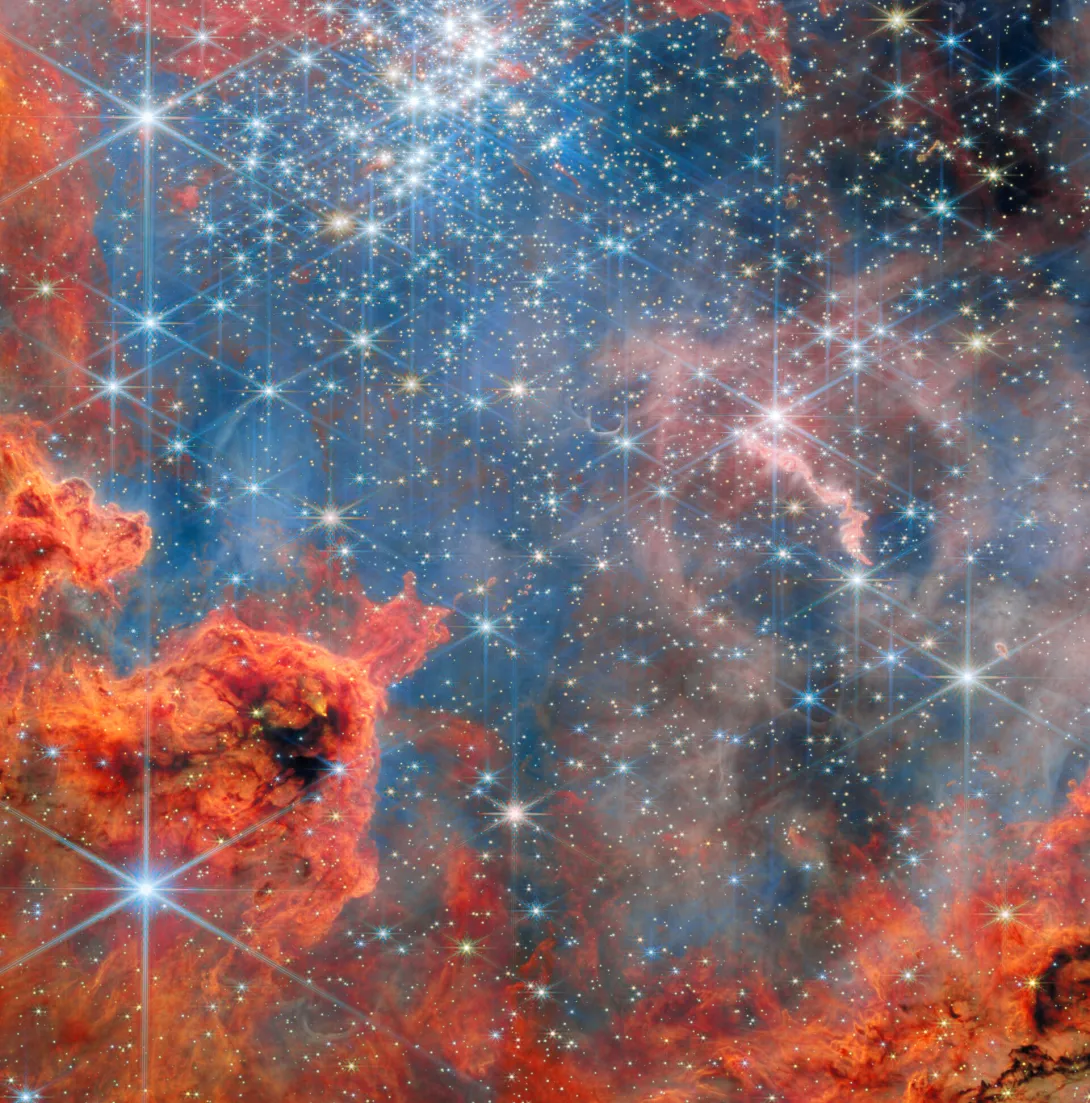
The James Webb Space Telescope (JWST) has released a fresh set of high-resolution images, offering unprecedented views of distant galaxies, nebulae, and exoplanetary systems. These images, captured using cutting-edge infrared technology, reveal cosmic structures in unparalleled detail, enabling astronomers to study star formation, galactic evolution, and planetary atmospheres with remarkable precision. Experts note that JWST’s observations could reshape our understanding of the universe’s early history and the potential for habitable worlds. Beyond scientific impact, the telescope’s visuals are captivating global audiences, demonstrating the synergy between advanced technology, public engagement, and the ever-expanding frontiers of space exploration.
Breakthrough Observations
JWST’s latest imagery provides detailed insights into regions previously obscured by interstellar dust. Utilizing infrared spectroscopy, the telescope penetrates dense cosmic clouds, unveiling newborn stars, complex nebular structures, and interacting galaxies.
These observations allow scientists to analyze chemical compositions, temperature distributions, and stellar dynamics, offering critical data for theoretical models of cosmic evolution.
Scientific Implications
The enhanced resolution and sensitivity of JWST enable researchers to study exoplanet atmospheres, detect organic molecules, and assess habitability markers. Early findings suggest a broader diversity of planetary systems than previously understood, while the telescope’s deep-field images shed light on the formation of the earliest galaxies.
Astronomers anticipate that JWST will refine models of cosmic inflation, dark matter distribution, and star lifecycle processes, contributing to fundamental breakthroughs in astrophysics.
Technological Innovation
JWST represents a leap forward in observational astronomy, combining a 6.5-meter segmented mirror with advanced infrared sensors and precision instrumentation. Its location at the second Lagrange point (L2) provides a stable, low-temperature environment crucial for sensitive measurements, enabling imaging of faint and distant objects with exceptional clarity.
The telescope’s technology sets a new standard for space observatories, influencing future missions and international collaborative projects in astronomy.
Global Engagement and Outreach
Beyond scientific contributions, JWST’s images have captivated the public, generating widespread interest in space science and STEM education. The visuals serve as a tool for outreach, inspiring global audiences and fostering appreciation for the complexity and beauty of the universe.
Educational institutions, media outlets, and digital platforms have leveraged these images to illustrate scientific concepts, promote research literacy, and encourage the next generation of astronomers and engineers.
Future Prospects
JWST is poised to continue reshaping astronomy, providing a continuous stream of transformative data over its operational lifespan. Researchers are preparing targeted observation campaigns to explore early-universe galaxies, exoplanet atmospheres, and cosmic phenomena, ensuring that JWST remains at the forefront of discovery.
Its contributions reinforce the value of investment in large-scale space infrastructure, demonstrating how technological innovation can expand human understanding while captivating public imagination.
Comments