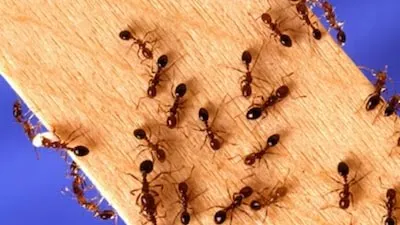
Scientists estimate that the global ant population reaches an astonishing 20 trillion, a testament to the species’ ecological success and adaptability. Despite individual vulnerability, ants thrive through sophisticated social structures, division of labor, and collective decision-making, illustrating the power of cooperation over brute strength. Researchers note that their dominance spans ecosystems worldwide, influencing soil health, plant growth, and predator-prey dynamics. Ant colonies optimize survival by “choosing weakness” at the individual level while leveraging collective resilience, demonstrating principles applicable to ecology, economics, and even human organizational systems. Their strategy underscores how intelligence, cooperation, and coordination often outweigh sheer physical power in complex systems.
The Scale of Ant Domination
With an estimated 20 trillion individuals worldwide, ants outnumber humans by several orders of magnitude. Their colonies, ranging from a few dozen to millions of members, are intricately organized, enabling resource acquisition, territory defense, and environmental engineering on scales disproportionate to their size.
Ecologists emphasize that while a single ant is fragile, the colony’s collective efficiency ensures resilience, adaptability, and long-term survival across diverse habitats, from tropical rainforests to arid deserts.
Strength in Numbers: The Collective Strategy
Ants exemplify the principle of distributed intelligence, where no single individual bears overwhelming responsibility. By operating as a decentralized system, colonies achieve complex outcomes: coordinated foraging, nest building, and defense mechanisms.
Researchers describe this as a “strategic weakness” — individuals remain small and expendable, yet the colony as a whole exhibits extraordinary durability and influence, demonstrating that collaborative systems can outperform solitary strength.
Ecological and Evolutionary Impact
Ants play pivotal roles in global ecosystems: they aerate soil, disperse seeds, control pest populations, and recycle nutrients. Their ability to adapt collectively to environmental pressures has contributed to their evolutionary longevity and ecological ubiquity.
Scientists argue that understanding ant colony dynamics provides insights into resilience, efficiency, and adaptation strategies that can inspire human systems, from organizational management to robotics and artificial intelligence.
Lessons from Nature
The success of ants highlights a broader lesson: individual vulnerability can be transformed into collective dominance through cooperation, communication, and strategy. Their approach challenges conventional notions of power, showing that intelligence, coordination, and flexibility often surpass raw strength in determining long-term success.
Conclusion
The planet’s estimated 20 trillion ants demonstrate that dominance does not require individual strength but rather strategic organization, cooperation, and resilience. By “choosing to be weak” at the individual level, ants have shaped ecosystems, influenced evolutionary pathways, and provided a natural blueprint for understanding the power of collective action. Their story serves as a remarkable reminder that in complex systems, unity and strategy often outmatch solitary force.
Comments