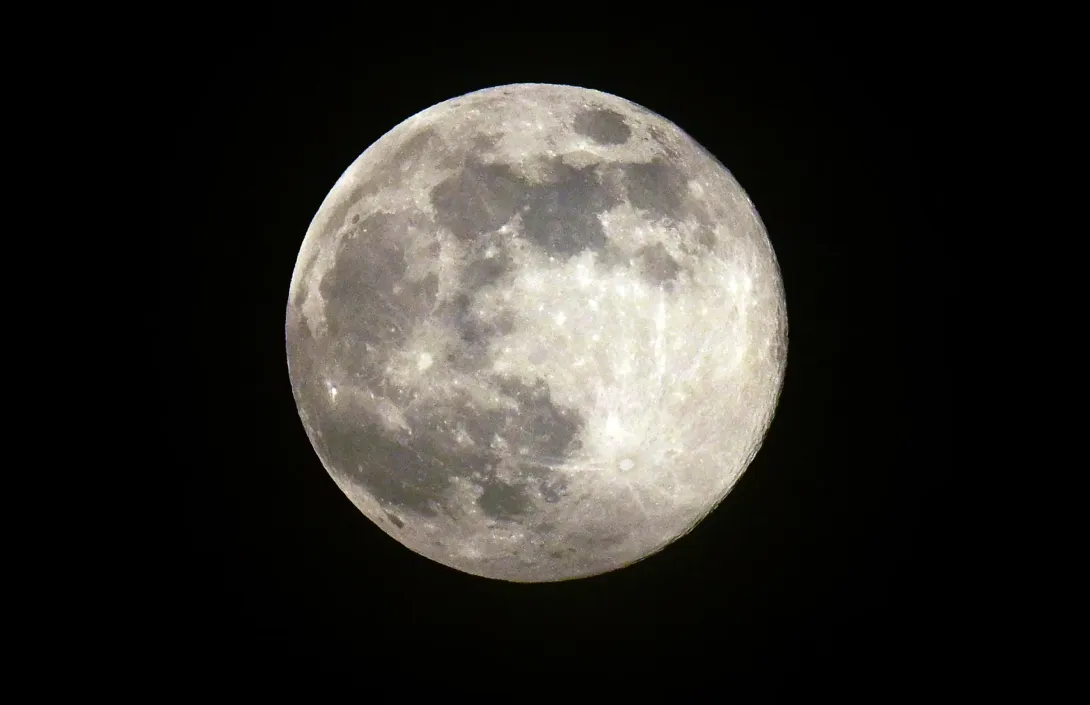
The first full moon of 2026, known as the Wolf Moon, is set to appear as a supermoon in January, offering a rare celestial spectacle for skywatchers worldwide. Occurring when the Moon’s orbit brings it closest to Earth, the phenomenon will make the lunar disk appear significantly larger and brighter than a typical full moon. Astronomers note that this alignment not only provides breathtaking visual opportunities but also influences tides and minor gravitational effects. With optimal visibility in multiple regions, the January Wolf Supermoon is expected to attract both amateur stargazers and professional observers, blending scientific curiosity with cultural folklore surrounding lunar events.
What is the Wolf Moon?
The Wolf Moon is traditionally the name given to the first full moon of January. Its origin traces back to Native American and European folklore, where howling wolves were often associated with the cold, winter nights.
Modern astronomy emphasizes that while the name is symbolic, the Wolf Moon provides a chance to observe lunar features with striking clarity, particularly when it coincides with the supermoon phenomenon.
Supermoon Phenomenon Explained
A supermoon occurs when a full moon coincides with the Moon’s perigee, the closest point in its elliptical orbit to Earth. During this alignment, the Moon can appear up to 14% larger and 30% brighter than a standard full moon.
Astronomers highlight that such lunar events are ideal for astrophotography and public engagement, offering a dramatic visual contrast against the night sky.
Optimal Viewing Times and Locations
The Wolf Supermoon will be best observed in the late evening hours of the designated full moon date. Clear skies in open areas away from city lights provide the best visibility.
Experts advise viewers to use binoculars or telescopes to observe surface details like craters and maria. In addition, astrophotographers are preparing for unique opportunities to capture the Moon alongside terrestrial landscapes.
Cultural and Scientific Significance
Beyond its visual spectacle, the supermoon holds cultural significance in many traditions, symbolizing renewal and the start of a new lunar cycle. Folklore connects the Wolf Moon with themes of reflection, transformation, and guidance during winter months.
Scientifically, the Moon’s proximity influences tidal patterns, leading to slightly higher tides known as “perigean spring tides.” While these effects are minor, they serve as a reminder of the Moon’s gravitational impact on Earth.
Public Engagement and Observational Opportunities
Planetariums, observatories, and astronomical societies often host public events during supermoons to educate communities about lunar science. Skywatchers are encouraged to share images and observations, creating a blend of citizen science and recreational astronomy.
The January Wolf Supermoon represents both a spectacular visual experience and an educational opportunity, highlighting the intersection of science, culture, and natural wonder.
Comments