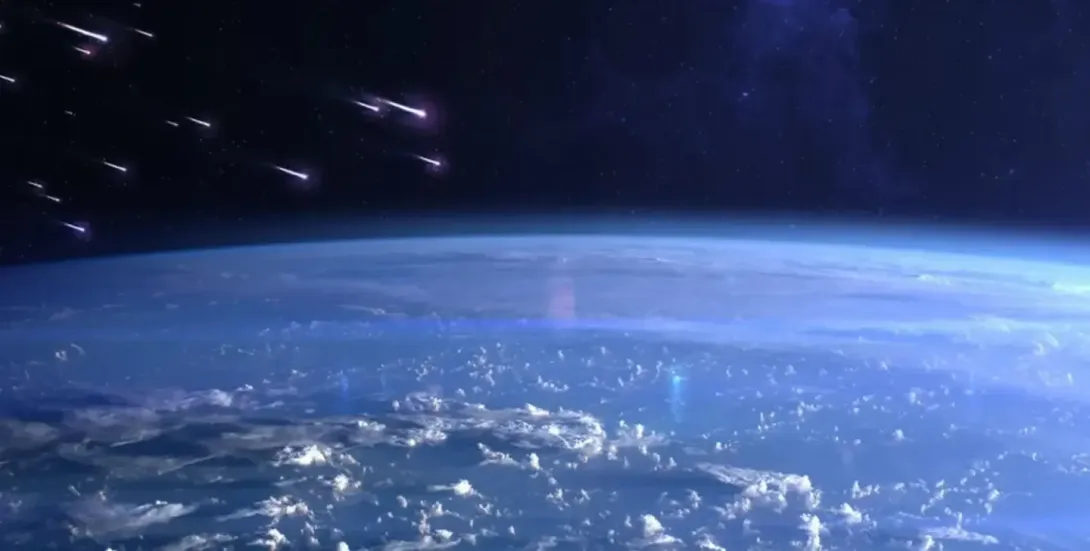
Skywatchers are witnessing an uncommon astronomical pairing as the annual Quadrantid meteor shower coincides with a bright supermoon, creating a visually striking yet scientifically intriguing event. While the supermoon’s intense brightness is expected to reduce visibility of fainter meteors, astronomers say the overlap offers a unique opportunity to study how lunar illumination affects meteor observation. The Quadrantids, known for their short-lived but intense peak, remain one of the most active meteor showers of the year. The convergence highlights the dynamic nature of near-Earth space and continues to draw interest from both professional astronomers and amateur observers.
The Quadrantids: A Brief but Powerful Display
The Quadrantid meteor shower originates from debris left by an extinct comet or asteroid, producing fast-moving meteors that streak across the sky. Unlike longer-lasting showers, the Quadrantids peak sharply over a narrow window, often delivering high meteor rates within a matter of hours.
Under optimal conditions, observers can witness dozens of meteors per hour, making timing a critical factor for viewing.
Supermoon Adds Brilliance—and Challenge
The supermoon occurs when the Moon reaches its closest point to Earth during a full phase, appearing larger and brighter than usual. While visually impressive, its intense light can overwhelm the night sky, washing out dimmer celestial events.
Astronomers note that this lunar brightness may limit the number of visible Quadrantid meteors, particularly for observers in urban or light-polluted areas.
Scientific Value of the Overlap
Despite reduced visibility, the simultaneous occurrence offers valuable observational data. Researchers can assess how varying lunar illumination impacts meteor detection rates and visibility thresholds.
Such insights help refine observation models and improve planning for future meteor studies, particularly when lunar conditions are less than ideal.
Tips for Observers
Experts recommend watching from the darkest possible location, away from artificial lighting, and allowing time for eyes to adjust. Focusing on areas of the sky opposite the Moon can also improve chances of spotting brighter meteors.
No telescopes or binoculars are required, as meteors are best viewed with the naked eye.
A Reminder of Celestial Dynamics
The convergence of the Quadrantid meteor shower and a supermoon underscores the constantly shifting nature of the night sky. Even when conditions are not perfect, such events offer a compelling reminder of the complex interactions governing celestial phenomena.
Comments