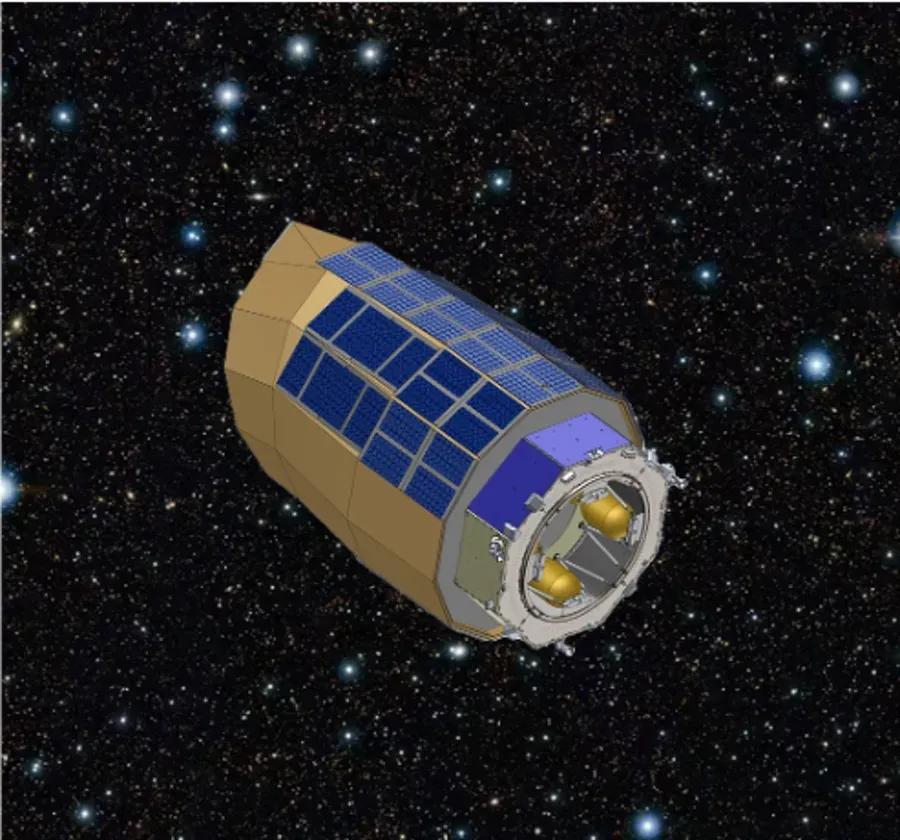
Schmidt Sciences has unveiled plans to construct a groundbreaking space telescope that will surpass the Hubble Space Telescope in size and observational capabilities. The ambitious project aims to expand humanity’s understanding of the universe, enabling unprecedented studies of distant galaxies, exoplanets, and cosmic phenomena. Industry analysts note that this initiative reflects the growing role of private organizations in space exploration, complementing public agencies like NASA and ESA. With a projected budget in the multi-billion-dollar range and a timeline extending into the late 2020s, the telescope promises to redefine astronomical research and catalyze technological innovation in optics, engineering, and astrophysics.
Project Overview
Schmidt Sciences’ proposed telescope will feature a primary mirror significantly larger than Hubble’s 2.4-meter aperture, potentially exceeding 6 meters in diameter. The enhanced mirror size is expected to dramatically improve light-gathering power and resolution, allowing scientists to probe deeper into the cosmos.
The mission is designed for multi-wavelength observations, spanning ultraviolet, visible, and near-infrared spectra. This capability will support comprehensive investigations of star formation, black holes, galactic evolution, and the characterization of exoplanet atmospheres.
Strategic Implications for Astronomy
The telescope represents a pivotal advancement in private-sector contributions to space science. By partnering with global research institutions and leveraging cutting-edge engineering innovations, Schmidt Sciences is positioning itself as a leader in high-end astrophysical instrumentation.
Experts suggest that the new observatory could accelerate discoveries in dark matter, cosmic expansion, and early universe phenomena, complementing the work of existing telescopes and upcoming missions such as NASA’s James Webb Space Telescope and ESA’s Euclid mission.
Technological and Economic Considerations
Building a telescope of this magnitude involves sophisticated engineering challenges, including lightweight mirror fabrication, advanced thermal control systems, and precise orbital deployment mechanisms. The project is expected to stimulate the aerospace supply chain, create specialized high-tech jobs, and foster innovation in optics, robotics, and data processing.
Preliminary cost estimates place the project in the multi-billion-Rs range, highlighting the financial scale and investment required. Strategic partnerships with governments, private investors, and international research organizations are likely to play a critical role in funding and resource allocation.
Future Outlook
Once operational, Schmidt Sciences’ telescope could transform our understanding of the universe and redefine the landscape of observational astronomy. By surpassing Hubble’s capabilities, it offers both scientific and commercial opportunities, from enhanced space imaging to data-driven astrophysical research platforms.
Comments