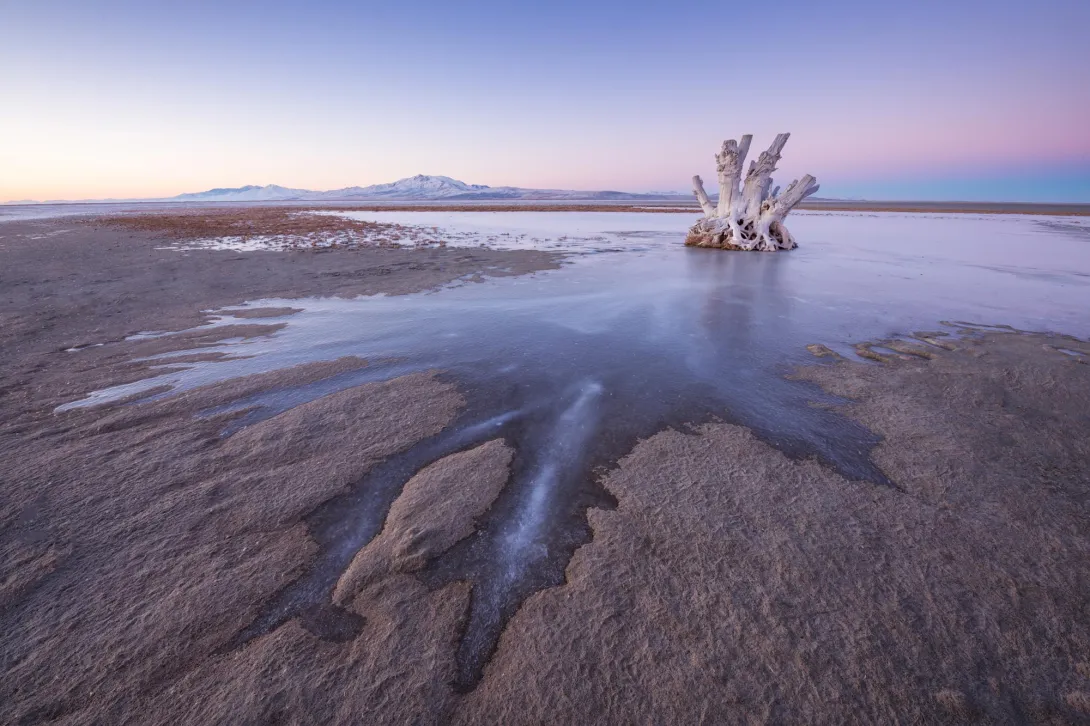
Researchers have identified a previously unknown worm species inhabiting the saline waters of Utah’s Great Salt Lake, underscoring the ecosystem’s unique biodiversity. This discovery offers insights into how life adapts to extreme environments, with potential implications for ecology, evolutionary biology, and environmental management. The newly documented species, which thrives in high-salinity conditions, expands scientific understanding of invertebrate resilience and adaptation strategies. Experts suggest that further study could illuminate microbial and invertebrate interactions within hypersaline habitats. The finding reinforces the global significance of the Great Salt Lake as a natural laboratory for studying life in extreme conditions and informs ongoing conservation efforts.
Discovery Context
The team of biologists conducting routine ecological surveys stumbled upon the worm while examining sediment samples. Genetic analysis confirmed that the specimen represents a species not previously documented in scientific literature. The organism’s physiology allows it to survive in salinity levels that are typically inhospitable to most freshwater and marine species.
Scientists note that this discovery highlights the underestimated diversity of hypersaline environments, which are often overlooked in ecological research. The Great Salt Lake, despite its industrial and recreational uses, continues to reveal hidden facets of biodiversity that could be crucial for understanding broader ecological dynamics.
Ecological Significance
The new worm species provides a model for studying extremophile adaptation. Its ability to thrive under high-salt conditions may offer clues about evolutionary mechanisms that enable survival in challenging habitats.
Researchers also emphasize the species’ potential role in nutrient cycling and sediment health within the lake. As part of the food web, it may influence the populations of microorganisms, birds, and other invertebrates, thereby impacting ecosystem stability and resilience.
Conservation and Research Implications
The discovery adds urgency to ongoing efforts to protect the Great Salt Lake’s unique ecosystems, which face threats from water diversion, pollution, and climate-induced drying. Environmentalists advocate for integrated management strategies that balance industrial use with biodiversity preservation.
Further research is planned to map the distribution, behavior, and ecological role of the worm species. Scientists hope that understanding its survival mechanisms could inform broader studies on extremophiles, with potential applications in biotechnology, environmental monitoring, and even astrobiology.
Future Outlook
As scientific exploration continues, the Great Salt Lake may reveal additional unknown species, reaffirming its status as a vital natural laboratory. Documenting and preserving these organisms is essential for both ecological knowledge and conservation planning, ensuring that extreme environments are recognized not just for their economic value but also for their irreplaceable contribution to global biodiversity.
Comments