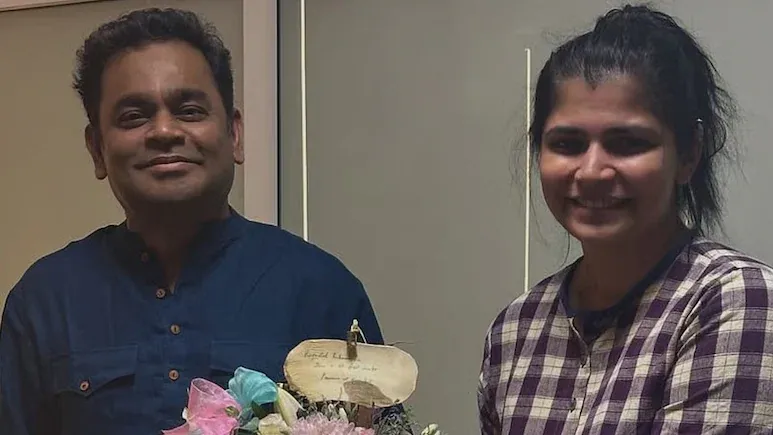
Comments made recently by Oscar-winning composer AR Rahman have drawn attention across the music and entertainment industry, prompting discussion on creativity, artistic integrity, and the evolving role of technology in music. Known for his measured public voice, Rahman’s observations were widely interpreted as a reflection on deeper structural shifts affecting musicians, composers, and cultural production. While not directed at any single individual or institution, the remarks resonated strongly in an era marked by rapid digital disruption. The response highlights Rahman’s enduring influence as both an artist and a public intellectual whose views often extend beyond music into broader cultural and economic conversations.
Context Behind the Remarks
AR Rahman’s comments emerged during a public interaction, where he addressed themes related to artistic purpose, professional pressures, and the changing dynamics of the music industry. Though concise, his words carried weight, reflecting decades of experience across Indian and global creative ecosystems.
Observers noted that Rahman’s perspective is shaped not only by commercial success but also by sustained engagement with independent artists, technology-driven production, and cross-cultural collaboration.
Industry Reaction and Interpretation
The remarks quickly gained traction among musicians, producers, and fans, many of whom interpreted them as a subtle critique of increasing commercialization and creative uniformity. Others viewed the comments as a call for introspection, particularly as algorithm-driven platforms reshape how music is created, distributed, and monetized.
Industry professionals said such conversations are timely, as artists navigate shrinking attention spans, changing revenue models, and rising dependence on digital intermediaries.
Creativity in the Age of Technology
Rahman has long spoken about the intersection of music and technology, often embracing innovation while cautioning against its uncritical use. His recent comments were seen as reinforcing the idea that technology should serve creativity, not replace emotional depth or human expression.
Analysts believe this balance will be central to the future of the creative economy, especially as artificial intelligence tools become more prevalent in music composition and production.
Cultural Influence Beyond Music
Beyond his role as a composer, AR Rahman is widely regarded as a cultural voice whose opinions influence public discourse. His comments frequently touch on ethics, spirituality, and sustainability—issues that resonate across industries.
This broader influence explains why even brief remarks from Rahman often generate widespread discussion, extending well beyond the entertainment sector.
Looking Ahead
While the composer has not elaborated further, the response to his comments underscores the ongoing tension between creativity and commerce in modern cultural industries. For many, Rahman’s words serve as a reminder that artistic longevity depends not just on adapting to change, but on preserving authenticity.
Comments