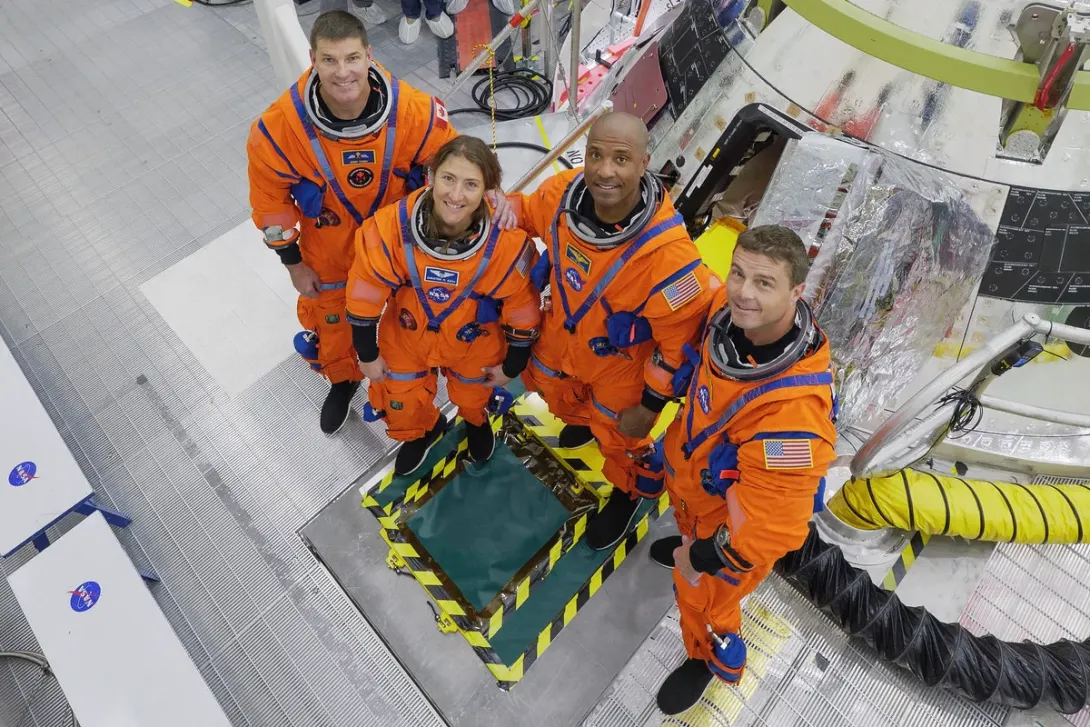
NASA has positioned the Artemis II moon rocket on the launch pad, signaling a major milestone in the agency’s effort to return humans to lunar orbit. The move represents a transition from preparation to execution for the first crewed mission under the Artemis program. Designed to validate systems, crew safety, and mission operations beyond low-Earth orbit, Artemis II is central to NASA’s long-term lunar and deep-space ambitions. The rollout underscores both technological readiness and strategic intent, as the United States accelerates plans to establish a sustained human presence around the Moon and lay the groundwork for future missions to Mars.
A Visible Milestone for the Artemis Program
The arrival of the Artemis II rocket at the launch pad marks one of the most visible and symbolically significant moments in NASA’s current exploration roadmap. The mission will use the Space Launch System (SLS) rocket paired with the Orion spacecraft, both developed to support human missions beyond Earth’s orbit.
This phase allows engineers to conduct final integrated testing, including fueling rehearsals and launch-day simulations, before setting a firm launch window.
Artemis II’s Role in Crewed Deep-Space Exploration
Unlike Artemis I, which was uncrewed, Artemis II will carry astronauts on a lunar flyby, testing life-support systems, navigation, and communication in deep space. The mission is designed to validate crew performance and spacecraft reliability under real mission conditions.
From a strategic standpoint, Artemis II serves as the bridge between test flight and operational lunar missions, reducing risk ahead of future landings.
Technological and Operational Readiness
Positioning the rocket on the pad enables NASA to assess how the integrated system performs in its launch configuration. Engineers will closely monitor structural integrity, propulsion systems, and ground-support infrastructure.
The SLS rocket remains one of the most powerful launch vehicles ever built, and its performance is critical to NASA’s ability to carry large payloads and crews on long-duration missions.
Economic and Policy Dimensions
The Artemis program represents a multiyear investment involving NASA, private contractors, and international partners. Beyond exploration goals, it supports a broad industrial ecosystem, sustaining high-skilled jobs and advancing aerospace manufacturing.
For policymakers, Artemis is also a statement of leadership in space, reinforcing the United States’ role in shaping norms and cooperation in cislunar activity.
Looking Beyond the Launch Pad
With the rocket now in place, attention will shift to final checks and readiness reviews. While launch timelines remain subject to technical and weather conditions, the milestone reinforces confidence in the program’s momentum.
As Artemis II moves closer to liftoff, it stands as a tangible step toward reestablishing human presence near the Moon—an essential precursor to long-term lunar operations and eventual missions to Mars.
Comments