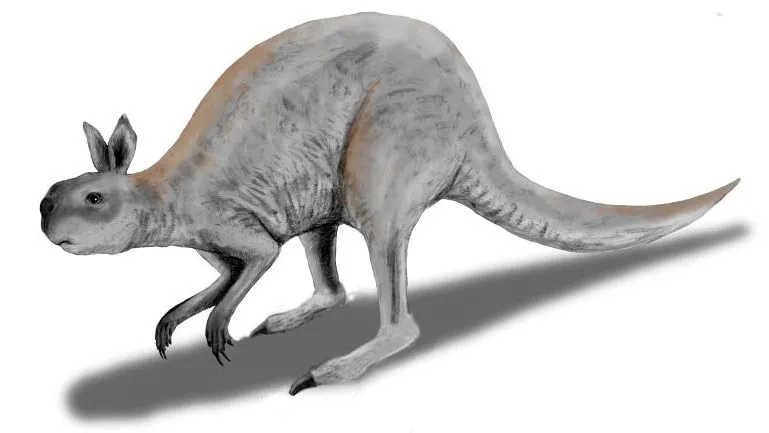
A groundbreaking study on the hindlimb anatomy of giant kangaroos has shed light on their extraordinary locomotion and evolutionary adaptations. Researchers employed advanced biomechanical modeling and comparative anatomy to examine muscle leverage, tendon elasticity, and skeletal structures, revealing how these marsupials achieve efficient hopping while minimizing energy expenditure. The findings offer broader implications for evolutionary biology, robotics, and biomechanics, providing a model for energy-efficient bipedal movement. Beyond academic interest, the study underscores the intricate interplay between anatomy and function in large terrestrial mammals, contributing to our understanding of both extant and extinct species within the macropod family.
Evolutionary Context of Giant Kangaroos
Giant kangaroos, notably larger than their contemporary relatives, evolved unique musculoskeletal adaptations to support their substantial body mass. Their hindlimbs exhibit elongated tendons and specialized muscle arrangements that enhance elastic energy storage, enabling sustained hopping over long distances with minimal metabolic cost. Evolutionary pressures favored these traits, ensuring survival in open habitats where efficient locomotion was critical for foraging and predator avoidance.
Biomechanical Insights
The study utilized a combination of high-resolution imaging, 3D skeletal modeling, and motion simulation to assess limb dynamics. Key findings include:
- Tendon Elasticity: Hindlimb tendons act as biological springs, storing and releasing energy to reduce muscular effort.
- Muscle Leveraging: Specific muscle attachment points optimize mechanical advantage, balancing force generation and energy conservation.
- Joint Architecture: Hip and knee joint morphologies support both stability and range of motion, accommodating powerful propulsive forces during hopping.
These biomechanical traits collectively illustrate an evolutionary optimization for high-efficiency locomotion.
Implications for Science and Technology
Understanding giant kangaroo locomotion informs multiple disciplines:
- Evolutionary Biology: Provides insights into the adaptive strategies of large terrestrial marsupials.
- Paleobiology: Offers analogs for reconstructing the movement of extinct giant kangaroo species.
- Robotics and Bioengineering: The elastic energy storage mechanism inspires energy-efficient designs in legged robotics and prosthetics.
Conclusion
The study of giant kangaroo hindlimbs transcends zoological curiosity, bridging evolutionary theory, biomechanics, and applied science. By elucidating how anatomy dictates function, researchers provide a blueprint for energy-efficient movement in both biological and artificial systems. As this research gains attention, it highlights the potential for interdisciplinary innovation derived from observing nature’s most remarkable adaptations.
Comments