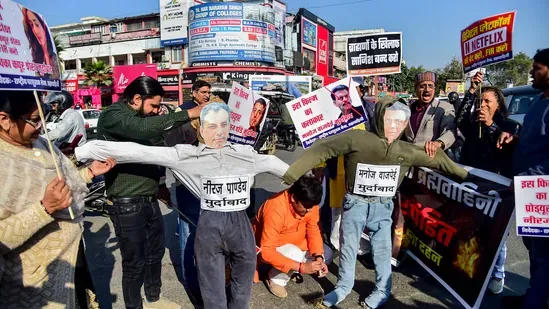
A term gaining rapid traction across digital platforms, “Ghooskhor Pandat” has emerged as a satirical symbol in India’s online discourse on corruption and public accountability. Rather than pointing to a specific individual, the phrase has evolved into a broader metaphor representing unethical conduct, bribery, and institutional decay. Its popularity underscores growing public frustration and the power of social media to shape narratives around governance and integrity. This phenomenon reflects how humor, irony, and sharp commentary are increasingly used to spotlight serious socio-economic issues, forcing policymakers and institutions to confront public sentiment in an era of heightened transparency.
A Symbol Born in the Digital Public Square
“Ghooskhor Pandat” has surfaced not as a formal entity or individual, but as a cultural expression rooted in satire. Social media users, digital artists, and commentators have adopted the phrase to caricature corrupt practices that continue to undermine economic efficiency and public trust. The term’s viral spread illustrates how modern civic engagement often blends critique with creativity, making complex governance failures more accessible to a broader audience.
Public Sentiment and Economic Implications
Corruption remains a persistent drag on economic growth, distorting markets and increasing transaction costs for businesses and consumers alike. The rise of symbolic labels such as “Ghooskhor Pandat” reflects mounting impatience among citizens and entrepreneurs who bear the financial consequences of inefficiency and rent-seeking behavior. Analysts note that such public pressure, even when expressed informally, can influence corporate governance norms and policy debates, particularly in sectors heavily regulated by the state.
Social Media as a Tool of Accountability
Digital platforms have become powerful amplifiers of public opinion, allowing symbolic movements to gain momentum without centralized leadership. The widespread use of “Ghooskhor Pandat” highlights how narratives around ethics and accountability are increasingly shaped outside traditional media. While informal in nature, these movements can compel institutions to respond, clarify policies, or reinforce compliance mechanisms to protect credibility and investor confidence.
A Reflection of Changing Civic Engagement
The emergence of this satirical symbol signals a shift in how citizens engage with issues of governance and integrity. Rather than relying solely on formal complaints or investigative reports, the public is leveraging humor and collective expression to demand transparency. For businesses and policymakers, the message is clear: reputational risk now extends beyond balance sheets and into the fast-moving realm of digital perception.
Comments