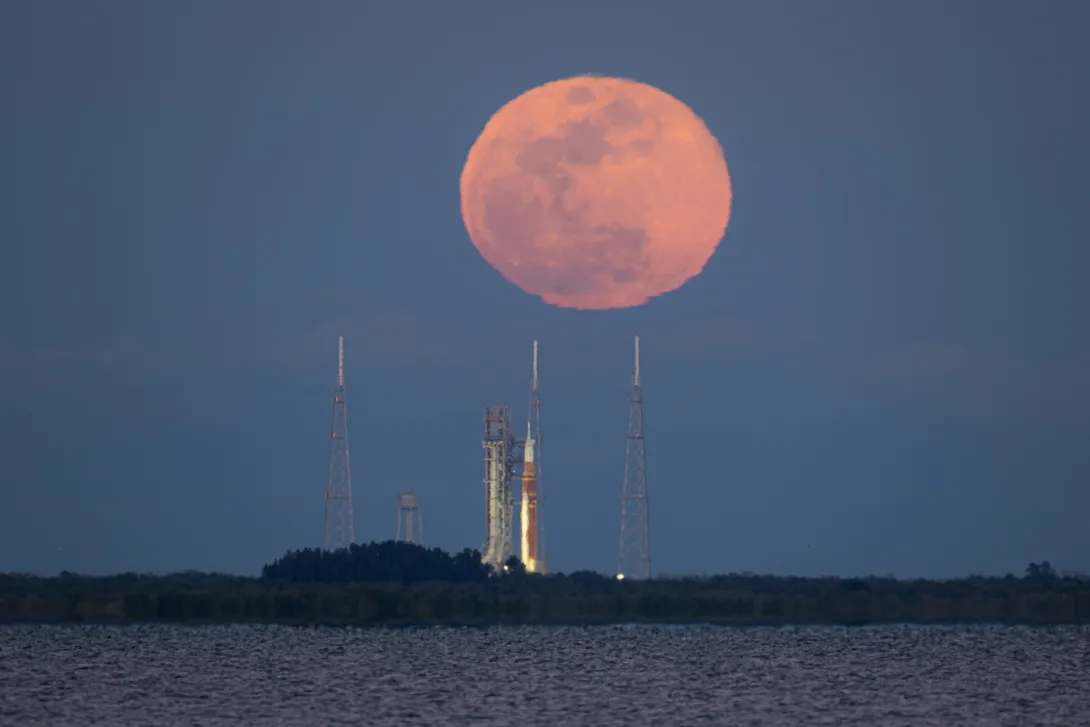
NASA’s Artemis II mission represents a pivotal milestone in the United States’ renewed lunar exploration strategy, marking the first crewed flight under the Artemis program. Designed to carry astronauts around the Moon and back to Earth, the mission will validate critical systems, technologies, and operational protocols required for long-duration human spaceflight beyond low-Earth orbit. More than a symbolic journey, Artemis II underpins broader ambitions that include lunar infrastructure development, commercial partnerships, and eventual crewed missions to Mars. The mission also reflects growing international and private-sector collaboration, positioning space exploration as both a scientific endeavor and a strategic economic frontier.
Mission Overview and Strategic Objectives
Artemis II is planned as a crewed test flight that will send astronauts aboard NASA’s Space Launch System rocket and the Orion spacecraft on a multi-day voyage around the Moon. Unlike its uncrewed predecessor, Artemis I, this mission will focus on human-rated performance, assessing life-support systems, navigation, and deep-space communications.
The primary objective is to demonstrate that NASA’s next-generation hardware and mission architecture are safe and reliable for astronauts operating far beyond Earth’s orbit.
Economic and Industrial Significance
Beyond exploration, Artemis II carries substantial economic implications. The program supports a broad supply chain involving aerospace manufacturers, technology firms, and research institutions. Billions of dollars in federal investment are flowing into advanced propulsion, materials science, and digital systems, reinforcing the United States’ position in the global space economy.
The mission also strengthens public-private partnerships, as commercial contractors play a central role in spacecraft development, ground systems, and future lunar logistics.
International Collaboration and Geopolitical Context
Artemis II is part of a wider framework that includes international partners committed to long-term lunar exploration. Through agreements with allied space agencies, NASA is positioning the Moon as a shared scientific and economic domain governed by cooperative norms.
Analysts note that the mission also carries geopolitical weight, as space exploration increasingly intersects with national competitiveness, technological leadership, and strategic influence.
Pathway to Future Lunar and Mars Missions
The successful execution of Artemis II will clear the way for subsequent missions, including crewed lunar landings and the establishment of a sustained human presence on the Moon. These efforts are intended to serve as a proving ground for technologies and operational models required for eventual missions to Mars.
For policymakers and industry leaders alike, Artemis II is not an endpoint but a critical step in redefining humanity’s long-term engagement with deep space.
Comments