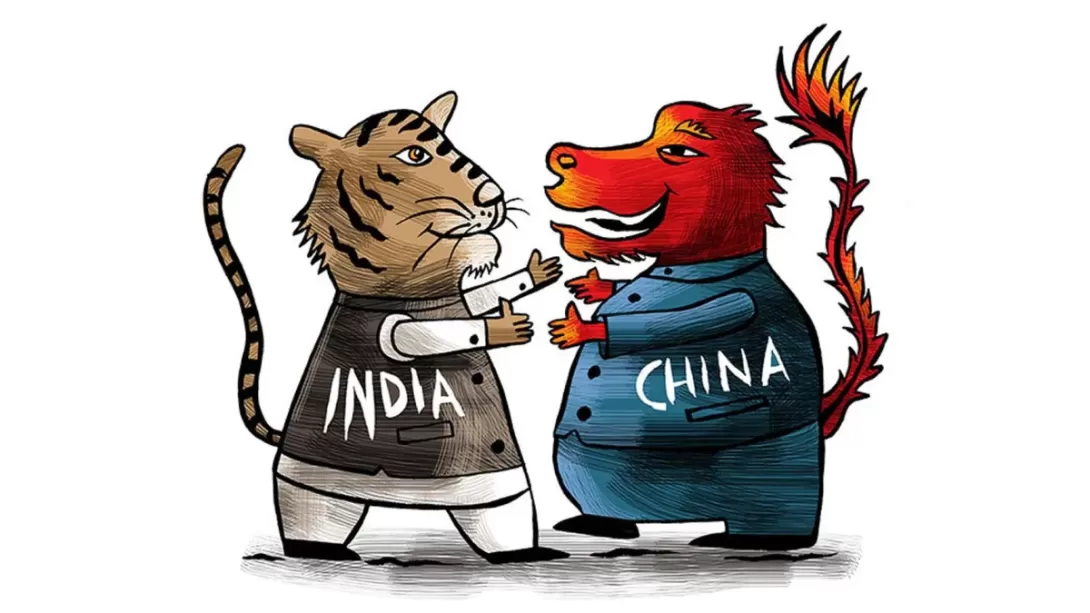
India’s Chief Economic Advisor, V Anantha Nageswaran, shared insights into the country’s economic prospects amidst global disruptions, emphasizing the favorable outcomes of the ongoing trade shifts. The growing trend of companies looking to diversify away from China, driven by U.S. tariffs, presents India with a significant opportunity to become a key manufacturing hub. Coupled with reduced crude oil prices, India's economic trajectory remains promising. Nageswaran outlined key growth drivers, including energy transition, job creation, and private-sector capital formation, while stressing the need for collaborative efforts between the government and private entities to capitalize on emerging opportunities.
India’s Strategic Advantage Amid Global Uncertainty
As the world continues to face uncertainty, the ripple effects of U.S. tariffs on China are pushing manufacturers to rethink their supply chain strategies. V Anantha Nageswaran, India’s Chief Economic Advisor, believes that this shift, often referred to as the "China Plus One" strategy, now has a heightened urgency. Companies operating in China are increasingly looking for alternative manufacturing destinations to mitigate risks associated with the Chinese market.
India, with its competitive cost structure and improving infrastructure, stands out as a prime candidate to absorb these manufacturing relocations. As businesses consider diversifying away from China, Nageswaran sees India benefitting from this trend, potentially accelerating progress in the coming years — particularly in states with strong per capita income and competitive advantages in manufacturing.
The Impact of Lower Oil Prices on India’s Economy
Another positive consequence of global disruptions is the significant reduction in crude oil prices, which currently hover around USD 60 per barrel. This price drop presents a windfall for India, as it directly lowers input costs for businesses, contributing to more affordable energy. The fiscal space created by this development allows the Indian government to manage its budget more effectively, potentially investing in infrastructure, social programs, and economic reforms that further enhance growth prospects.
With energy costs being a major input in industrial production, this reduction in oil prices is expected to bolster the competitiveness of Indian manufacturing while alleviating some of the pressures on both consumers and businesses.
"China Plus One" Strategy: A New Era for Indian Manufacturing
The "China Plus One" strategy, which initially gained traction among multinational companies as a hedge against political and trade-related risks in China, is now accelerating. India stands at the center of this shift, with its robust labor force and growing industrial base making it an attractive destination for foreign investments looking to diversify away from China.
Nageswaran highlighted that certain Indian states are already positioned to seize these opportunities. For instance, states with a higher per capita income can focus on capital-intensive manufacturing, while others with a lower per capita income can concentrate on labor-intensive industries. This diversification in manufacturing strategies could lead to a more balanced and inclusive growth trajectory, benefiting a wider range of Indian states.
Economic Growth and Export Prospects: Maintaining Momentum
India’s economic growth is projected at 6.5% for FY 2024-25, with exports contributing significantly to this expansion. Nageswaran remained optimistic about the future of India’s export sector, suggesting that the "China Plus One" strategy would continue to open new opportunities. Despite challenges in global demand and market uncertainty, India’s diversified economic model positions it well to weather external shocks while maintaining steady growth.
High-frequency data for the first quarter of FY 2025-26 also suggest that this momentum is expected to continue. The combination of strong domestic reforms and external shifts could propel India to a higher growth trajectory in the coming years.
The Role of Government and Private Sector Collaboration in Reforms
While economic reforms are often associated with government actions, Nageswaran emphasized that the private sector plays an equally important role in driving India’s growth. Reforms are most effective when there is a partnership between the government and businesses, with both sectors contributing to shaping the country’s economic future.
The government’s role is to provide a conducive environment for business, remove bureaucratic barriers, and implement sound policy. However, the private sector must reciprocate by investing, innovating, and driving job creation. Additionally, Nageswaran pointed out that the judiciary, media, and non-governmental sectors also have a role in shaping reforms and ensuring that they benefit society at large.
Key Areas for Future Growth: Energy, Employment, and Education
Nageswaran identified several priority areas for India’s continued growth, including:
- Energy Affordability and Transition: As India seeks to shift towards more sustainable energy sources, ensuring affordability for both consumers and businesses will be crucial.
- Job Creation and Artificial Intelligence: With the rise of AI, Nageswaran highlighted the need to foster new job opportunities and ensure that India’s workforce is prepared for the technological shift.
- Income Distribution and Education: Ensuring that the benefits of growth are equitably distributed will be a major focus, particularly through targeted education and skill-building initiatives.
- Support for SMEs and Manufacturing Growth: Strengthening small and medium-sized enterprises (SMEs) and boosting the manufacturing sector will be vital for generating employment and enhancing India’s industrial output.
Conclusion: A Pivotal Moment for India’s Economic Future
India finds itself at a critical juncture in its economic development. The combination of global disruptions, shifting manufacturing trends, and favorable internal conditions positions the country to capitalize on emerging opportunities. By aligning government policies with private-sector innovation and fostering a collaborative ecosystem, India has the potential to become a major player in the global manufacturing and export sectors.
As global dynamics evolve, India’s adaptability and strategic positioning under the "China Plus One" paradigm could allow it to maintain robust growth, strengthening its economic foundation and ensuring a prosperous future for its population.
Comments