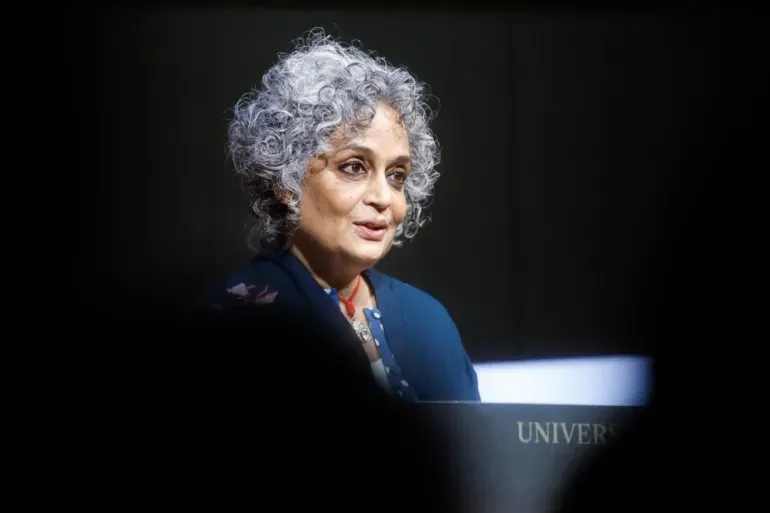
The Berlin Film Festival once again demonstrated its role as a global forum for artistic freedom and political discourse, with acclaimed author and public intellectual Arundhati Roy emerging as a prominent voice at this year’s edition. Her presence underscored the festival’s tradition of engaging with urgent social and political questions beyond cinema alone. Through panel discussions and public engagements, Roy highlighted the intersection of storytelling, resistance, and cultural responsibility, reinforcing Berlinale’s standing as a space where art, ideas, and global conscience meaningfully intersect.
Berlinale’s Enduring Political Identity
Unlike many international film festivals that prioritize glamour and commercial premieres, the Berlin Film Festival has long cultivated a reputation for political engagement and intellectual rigor. Its programming frequently amplifies voices that challenge power structures, making it a natural platform for writers, filmmakers, and thinkers whose work extends beyond entertainment.
This positioning has strengthened the festival’s global relevance, attracting audiences and creators who view cinema as a catalyst for dialogue and dissent.
Arundhati Roy’s Intervention Beyond Literature
Arundhati Roy’s participation resonated strongly with Berlinale’s ethos. Known globally for her Booker Prize–winning fiction as well as her uncompromising political essays, Roy used the मंच to address themes of freedom of expression, state power, and the moral obligations of artists in polarized societies.
Her remarks were not tied to a single film but rather to the broader responsibility of cultural institutions to safeguard critical voices—an argument that found a receptive audience in Berlin.
Cinema, Capital, and Conscience
From a business and cultural standpoint, Berlinale’s embrace of figures like Roy reflects a strategic differentiation in a crowded global festival calendar. While commercial festivals often align closely with studio economics, Berlin positions itself as a values-driven brand, appealing to public funding bodies, independent producers, and socially conscious sponsors.
This approach reinforces long-term credibility, even if it occasionally courts controversy.
A Festival That Extends Beyond Film
The convergence of cinema and political thought at the Berlin Film Festival illustrates how global cultural platforms are evolving. By hosting voices such as Arundhati Roy, Berlinale signals that storytelling—whether on the page or the screen—remains inseparable from the realities it seeks to represent.
Comments