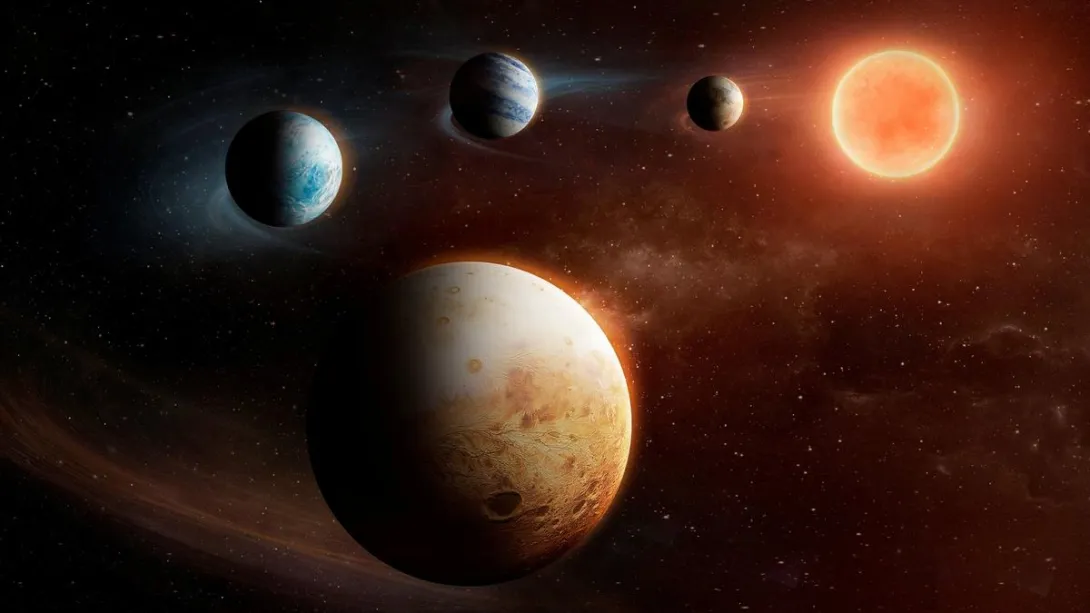
Researchers have identified a previously unknown planetary formation system, shedding fresh light on how planets are born and evolve across the universe. The discovery captures an early and dynamic stage of planetary development, where dust and gas actively coalesce around a young star. Scientists say the finding provides a rare observational window into processes that are usually inferred rather than directly seen. Beyond its scientific importance, the breakthrough reinforces the rapid progress of modern astronomy, driven by advanced instruments and international collaboration. The discovery not only deepens understanding of cosmic evolution but also sharpens the search for planetary systems similar to our own.
A Window Into Planetary Birth
The newly identified system is notable for its clarity and structure, revealing distinct rings and gaps within a protoplanetary disk. These features are widely interpreted as signs of planets forming and shaping their surroundings. Such direct evidence helps validate long-standing theoretical models of how gravity and motion sculpt emerging worlds.
Why This Discovery Matters
Planet formation is a complex process that unfolds over millions of years, making it difficult to observe in real time. Capturing a system at this stage allows astronomers to refine simulations and improve predictions about how planetary architectures emerge. From a scientific standpoint, each such discovery narrows the gap between theory and observation.
Technology Driving Astronomical Progress
Advances in observational technology have played a central role in this breakthrough. High-resolution imaging and enhanced data processing now enable scientists to study distant systems with unprecedented precision. These capabilities are accelerating discovery cycles and reshaping expectations about what can be observed directly.
Implications Beyond Astronomy
While the research is rooted in astrophysics, its implications extend further. Understanding how planetary systems form informs broader questions about habitability, the distribution of resources in space, and the long-term prospects of exploration. Such insights increasingly influence funding priorities and international space strategies.
Looking Ahead
As more planet-forming systems are identified, researchers expect patterns to emerge that clarify why planetary systems differ so widely. This discovery represents another step toward answering a fundamental question: how common are systems like our own, and what conditions make them possible?
Comments