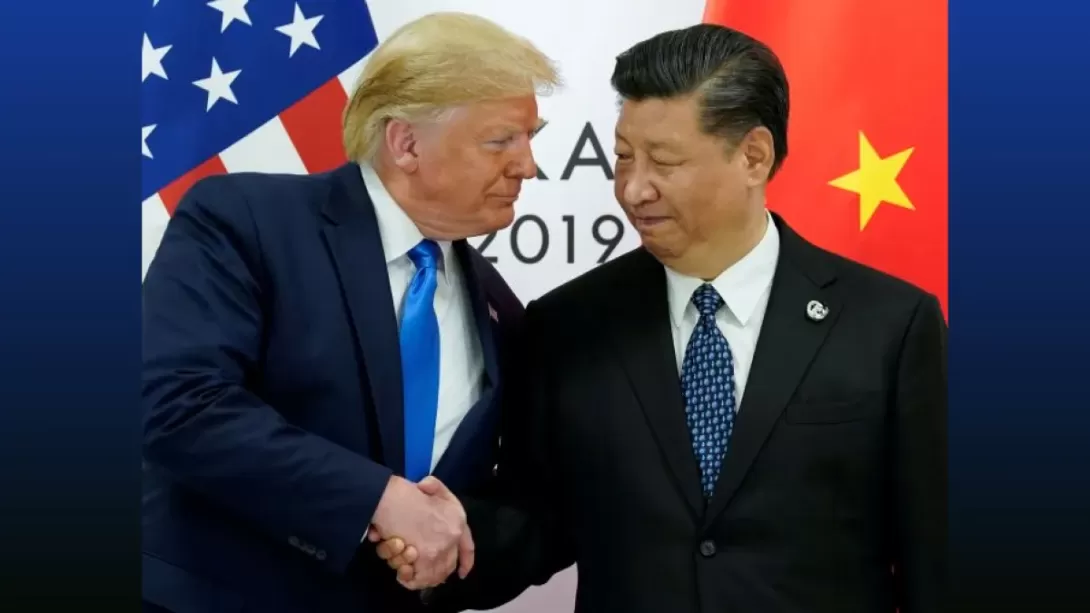
Amid escalating trade tensions with the United States, Chinese President Xi Jinping has vowed to strengthen strategic relationships with neighboring countries by managing differences diplomatically and enhancing supply chain connections. This pledge comes as U.S. President Donald Trump’s tariffs on Chinese exports reach new heights. Xi’s remarks at a recent conference reflect China’s efforts to navigate increasing global trade tensions, including improving relations with neighboring nations such as India, Japan, and South Korea. As the trade conflict intensifies, China is looking to bolster regional cooperation and promote its Belt and Road Initiative (BRI).
China’s Strategic Shift Amid Growing Tariff War
The escalating trade war between China and the United States has prompted Chinese President Xi Jinping to make a strategic shift toward bolstering relations with neighboring countries. In his first public remarks following President Donald Trump’s decision to impose steep tariffs on Chinese exports, Xi emphasized the importance of strengthening ties with China's neighbors through careful diplomacy and improved supply chain cooperation. This statement comes as Trump's tariffs on Chinese exports to the U.S. soar to a staggering 104%, further intensifying the trade standoff. In response, China has signaled its intent to counteract these economic pressures, pledging to stand firm against U.S. measures. At the same time, Xi’s government has been actively working to stabilize and enhance its relationships within the region, particularly with countries like India, Japan, and South Korea.
China’s Focus on Regional Cooperation
Xi’s remarks at a central conference on neighboring countries’ work reflect China’s broader strategy to ensure its continued economic and diplomatic stability. The conference, held in Beijing, focused on enhancing cooperation with neighboring nations while managing any bilateral differences that may arise. Xi Jinping called for the creation of a “community with a shared future” in the region, underscoring China’s desire to create mutually beneficial ties with neighboring countries. Despite strained relations with the U.S., China is actively seeking to solidify its position in Asia through strategic partnerships and trade agreements. By focusing on regional collaboration, Xi’s administration hopes to mitigate the impact of U.S. tariffs and secure a stable economic environment in the face of global uncertainty.
Improved India-China Relations: A Sign of Stabilization
In a significant diplomatic move, India-China relations—which had been severely strained over a military standoff in eastern Ladakh—are showing signs of improvement. After several years of frozen diplomatic exchanges, Xi met with Indian Prime Minister Narendra Modi in Kazan, Russia last October, marking a pivotal step toward thawing relations between the two countries. Since that meeting, the two nations have held a series of high-level discussions aimed at normalizing their relations. These talks are seen as crucial to stabilizing the broader regional security situation, especially as both countries are navigating the complexities of their respective relationships with the U.S. Xi's emphasis on fostering stronger ties with India is seen as an essential component of China’s broader geopolitical strategy in Asia.
Trade Dialogues with South Korea and Japan
As the U.S. continues to escalate tariffs, China has also sought to improve its economic relations with South Korea and Japan, two of its key neighbors in the region. Recently, the three countries held their first economic dialogue in five years to discuss trade facilitation and strategies for maintaining economic stability in the face of global uncertainties. The dialogue primarily focused on free trade agreements and how to sustain regional and global trade. These talks reflect China’s broader effort to shore up economic ties in the region and mitigate the impact of the U.S. trade war. By strengthening trade cooperation with South Korea and Japan, China aims to maintain its role as a central economic force in East Asia.
Belt and Road Initiative Gains Traction
Another key element of China’s strategy is its Belt and Road Initiative (BRI), which aims to expand China’s influence through infrastructure development and trade partnerships across Asia and beyond. The BRI has been a central component of Xi Jinping’s foreign policy and continues to gain traction, with China ramping up trade relations with a number of neighboring countries. Through this initiative, China seeks to create a network of partnerships that will not only benefit its own economy but also help foster economic growth and regional integration. As global trade disruptions continue, the BRI represents China’s long-term vision for shaping the future of regional trade and maintaining its leadership in the global economy.
Conclusion: A Complex Geopolitical Landscape
China’s efforts to strengthen regional ties and manage geopolitical challenges in the face of escalating trade tensions with the United States reflect a broader shift in its foreign policy. By enhancing diplomatic relations, improving trade cooperation, and investing in long-term initiatives like the Belt and Road Initiative, China is positioning itself as a key player in global economics. As the U.S.-China tariff war continues to unfold, China’s focus on regional partnerships—especially with India, Japan, and South Korea—signals a strategic recalibration aimed at ensuring economic stability. Moving forward, China’s ability to navigate these complex geopolitical dynamics will be crucial to its success in mitigating external pressures and securing its place on the world stage.
Comments