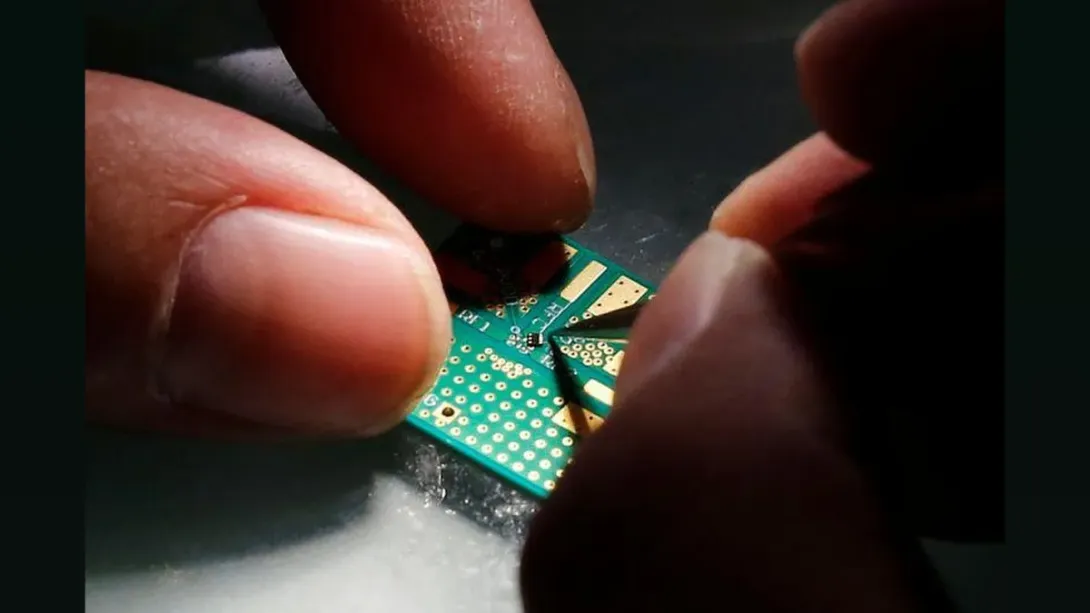
India’s ambition to emerge as a global semiconductor hub gained renewed emphasis as Prime Minister Narendra Modi highlighted the strategic importance of domestically manufactured chips. Framing semiconductors as the backbone of modern economies, the government has positioned self-reliance in chip production as critical to national security, economic resilience, and technological sovereignty. The push aligns with India’s broader manufacturing and innovation agenda, aimed at reducing import dependence while integrating the country into global value chains. As demand for chips accelerates across industries, the focus on indigenous capability marks a pivotal shift in India’s industrial policy.
Semiconductors at the Core of Economic Strategy
Semiconductors have moved from being a niche industrial input to a strategic asset underpinning everything from smartphones and electric vehicles to defense systems and artificial intelligence. Prime Minister Modi has underscored that domestic chip manufacturing is no longer optional but essential for sustaining growth in a digital-first economy.
India currently relies heavily on imports to meet semiconductor demand, a vulnerability exposed by recent global supply disruptions. The government’s renewed emphasis signals a long-term effort to insulate the economy from external shocks.
Policy Push for Domestic Manufacturing
The government has rolled out a series of policy measures to attract global and domestic players into semiconductor fabrication, assembly, testing, and packaging. Incentive-linked schemes, infrastructure support, and regulatory facilitation are central to this approach, designed to offset the high capital costs associated with chip manufacturing.
By encouraging technology partnerships and fostering an ecosystem of suppliers, India aims to move beyond design and software strengths into large-scale hardware production.
Strategic and Geopolitical Dimensions
Beyond economics, semiconductors carry significant geopolitical weight. Global competition over chip supply chains has intensified, prompting countries to localize production and secure critical technologies. India’s push for self-reliance reflects this shifting landscape, positioning the country as a trusted manufacturing partner in a diversifying global supply network.
Analysts note that a domestic semiconductor base could strengthen India’s negotiating position in trade and technology alliances.
Challenges on the Road Ahead
Despite policy momentum, building a competitive semiconductor ecosystem remains complex. Fabrication plants require advanced technology, skilled talent, reliable power, and water infrastructure. Industry experts caution that execution, timelines, and sustained policy consistency will be as important as financial incentives.
Developing ancillary industries and a deep talent pipeline will be critical to ensuring long-term viability.
A Long-Term Bet on Technological Sovereignty
The focus on made-in-India chips reflects a broader vision of technological sovereignty—where India not only consumes advanced technology but also produces it at scale. While results will take time, the renewed emphasis from the highest levels of government sends a clear signal to investors and industry players.
If successfully executed, India’s semiconductor push could redefine its role in the global technology economy, transforming the country from a downstream user into a strategic producer.
Comments