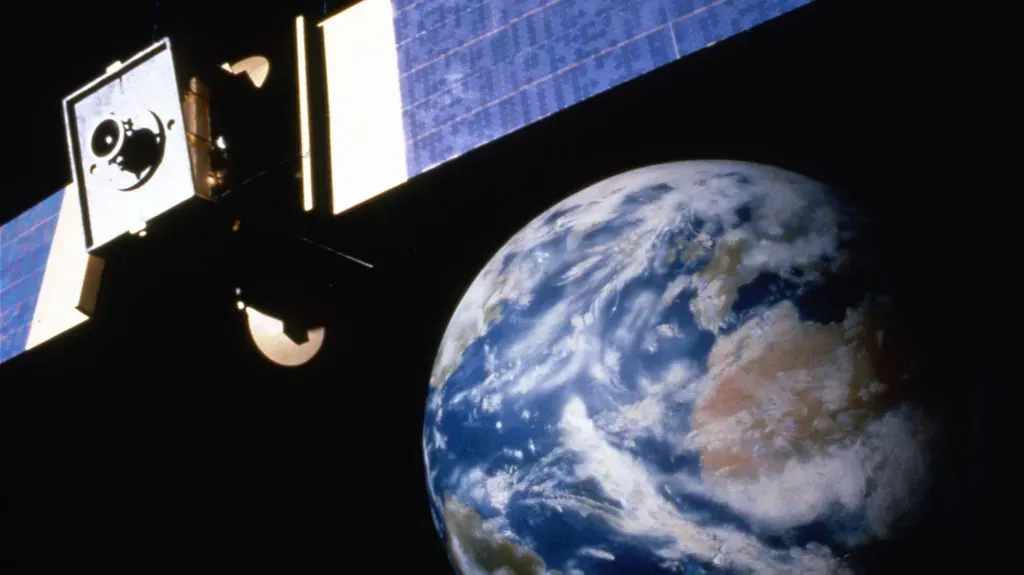
A new scientific model developed by researchers at the University of Manchester has raised fresh concerns about the growing risk of satellite collisions in Earth’s orbit. The study highlights how rapid satellite deployment, particularly in low Earth orbit, is increasing congestion and the probability of cascading collisions that could disrupt global communications and navigation systems. Analysts say the findings underscore an urgent need for stronger space governance, better tracking technologies, and coordinated international rules to protect the orbital economy that underpins modern finance, defense, and digital infrastructure.
A Crowded Orbital Environment
The model illustrates how Earth’s orbit is becoming increasingly congested as governments and private companies launch thousands of satellites. Once considered vast and forgiving, orbital space is now a finite economic resource, with satellites operating in tightly packed corridors where even minor miscalculations can prove catastrophic.
Collision Risk and the Domino Effect
According to the research, a single collision can generate thousands of debris fragments, each capable of triggering further impacts—a phenomenon often described as a collision cascade. Such a scenario could render key orbital zones unusable for years, jeopardizing investments worth billions of rupees and disrupting services ranging from broadband connectivity to weather forecasting.
Economic and Strategic Implications
Satellites support critical sectors including banking networks, aviation, logistics, and defense. Any prolonged disruption would carry serious financial consequences, increasing insurance costs and deterring future investment in space-based infrastructure. The study frames orbital safety not just as a scientific issue, but as a matter of economic resilience.
The Case for Regulation and Innovation
Researchers argue that improved debris tracking, mandatory end-of-life disposal for satellites, and shared international standards are essential. Without coordinated action, the orbital commons risks becoming a high-cost bottleneck—one that could slow innovation in an increasingly space-dependent global economy.
Comments