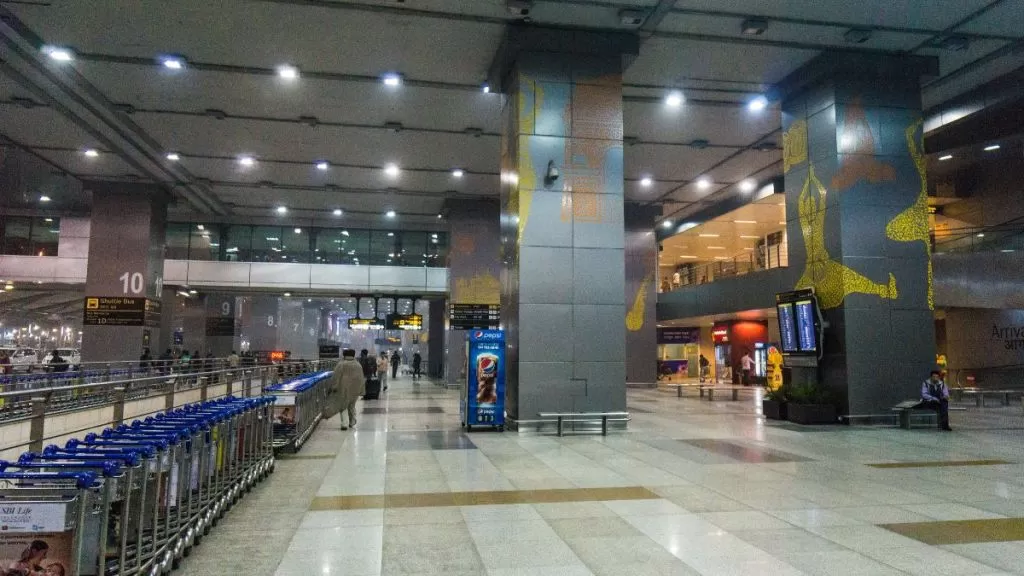
As hostilities surge along the India-Pakistan border, India has taken the extraordinary step of suspending civilian flight operations at 24 airports across its northern and western frontiers. The move follows a coordinated wave of Pakistani drone and missile attacks on Indian territory, including Jammu, Punjab, and Rajasthan. Simultaneously, the Indian military launched retaliatory operations under “Operation Sindoor,” targeting terrorist infrastructure in Pakistan and Pakistan-occupied Kashmir. A complete airspace lockdown, accompanied by blackouts and enhanced aviation security protocols, underscores the gravity of the geopolitical crisis and its broader implications for national defense and regional economic stability.
Nationwide Airspace Clampdown: A Strategic Shield
In a decisive response to rising cross-border aggression, India’s Civil Aviation Ministry on Thursday ordered the suspension of civilian operations at 24 airports. The affected airports, spanning Jammu & Kashmir, Himachal Pradesh, Punjab, Rajasthan, and Gujarat, include major transit points such as Srinagar, Chandigarh, Jammu, Amritsar, Leh, and Jodhpur.
This unprecedented measure is part of “Operation Sindoor,” a coordinated military and homeland security effort aimed at neutralizing the threat of further strikes following the deadly terror attack in Pahalgam last month, which claimed 26 lives. The airspace restrictions reflect both immediate tactical defense measures and a long-term realignment of air mobility policy in conflict-sensitive zones.
The Trigger: A Coordinated Aerial Barrage
Tensions flared anew on Wednesday night when Pakistan launched a multi-pronged aerial assault using drones and missiles targeting towns across Jammu, Punjab, and Rajasthan. Civilians reported visual sightings of missile trails and heard multiple explosions across northern India. A full blackout was initiated in key cities, including Jammu, where panic spread amid the audible blasts.
Former Jammu and Kashmir Police Chief Shesh Paul Vaid described the scene vividly: “Complete blackout in Jammu. Loud explosions — bombing, shelling, or missile strikes suspected... fret not — Mata Vishnu Devi is with us, and so are valiant Indian Armed Forces.”
The attacks prompted India's armed forces to initiate retaliatory operations, striking militant bases across the border in Pakistan and Pakistan-occupied Kashmir. This robust response aims to dismantle the infrastructure that enables such terrorist incursions.
Full Security Protocols: Civil Aviation Under Lockdown
To prevent any exploitation of civil aviation infrastructure, the Bureau of Civil Aviation Security (BCAS) issued a sweeping advisory aimed at tightening air travel security. The directive bans visitors from entering airport terminals and mandates Secondary Ladder Point Checking (SLPC) for all flights nationwide.
In addition, heightened vigilance has been extended to all civil aviation assets—airports, airstrips, helipads, flying schools, and aviation training centers—regardless of their location. The advisory reflects the Ministry’s resolve to shield national airspace from both external threats and internal sabotage during this critical period.
“In view of the recent attack in Pahalgam and subsequent surcharged security scenario, it is necessary to enhance security measures at all civil aviation installations,” the BCAS stated in its official notification.
Implications for Business and Stock Markets
While defense-related equities showed signs of upward momentum in Friday’s early trading session, the broader market remained stable—though cautious. Aviation and travel-related stocks were impacted by the temporary closure of key airports. Companies operating in these regions, particularly those in logistics and hospitality, may face short-term disruptions.
However, defense sector firms—especially those involved in aerospace, surveillance, and UAV countermeasure technologies—could benefit from a renewed focus on national security procurement. Market analysts are closely watching developments for signs of policy shifts favoring increased defense expenditure in the upcoming budget cycle.
Conclusion: Airspace as a New Frontline
The closure of nearly two dozen airports in India signals a critical inflection point in South Asian geopolitics. No longer confined to the traditional battlefield, conflict now straddles digital networks, urban centers, and air corridors. The swift and comprehensive lockdown of civil aviation demonstrates India’s readiness to defend not just its borders but also its skies.
As airspace becomes a contested domain, both strategically and symbolically, policymakers and market participants alike must adapt to a rapidly shifting security landscape—one where preparedness, resilience, and real-time coordination are paramount.
Comments