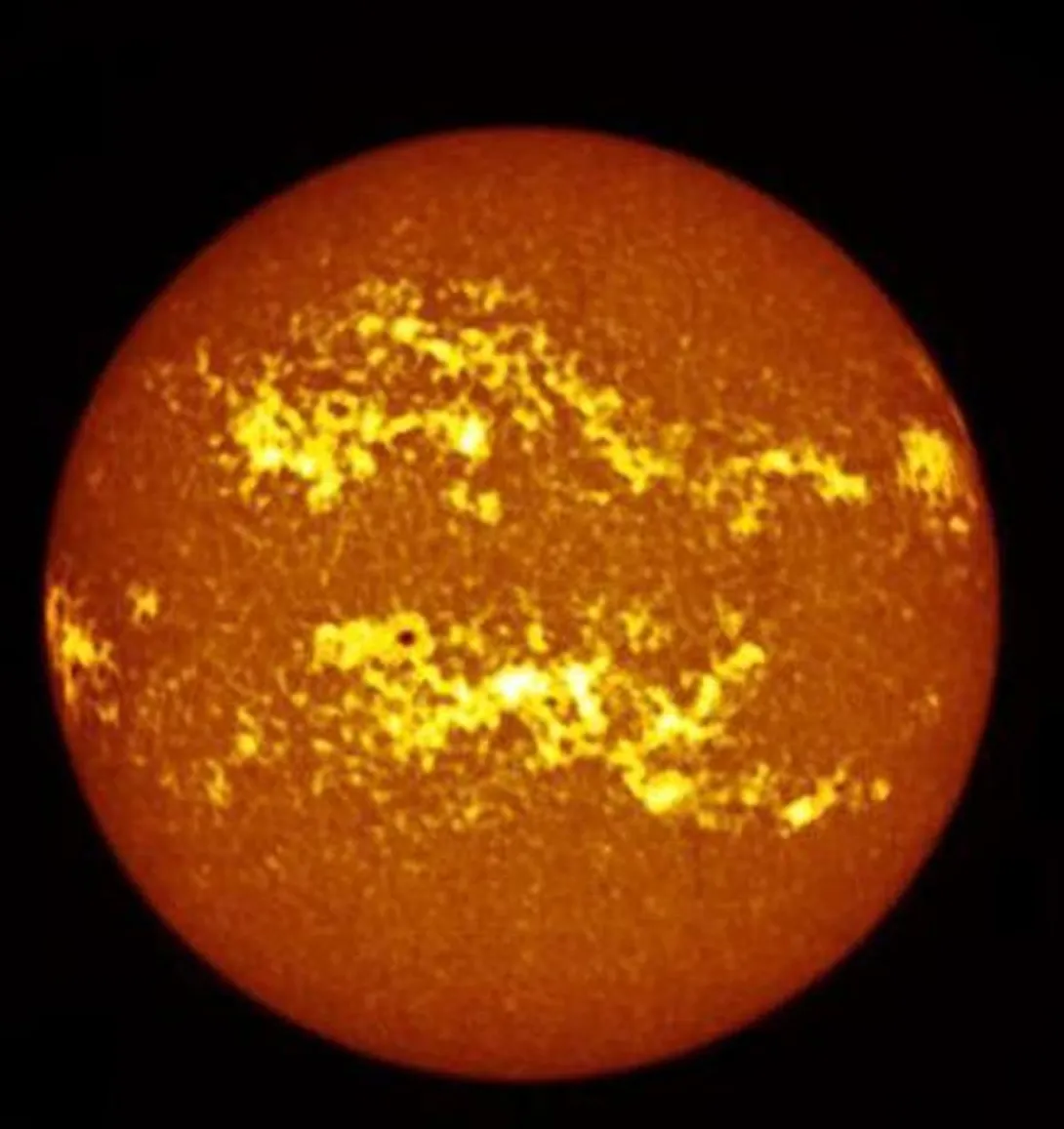
Rising solar activity has renewed attention on geomagnetic disturbances, with scientists closely tracking their potential impact on Earth’s technological infrastructure. Data from India’s Aditya-L1 solar observatory is now playing a growing role in improving early warnings and scientific understanding of solar storms. These space weather events, driven by eruptions on the Sun’s surface, can disrupt satellites, navigation systems and power grids if left unmonitored. As solar cycles intensify, the convergence of advanced observation and timely forecasting is becoming critical—not only for space agencies, but also for economies increasingly dependent on uninterrupted digital and energy networks.
Understanding Geomagnetic Disturbances
Geomagnetic disturbances occur when charged particles released during solar storms interact with Earth’s magnetic field. While mild events may only produce visual phenomena such as auroras, stronger disturbances can interfere with satellite communications, aviation routes and electricity transmission systems.
With global dependence on space-based infrastructure growing, these disturbances are no longer viewed as rare scientific curiosities but as material operational risks.
Role of Aditya-L1 in Solar Monitoring
India’s Aditya-L1 mission has been positioned to observe the Sun continuously, offering scientists near-real-time data on solar flares, coronal mass ejections and radiation output. This vantage point allows researchers to assess the intensity and trajectory of solar storms before they reach Earth.
Officials from Indian Space Research Organisation have indicated that such observations significantly enhance predictive capabilities, enabling earlier alerts and mitigation planning.
Economic and Technological Implications
From a financial perspective, severe solar storms carry measurable risk. Disruptions to satellite-based services can affect telecommunications, banking transactions, logistics tracking and weather forecasting. Power grid instability caused by geomagnetic interference can result in costly outages.
Analysts increasingly classify space weather as a low-frequency but high-impact risk, warranting proactive investment in monitoring and resilience.
Global Collaboration on Space Weather
Solar storms do not respect national boundaries, making international cooperation essential. Data-sharing agreements and coordinated forecasting among space agencies are becoming standard practice. India’s contribution through Aditya-L1 strengthens its role in the global space weather ecosystem.
Such collaboration supports not only scientific advancement but also collective risk management.
Outlook
As the Sun moves toward heightened activity in its current cycle, geomagnetic disturbances are expected to draw sustained attention from policymakers, businesses and scientists alike. With missions like Aditya-L1 enhancing visibility into solar behavior, the focus is shifting from reactive response to anticipatory preparedness—an evolution that reflects the growing economic stakes of space weather in a connected world.
Comments