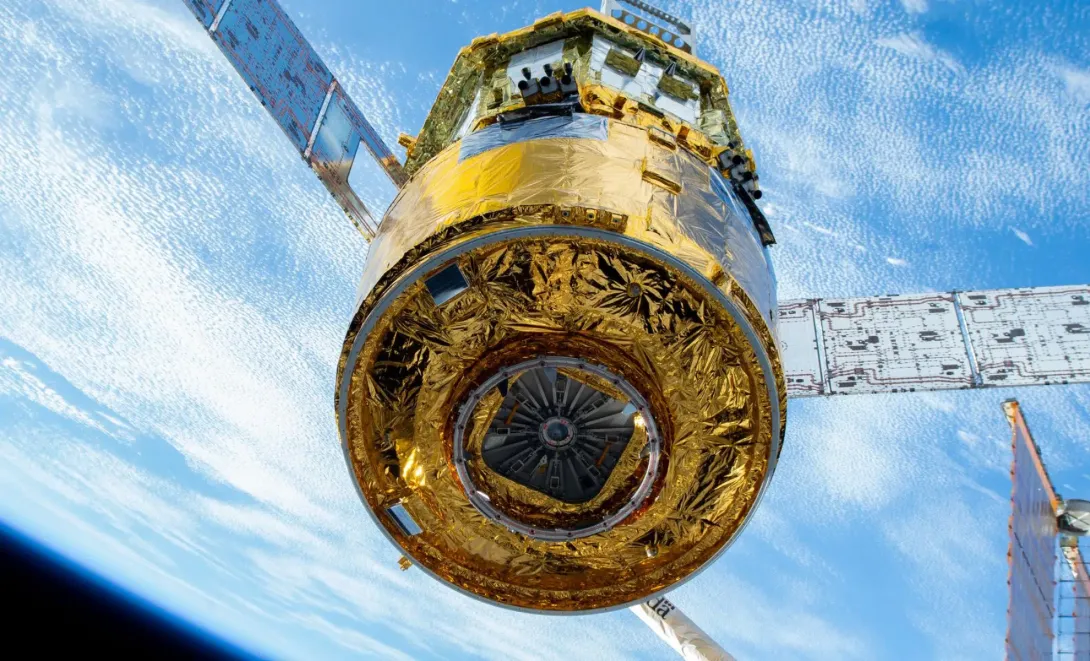
The Japanese cargo spacecraft HTV-X1 is scheduled to depart from the International Space Station this week, marking the conclusion of its mission to deliver critical supplies and technological equipment to orbiting astronauts. Developed by Japan Aerospace Exploration Agency (JAXA), the spacecraft represents the next generation of Japan’s space logistics program. The mission has played an important role in transporting scientific instruments, maintenance equipment, and essential cargo to support operations aboard the space station. Its departure signals another milestone in international space collaboration and highlights the continuing evolution of advanced spacecraft designed to sustain long-term space exploration.
A Milestone Mission in Space Logistics
The advanced Japanese cargo spacecraft HTV-X1 is preparing to leave the International Space Station after completing a successful resupply mission.
Developed by the Japan Aerospace Exploration Agency, the HTV-X1 represents a major upgrade to Japan’s long-standing cargo transportation systems used to support orbital missions. The spacecraft delivered a range of supplies essential for maintaining daily operations aboard the station.
Cargo missions of this nature are critical to the sustainability of long-term human presence in orbit, ensuring astronauts have access to food, equipment, and scientific tools necessary for ongoing research.
Advancing Japan’s Next-Generation Cargo Technology
The HTV-X1 forms part of Japan’s new generation of space logistics vehicles designed to enhance efficiency and reliability in cargo transport.
Compared with earlier models, the upgraded spacecraft incorporates improved payload capacity, advanced avionics systems, and more efficient operational capabilities. These improvements enable the spacecraft to carry a wider range of materials while supporting more complex scientific missions aboard the International Space Station.
Engineers at the Japan Aerospace Exploration Agency developed the HTV-X series to meet evolving requirements as space agencies increasingly focus on extended missions and deeper exploration initiatives.
Supporting Scientific Research in Orbit
One of the primary objectives of the HTV-X1 mission was to transport research equipment and experimental materials used in microgravity studies. The International Space Station serves as a unique laboratory where scientists conduct experiments that cannot be replicated on Earth.
Research carried out aboard the station spans multiple disciplines, including biotechnology, materials science, and space medicine. Cargo spacecraft such as HTV-X1 play a crucial logistical role by delivering instruments, replacement parts, and experimental modules required for these studies.
The successful delivery and eventual departure of the spacecraft illustrate the complex supply chain that underpins orbital research activities.
International Collaboration in Space Exploration
The mission also highlights the global nature of modern space exploration. The International Space Station is a collaborative project involving multiple space agencies, including Japan Aerospace Exploration Agency, NASA, the European Space Agency, and other international partners.
Each participating organization contributes technology, resources, and operational expertise to maintain the station and support its scientific mission. Cargo spacecraft from different countries regularly deliver supplies, demonstrating the cooperative framework that defines the ISS program.
Japan’s HTV series has been a reliable component of this international logistics network for many years.
Looking Ahead to Future Space Missions
As the HTV-X1 prepares to depart the International Space Station, attention is already shifting toward future missions within the HTV-X program.
The next-generation cargo vehicles are expected to play an increasingly important role in supporting not only ISS operations but also potential future space infrastructure, including lunar missions and deep-space exploration initiatives.
For the Japan Aerospace Exploration Agency, the success of the HTV-X1 mission reinforces Japan’s growing contribution to global space logistics and technological innovation. As space agencies worldwide expand their ambitions beyond low Earth orbit, reliable cargo transportation systems will remain a cornerstone of sustainable human activity in space.
Comments