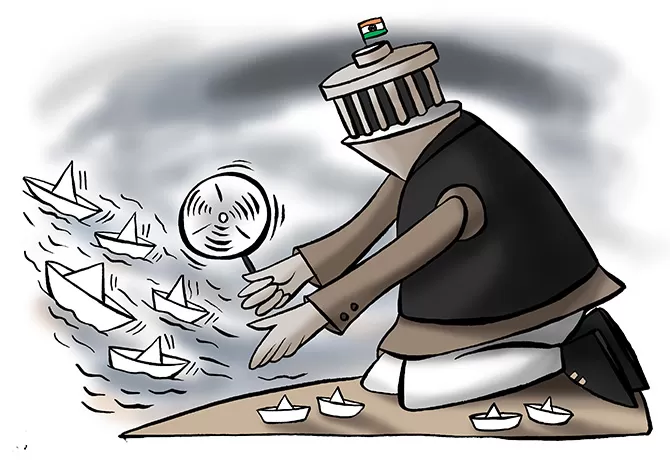
India is accelerating its global trade facilitation strategy by signing Mutual Recognition Agreements (MRAs) with customs authorities worldwide, aiming to simplify cross-border procedures for trusted businesses. Having formalized MRAs with nine nations—including the U.S., Russia, and South Korea—the country now targets ten additional agreements by December 2025. These pacts are built on the Authorized Economic Operator (AEO) framework, a World Customs Organization initiative that fosters trade efficiency and security. With over 5,900 AEO-certified entities in India, the program is reshaping the nation's global trade integration, especially as it eyes stronger ties with Russia and other key economies.
India’s Strategic Push for Trade Facilitation
In a significant policy move aimed at boosting international commerce, India has deepened its commitment to streamlining cross-border logistics through a growing network of customs MRAs. These agreements, signed on a reciprocal basis, recognize and reward the credibility of AEO-certified businesses by enabling faster, more secure customs clearances across participating countries.
Speaking at the “First India-Russia AEO Seminar” hosted in collaboration with the Federation of Indian Export Organisations (FIEO), Akhil Kumar Khatri, Principal Commissioner at the Directorate of International Customs (DIC), revealed that India has already signed MRAs with nine nations and is on course to finalize ten more before year-end.
AEO: Strengthening the Global Supply Chain
The Mutual Recognition Agreements are grounded in the principles of the Authorized Economic Operator (AEO) program—a globally recognized trade facilitation initiative under the World Customs Organization (WCO). India’s AEO framework, launched in 2011 and administered by the Central Board of Indirect Taxes and Customs (CBIC), grants expedited customs benefits to businesses that demonstrate compliance, security, and reliability in supply chain operations.
The program covers a wide spectrum of stakeholders, including importers, exporters, logistics providers, customs brokers, warehouse operators, and custodians. As of December 31, 2024, India has accredited 5,947 AEO-certified entities under a structured three-tier classification system, with a fourth tier for logistical operators.
These certifications not only bolster cargo security but also reduce time and costs associated with trade, providing businesses with a tangible competitive edge in global markets.
MRAs in Force: Key Partners and New Horizons
India's current roster of MRA partners includes major global economies such as the United States, Russia, the United Arab Emirates, South Korea, Australia, Hong Kong, and Taiwan. The bilateral nature of these agreements ensures mutual recognition of customs procedures, paving the way for seamless cross-border operations.
Notably, the MRA with Russia’s Federal Customs Service, signed last year, is already fostering smoother trade between the two nations. The agreement grants reciprocal benefits to accredited exporters and importers in both countries, enabling prioritized customs clearance and reduced documentation.
Looking ahead, India is actively pursuing MRAs with a diverse mix of countries and regional blocs, including Japan, Singapore, the United Kingdom, South Africa, New Zealand, Bahrain, Uganda, Belarus, the East African Community, and the BRICS alliance.
India-Russia Trade Relations: An Emerging Growth Corridor
India's MRA with Russia gains particular significance against the backdrop of expanding Indo-Russian trade, which is currently valued at USD 11 billion. Key sectors include petroleum, gold, automotive components, pharmaceuticals, and industrial chemicals. The new customs arrangement is expected to further reduce friction in bilateral commerce, encouraging more Indian exports to flow toward Russian markets.
S C Ralhan, President of FIEO, emphasized the opportunity to “make the trade balance more equitable” by boosting outbound shipments from India. He noted that the AEO framework is a catalyst for trust-based, frictionless global trade, and lauded its role in unlocking synergies with new partners.
Implications for Indian Exporters and Investors
For Indian exporters, the MRA expansions present a meaningful opportunity to enhance market access, improve delivery timelines, and reduce operational overheads. These agreements signal to international buyers and partners that India is a compliant and secure trade hub.
Additionally, with global supply chains undergoing realignment, India’s proactive MRA strategy positions it as a reliable partner for just-in-time manufacturing and logistics. For investors, this also translates into increased confidence in India’s trade ecosystem, potentially spurring foreign direct investment into export-oriented sectors.
Conclusion: Building a New Trade Architecture
India's expanding MRA network underscores a strategic vision to embed itself deeper into global supply chains by fostering transparency, efficiency, and mutual trust. The alignment with WCO’s AEO framework signals India’s commitment to international norms while customizing trade solutions to its economic strengths. As the country moves to finalize MRAs with ten more economies by the end of 2025, the implications for trade, investment, and economic diplomacy are both far-reaching and transformative.
The message is clear: in a multipolar world with shifting trade dynamics, India is not just participating—it’s helping write the rules.
Comments