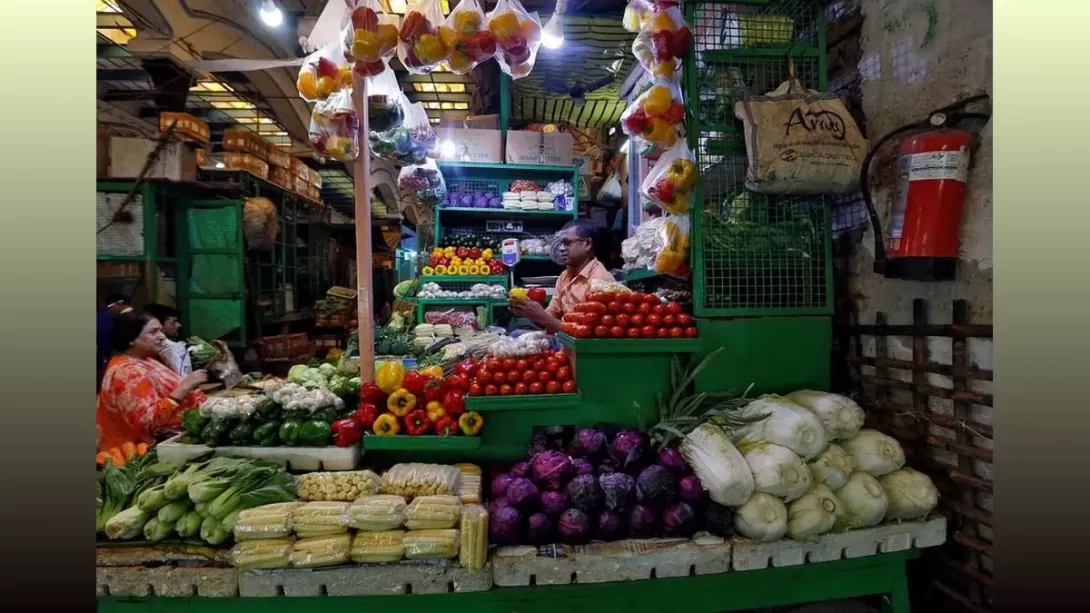
India’s retail inflation cooled to 3.16% in April 2025, marking its lowest level in nearly six years, as prices of essential food items such as vegetables, pulses, and fruits fell sharply. This sharp moderation in inflation, from 3.34% in March and 4.83% a year ago, reinforces the Reserve Bank of India’s monetary comfort and gives policymakers greater room to maneuver. With food inflation dropping to just 1.78%, well below last year's 8.7%, the macroeconomic environment appears increasingly stable. The RBI, targeting 4% inflation with a 2% margin, has already responded with two rate cuts totaling 50 basis points.
Inflation Hits Multi-Year Low Amid Softer Food Prices
Retail inflation, as measured by the Consumer Price Index (CPI), declined to 3.16% in April—its lowest level since July 2019, when it stood at 3.15%. The drop reflects easing cost pressures across several food categories, particularly vegetables, fruits, and pulses. This deceleration in price growth follows a steady decline observed over recent months, with March CPI inflation at 3.34%.
Food inflation, a major component of the overall CPI basket, fell to 1.78% in April. This is not only down from 2.69% in March, but also represents a dramatic decline from the 8.7% food inflation recorded in April 2024. The data signals a sharp correction in agricultural commodity prices, likely due to favorable weather patterns and improved supply chain efficiency.
Policy Implications for the Reserve Bank of India
The continued moderation in inflation is squarely within the Reserve Bank of India's comfort zone. The central bank operates under a flexible inflation targeting framework, aiming to keep headline CPI around 4%, with a tolerance band of 2 percentage points on either side. With April’s data reflecting a stable price environment, the RBI's policy stance is likely to remain growth-supportive in the near term.
In response to improving inflation dynamics, the RBI has already enacted two rate cuts totaling 50 basis points in recent months. These moves suggest the central bank is aligning monetary policy to bolster economic activity while remaining vigilant of future price risks.
Looking ahead, the RBI has projected CPI inflation for FY2025–26 at 4.0%, broken down as follows: 3.6% in Q1, 3.9% in Q2, 3.8% in Q3, and 4.4% in Q4. This forecast reflects a relatively stable trajectory, with minor volatility anticipated in the final quarter.
Economic Outlook and Market Sentiment
The steep decline in inflation supports a broader narrative of macroeconomic stability, potentially improving market sentiment. A benign inflation environment tends to be favorable for consumer purchasing power, corporate earnings, and investment sentiment, all of which are critical for sustaining economic momentum.
Market participants may interpret this data as a positive signal for interest-rate-sensitive sectors such as banking, housing, and automobiles. In particular, the expectation of continued accommodative monetary policy could catalyze credit growth and capital expenditure by businesses.
However, some caution is warranted. While the April numbers are encouraging, external shocks—such as global energy price fluctuations or supply disruptions—could influence the inflation outlook in coming months. Moreover, demand-side inflationary pressures could resurface if economic activity accelerates sharply in the latter half of the fiscal year.
Conclusion: Room to Breathe, But Vigilance Needed
India’s latest inflation data provides much-needed breathing space for the Reserve Bank and strengthens the case for a continued pro-growth monetary policy. As prices cool, policymakers gain additional flexibility to nurture the economic recovery without the immediate threat of runaway inflation. That said, continued vigilance will be essential to ensure that inflation remains anchored, particularly in a dynamic global economic landscape. For now, the April figures offer a welcome reprieve and a foundation for cautious optimism in the quarters ahead.
Comments