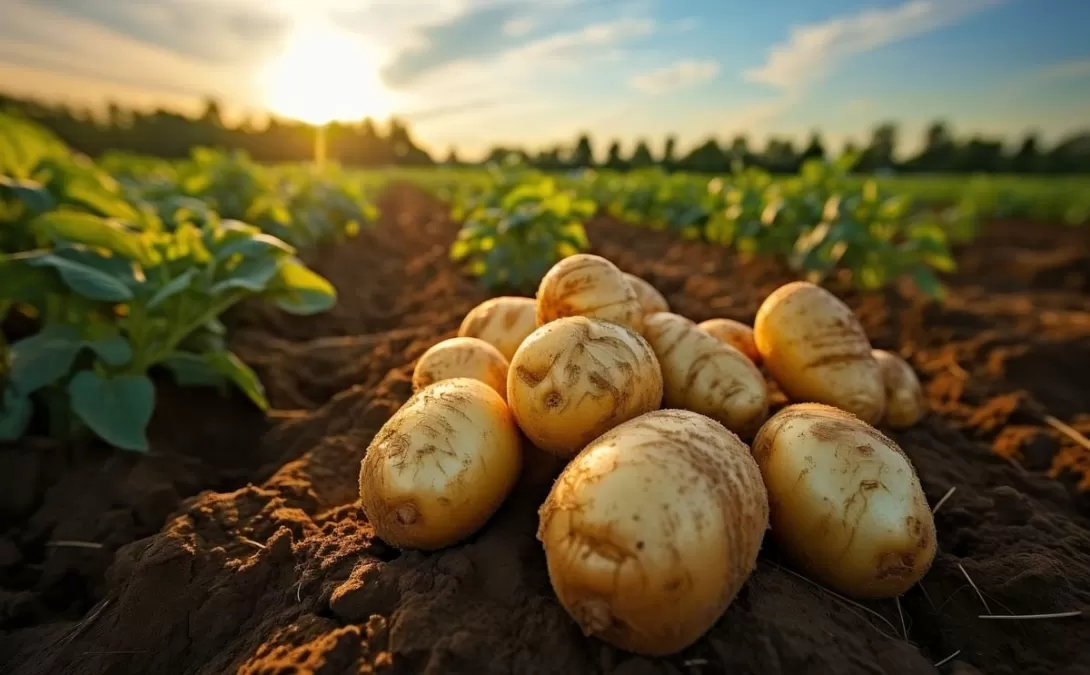
Uttar Pradesh is set to become a leading center for advanced potato research and value-added production with the establishment of the International Potato Research Centre in Agra and Centres of Excellence in Saharanpur and Kushinagar. These initiatives are poised to revolutionize the state’s potato industry, which already contributes over 35% of India’s total potato yield. With cutting-edge research, improved seed varieties, and modern farming techniques, Uttar Pradesh is positioning itself as the key player in the country’s potato sector. However, challenges remain, including the need for region-specific research and access to high-quality seeds during the sowing season.
Strategic Vision for Potato Research and Development
The Uttar Pradesh government has launched an ambitious plan to elevate the state's role in advanced potato research and value-added production. The initiative is anchored in the creation of the International Potato Research Centre in Agra, coupled with the development of Centres of Excellence in Saharanpur and Kushinagar. These centers are aimed at boosting the state’s potato output while addressing challenges faced by farmers, such as lack of high-quality seed varieties and delayed access to research.
This bold step will strengthen Uttar Pradesh’s position as a key player in India’s potato industry, particularly as the state leads the nation in production. Uttar Pradesh’s contribution exceeds 35% of India’s total potato yield, surpassing the national average productivity of 23-25 tonnes per hectare. However, despite this significant output, the state has faced difficulties with region-specific research that aligns with the agro-climatic conditions unique to Uttar Pradesh.
Addressing the Seed Shortage and Research Gaps
A critical issue faced by potato farmers in Uttar Pradesh has been the shortage of high-quality seed varieties during the sowing season. Due to this scarcity, many farmers are forced to reuse stored potatoes from the previous harvest, which affects both the quality of the crop and the yield. The government’s strategy aims to alleviate this long-standing problem by providing farmers with access to cutting-edge research and improved seed varieties through the new research centers. The International Potato Research Centre in Agra will provide crucial resources for developing potato varieties suited to the region’s climatic conditions, thus improving overall yields and income for farmers. Additionally, the centers will help address issues with seed availability, ensuring that farmers can access the appropriate varieties in a timely manner.
Benefiting Farmers: Heat-Resistant and High-Yield Varieties
One of the most anticipated outcomes of these initiatives is the introduction of heat-resistant potato varieties that can thrive in shorter growing seasons. This is especially crucial for regions that experience extreme temperatures, which can negatively impact potato production. For example, varieties like Kufri Neelkanth, which has lower sugar content, and Kufri Shaurya, known for its heat tolerance, are in high demand but face challenges due to limited seed availability.
According to SP Singh, a senior vegetable scientist at the Krishi Vigyan Kendra in Gorakhpur, these research centers will play a pivotal role in educating farmers about the advantages of such heat-resistant varieties. The goal is not only to improve the yield but also to align the production with market demand, which could lead to a substantial increase in farmer income. Singh emphasized that by providing locally available seeds during the sowing season, the research institutes would enable farmers to plant varieties that are both climatically suited and economically viable, thereby directly contributing to the sustainable growth of the potato industry.
Geographic Focus: Western Uttar Pradesh's Role
The initiative’s focus will be on the regions of western Uttar Pradesh, which contribute 75% of the state’s total potato production. The key districts in this area—Meerut, Aligarh, Agra, Kanpur, Moradabad, and Bareilly—are vital to the state’s potato economy, with Agra serving as the core of the potato-producing belt. In particular, districts such as Firozabad, Hathras, Kannauj, Farrukhabad, Etawah, Mathura, Mainpuri, and Badaun play an instrumental role in the state’s overall yield. By focusing on these regions, the Uttar Pradesh government aims to bolster production and enhance the state’s agricultural output through targeted research and innovative farming practices.
The Road Ahead: Impact on India's Potato Industry
With these new research initiatives, Uttar Pradesh is not only poised to increase its potato output but also to become a global hub for advanced potato research and value-added production. The creation of specialized research centers in Agra, Saharanpur, and Kushinagar marks a turning point for potato farming in the state, ensuring that farmers are equipped with the tools necessary to address both climatic challenges and market demands. The ultimate goal is to elevate Uttar Pradesh’s role in the national and global agricultural markets by improving potato quality, increasing sustainability, and enhancing farmer livelihoods. These efforts are expected to make a lasting impact on the potato supply chain and solidify Uttar Pradesh’s leadership in India’s potato industry.
Comments