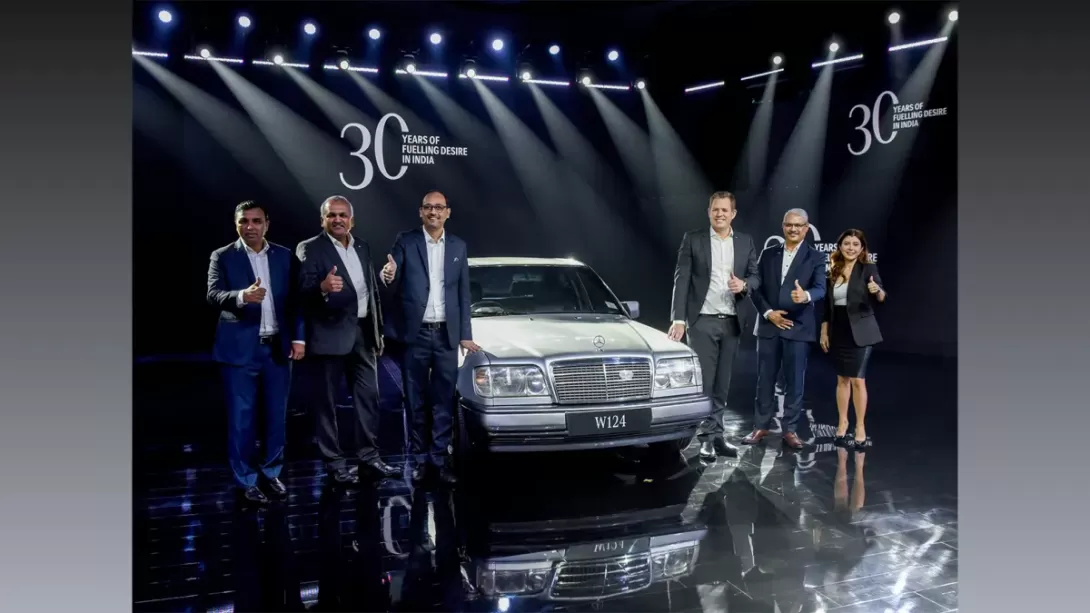
Mercedes-Benz India, the country’s leading luxury automobile manufacturer, is set to implement a two-phase price increase across its vehicle lineup, citing adverse currency fluctuations and rising operational costs. The adjustment, which ranges from Rs. 90,000 to Rs. 12.2 lakh depending on the model, will be rolled out in June and September 2025. The decision comes as the Euro has weakened significantly against the Indian rupee, intensifying import-related cost pressures. While the company has absorbed much of the forex impact thus far, this measured price revision aims to balance financial sustainability with consumer affordability.
Currency Fluctuations Prompt Strategic Price Adjustment
Over the past several months, the Indian rupee has experienced a pronounced depreciation against the Euro, with the exchange rate falling by approximately 10% since January 2025. For a company like Mercedes-Benz India, which relies heavily on imported components and completely built units (CBUs), this currency swing has dramatically increased operational expenses.
In response, the automaker will raise ex-showroom prices by roughly 3% in total, executed through two phases—a 1–2% increase from June 1, followed by another 1.5% hike from September 1. These adjustments are intended to partially offset the mounting financial strain without transferring the full burden onto consumers in a single blow.
Impact Across Model Range: From C-Class to Maybach
The new pricing structure will affect most of Mercedes-Benz India’s model portfolio. The entry-level C-Class will see a modest hike of Rs. 90,000, while the ultra-luxurious Mercedes-Maybach S 680 will command an increase of up to Rs. 12.2 lakh. The staggered approach allows customers greater flexibility to time their purchases, potentially locking in more favorable rates before the full revision is in effect.
Santosh Iyer, Managing Director and CEO of Mercedes-Benz India, stated that the company has “absorbed a significant portion of the forex impact” until now but is compelled to act in the interest of long-term sustainability for both the corporation and its franchise network.
Mitigating Customer Burden Through Financial Flexibility
To cushion the effect of these increases, Mercedes-Benz is leveraging its in-house financial arm, Mercedes-Benz Financial Services (MBFS), to offer tailored financing solutions. These include flexible repayment schemes and value-added finance products designed to help buyers manage the incremental costs without sacrificing purchase timelines or vehicle preference.
“This staggered approach allows customers to better plan their purchases and financing strategies,” said Iyer, emphasizing the importance of providing purchasing flexibility in an inflation-sensitive, premium segment.
Industry-Wide Trend Amid Shared Cost Pressures
Mercedes-Benz is not alone in facing the brunt of global economic volatility. Key rivals have already initiated similar price hikes:
- Audi India has announced a 2% price increase effective May 15, citing the same forex and input cost pressures.
- BMW India implemented a 3% hike across its BMW and MINI range from April 1, with another round of increases having occurred earlier in January.
These adjustments reflect a broader trend across the luxury automotive industry in India, as foreign manufacturers recalibrate to cope with macroeconomic headwinds while trying to preserve their competitive edge and brand integrity.
Sustainability, Localization, and Long-Term Resilience
Mercedes-Benz India reaffirmed its commitment to localization initiatives, which aim to reduce dependency on imported parts and partially shield the company from currency risk in the long term. However, for high-end models and CBUs—especially those that rely on sophisticated, precision-engineered components—the reliance on global supply chains remains substantial.
While the price revision may seem steep to some consumers, industry analysts note that it represents a calculated and necessary step to ensure the continued availability and quality of premium vehicles in India’s growing luxury auto segment.
Conclusion: Balancing Cost Efficiency with Customer Loyalty
Mercedes-Benz India’s two-stage price hike is a well-considered move in a complex economic landscape. By spacing out the increases and offering flexible financing options, the company has demonstrated a nuanced understanding of both macroeconomic realities and customer expectations.
As global market volatility continues to affect production costs, and with the Euro remaining under pressure, consumers can expect further recalibrations across the automotive sector. For now, early buyers of Mercedes-Benz vehicles have a window of opportunity to make their purchase before the full impact of these changes sets in.
Comments