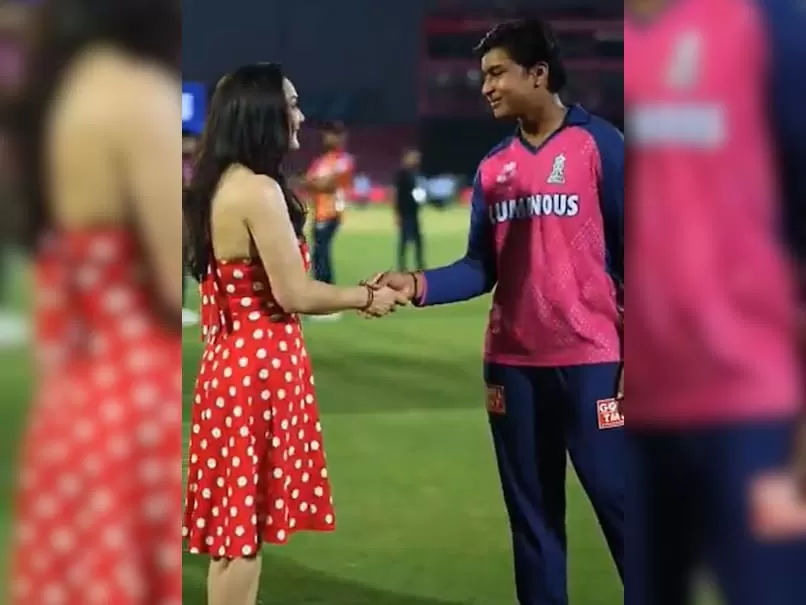
Bollywood actor and Punjab Kings co-owner Preity Zinta has forcefully denounced the circulation of a digitally altered photograph falsely depicting her hugging 14-year-old cricketer Vaibhav Suryavanshi. The morphed image, which gained traction across social media and was even aired by certain news outlets, originated after an innocent post-match interaction between Zinta and the young player. Deeply dismayed, Zinta condemned the dissemination of the fake image and called out media platforms for failing to verify content. Her reaction underscores broader concerns around digital misinformation, media accountability, and the reputational harm that can arise from manipulated content.
Digital Manipulation and the Cost of False Narratives
In an era where misinformation can spread faster than truth, the recent incident involving Preity Zinta and a morphed photograph of her with Rajasthan Royals' young player Vaibhav Suryavanshi highlights the darker side of social media virality. The manipulated image, which falsely depicted an intimate gesture, was fabricated from a video clip originally shared by Rajasthan Royals on X (formerly Twitter).
The actual footage captured a cordial post-match moment: Zinta, having interacted with senior players Yashasvi Jaiswal and Shashank Singh, approached Suryavanshi, greeted him with a handshake, and exchanged a few kind words. However, this benign interaction was hijacked by digital distortion, leading to the spread of an altered image that was not only deceptive but also damaging.
Zinta's Outrage and Media Responsibility
Responding swiftly, Zinta took to both Instagram and X to clarify the matter and publicly condemn the spread of disinformation. “This is a morphed image and fake news,” she posted, while also expressing disbelief at the role of news broadcasters in propagating the falsehood. She shared screenshots of regional news channels that had irresponsibly aired the doctored image as genuine, calling the entire situation “disgusting.”
“I am so shocked that people can stoop so low to spread lies,” Zinta remarked. “It’s disgusting how a simple gesture is being misrepresented. I expect better from media outlets.”
Her frustration raises serious concerns about journalistic standards in the age of social media. When even established news outlets forgo basic verification in pursuit of sensational content, public trust in the media ecosystem begins to erode.
The Broader Implications: Misinformation in the Age of AI
This episode is not merely a celebrity scandal—it is a case study in how quickly reputations can be jeopardized in the digital era. The ease with which photos and videos can be manipulated using generative tools means public figures, especially women, are increasingly vulnerable to online harassment and reputational attacks.
Moreover, the involvement of news channels—institutions ostensibly built on credibility—exacerbates the issue. Their failure to vet content before broadcasting it illustrates the urgency for stronger media literacy, ethical journalism practices, and stricter regulatory oversight on misinformation.
A Resilient Comeback Amid Controversy
Despite the social media storm, Zinta remains focused on her professional journey. After a seven-year hiatus from film, she is set to return to the silver screen in Lahore 1947, a period drama directed by Rajkumar Santoshi and produced by Aamir Khan. The film features Sunny Deol in the lead role, alongside veteran actors Shabana Azmi and Ali Fazal. Her last film appearance was in Bhaiaji Superhit (2018).
Her ability to navigate public controversy while preparing for a cinematic comeback reflects both resilience and professional commitment—qualities that continue to define her public persona.
Conclusion: Navigating Truth in the Post-Truth Era
The controversy surrounding the fake photo of Preity Zinta is more than a fleeting news cycle—it is a wake-up call about the state of truth, media integrity, and digital ethics. As technology advances, so too must our collective commitment to accuracy, responsibility, and fairness. Zinta’s candid response serves not only as a defense of her own reputation but also as a clarion call for reform in how content is created, shared, and reported in today's hyperconnected world.
Comments