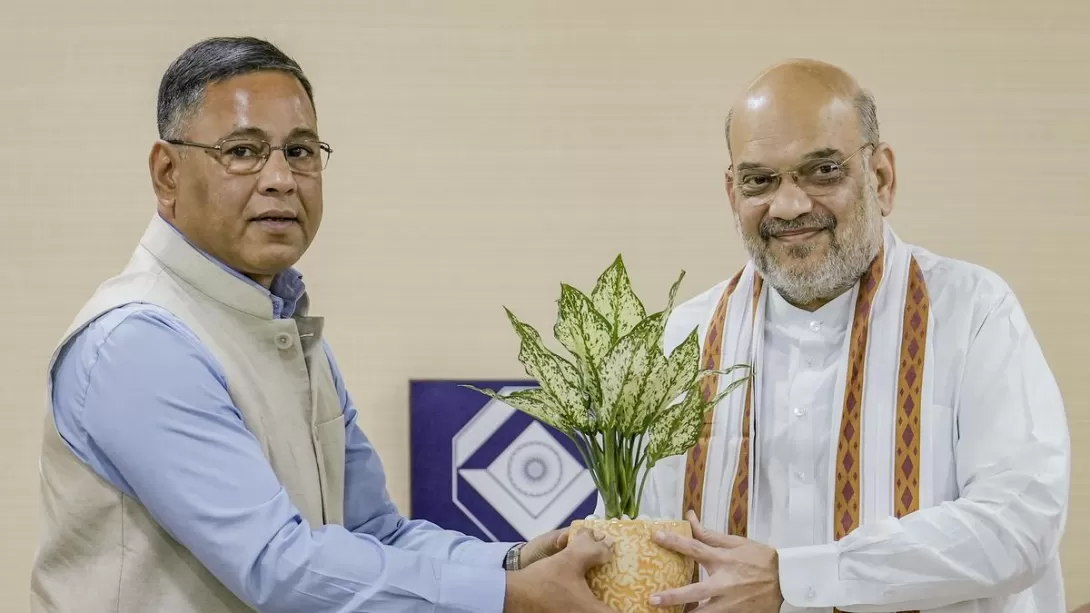
In a strategic move underscoring continuity in India’s internal security apparatus, the government has granted Tapan Kumar Deka, Director of the Intelligence Bureau (IB), a one-year extension in service until June 2026. A 1988-batch IPS officer from the Himachal Pradesh cadre, Deka has played a pivotal role in shaping India’s counter-terrorism strategies, particularly in operations linked to Pakistan and the volatile regions of Kashmir and the northeast. His reappointment not only reflects institutional confidence in his expertise but also signals New Delhi’s resolve to maintain seasoned leadership during a period marked by heightened cross-border tensions and internal security challenges.
Government Reaffirms Confidence in Deka’s Leadership
The Appointments Committee of the Cabinet has officially extended the tenure of Intelligence Bureau Director Tapan Kumar Deka by one year, extending his service until June 2026 or until further orders. This marks the second consecutive extension for Deka, who was initially appointed IB chief in June 2022 for a two-year term. The latest decision was made under the relaxation of provisions in the Fundamental Rules and the All India Services (Death-cum-Retirement Benefits) Rules, 1958—provisions that permit key officials to remain in office beyond the conventional superannuation age of 60, in view of public interest.
The extension comes at a critical juncture for India’s internal security, particularly amid growing concerns over terrorism-related activities and renewed hostilities in sensitive border regions.
A Veteran Strategist in Counter-Terror Operations
With over two decades of experience as the head of the IB’s operations wing, Deka brings a formidable track record to his extended leadership. His operational acumen was most notably demonstrated during the 26/11 Mumbai terror attacks, where he coordinated critical intelligence efforts in real time. He has also led multiple high-stakes missions against the Indian Mujahideen—a now-diminished but once-potent domestic terror group linked to several bombings across Indian cities during the 2000s.
In recent years, Deka has become a central figure in India’s response to terrorism with cross-border linkages, particularly from Pakistan. His leadership has been instrumental in operations such as Operation Sindoor, mounted in the wake of the Pahalgam terror attack—underscoring India’s more assertive counter-response doctrine.
Strategic Relevance Amid Regional Volatility
Deka’s reappointment assumes greater significance in the context of India’s current security landscape. With Kashmir witnessing a resurgence in terrorist activity and the northeast undergoing political and ethnic realignments, the Centre appears intent on prioritizing experience over change at the helm of its primary domestic intelligence agency.
Deka’s longstanding familiarity with the socio-political dynamics of Jammu and Kashmir, Assam, and other northeastern states positions him as a critical asset in the government’s ongoing efforts to manage both insurgency and cross-border infiltration. His role as a crisis strategist in these high-sensitivity zones has earned him the reputation of being the government’s “go-to man” during volatile periods.
Institutional Continuity Over Bureaucratic Rotation
The decision to extend Deka’s term also reflects a broader policy stance where institutional memory and operational continuity are being prioritized over traditional bureaucratic rotation. This is particularly vital in intelligence work, where relationships with ground-level assets, understanding of evolving threats, and institutional knowledge can directly influence national security outcomes.
By opting to keep Deka at the helm, the Centre sends a clear message: stability in the intelligence chain of command is paramount during times of increasing geopolitical uncertainty. The extension further aligns with a pattern of retaining seasoned officers in key roles, as has been seen with other top-level appointments across India’s security architecture.
Conclusion: Strategic Leadership Amid Unfinished Business
Tapan Kumar Deka’s continued stewardship of the Intelligence Bureau is more than a bureaucratic extension—it is a strategic call rooted in India’s pressing security imperatives. His career spans some of the most defining moments in the country’s battle against terrorism, and his ability to navigate complex intelligence terrains makes him an indispensable asset.
As India looks to fortify its internal defenses and recalibrate its counter-terror posture in the face of evolving threats, Deka’s experience, decisiveness, and operational insight will likely remain central to shaping the nation’s security trajectory.
Comments