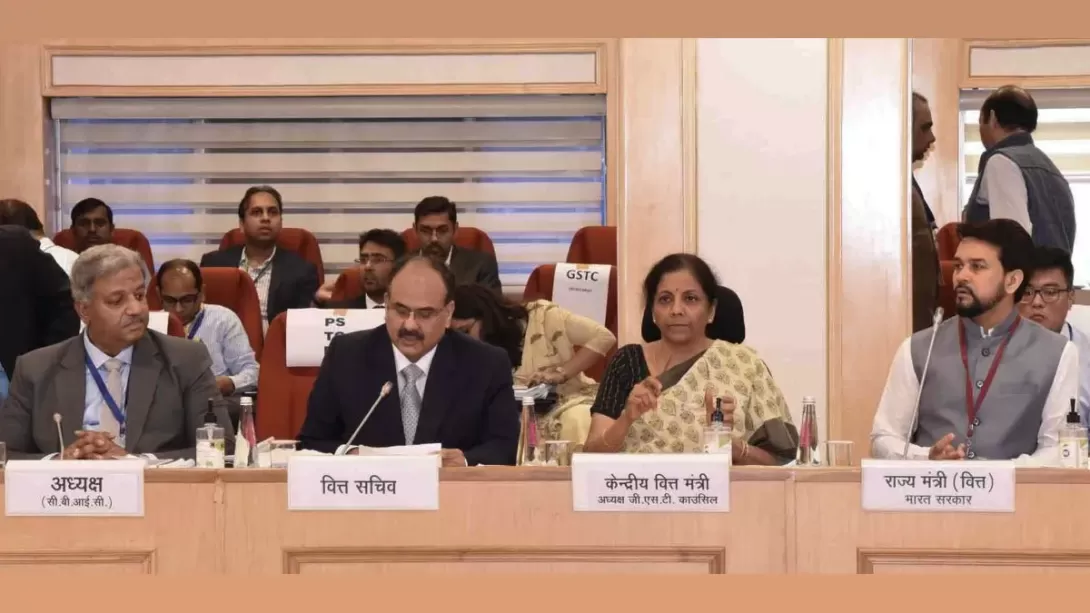
India's Goods and Services Tax (GST) Council is expected to convene shortly to deliberate on significant reforms, including rate rationalisation, tax structure simplification, and the contentious issue of compensation cess post-March 2026. These discussions gain urgency as the GST regime approaches maturity and stakeholders call for a more efficient and equitable tax system. While two Group of Ministers (GoMs) are yet to submit final recommendations on rate changes and exemptions, the Council’s decisions could reshape the fiscal dynamics between the Centre and states, particularly regarding cess proceeds currently allocated to service pandemic-era borrowings.
Council Set to Revisit GST Rate Rationalisation and Structural Reform
The GST Council, chaired by the Union Finance Minister and comprising state finance ministers, is poised to resume deliberations on longstanding tax reform proposals. Central to the upcoming agenda is the streamlining of GST rates, a move intended to simplify the indirect tax system and enhance compliance efficiency.
Sources indicate that the Council aims to revisit previously deferred recommendations by two Groups of Ministers, which had proposed rate cuts and exemptions in sectors such as health and life insurance. Despite preliminary discussions in the Council’s December 2024 meeting, formal adoption was postponed, pending submission of final reports.
Future of Compensation Cess: A Crucial Fiscal Juncture
A particularly sensitive subject on the Council’s agenda is the future of the compensation cess, currently applicable on products classified as luxury or sin goods—such as tobacco, automobiles, and aerated beverages. Originally instituted to offset states’ revenue losses post-GST implementation, the cess proceeds have more recently been diverted to service loans incurred during the COVID-19 pandemic.
The Group of Ministers on Compensation Cess, led by Minister of State for Finance Pankaj Chaudhary, is assessing mechanisms to retain a similar revenue stream beyond its sunset date of March 2026. The panel is also exploring options for redistributing the funds between the Centre and the states, a matter with significant fiscal implications for state governments reliant on these transfers.
Reform Imperatives and Federal Balancing Act
GST was launched in 2017 with the vision of creating a unified market by subsuming a range of indirect taxes. However, the current structure—comprising multiple rate slabs and cesses—has attracted criticism for its complexity and compliance burden. With growing consensus on the need for rationalisation, any decisions taken in the forthcoming Council meeting could mark a turning point in GST’s evolution.
At the same time, the issue of compensation cess strikes at the heart of federal fiscal relations. States are keen to ensure predictable revenue streams even after the official compensation mechanism ends. Thus, the Council’s verdict will likely reflect a delicate balancing act—sustaining state finances while progressively aligning with international best practices in tax simplicity.
Awaiting Final Recommendations: A Bottleneck in Policy Execution
Although the urgency for reform is widely acknowledged, procedural delays have stymied progress. Both GoMs—one focusing on overall rate rationalisation and the other on exemptions in key sectors—have yet to deliver final proposals to the Council. This inertia has limited the scope for comprehensive decision-making during prior Council sessions.
With the Union Budget and economic strategy for the next fiscal year on the horizon, stakeholders are pushing for expedited policy finalisation. Analysts argue that clear signals on GST simplification and cess strategy are essential for boosting investor confidence and supporting India’s medium-term fiscal consolidation.
Conclusion
As the GST Council reconvenes, its deliberations will bear heavily on India’s tax landscape for years to come. The dual challenge—simplifying a complex tax regime while managing the legacy of pandemic-era fiscal measures—requires prudent judgement and consensus-building across federal lines. The future of the compensation cess, in particular, will be watched closely by policymakers and markets alike, as it will shape intergovernmental fiscal dynamics and broader economic reform trajectories.
Comments