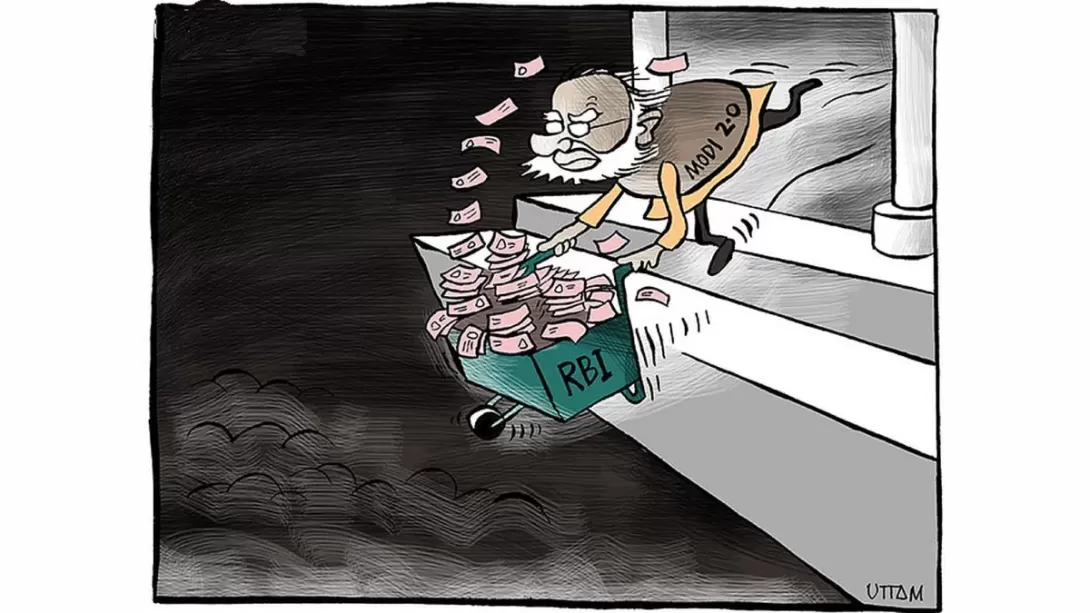
India’s central bank is poised to recalibrate its dividend transfer mechanism to the government, marking a potential evolution of the Economic Capital Framework (ECF) pioneered by the Bimal Jalan committee. Adopted in 2019, the ECF has thus far guided the Reserve Bank of India’s (RBI) surplus distribution policy, even withstanding economic shocks like the COVID-19 pandemic. As the Indian economy enters a phase of sustained growth, officials suggest that subtle changes—not a complete overhaul—may be warranted to align the framework with future fiscal and monetary realities. Analysts anticipate a higher-than-budgeted dividend payout for FY2024–25.
Economic Capital Framework: Resilient Yet Due for Review
The Economic Capital Framework (ECF), implemented in 2019 based on recommendations from the Bimal Jalan-led committee, was established to balance the RBI’s financial resilience with the government's fiscal needs. At its core, the framework dictates how much surplus capital the central bank can transfer to the government while preserving its own risk buffers.
A key recommendation from the Jalan panel was to maintain the Contingent Risk Buffer (CRB) between 5.5% and 6.5% of the RBI's balance sheet. This buffer is crucial to ensuring the central bank’s stability amid macroeconomic shocks. Remarkably, the ECF has held up through the pandemic and periods of financial volatility, prompting officials to affirm its enduring relevance.
Government Signals Tweaks, Not Transformation
Senior government sources emphasized on Friday that the framework remains largely fit-for-purpose but may require “tweaking” to better reflect India’s evolving macroeconomic landscape. The proposed review does not aim to abandon the Jalan model but to refine it, potentially setting a precedent for the next five years of dividend strategy.
“The Bimal Jalan panel recommendations have stood the test of time—even during COVID. I don’t see those formulations coming to an end. Some kind of alterations will happen, and RBI is working on it,” the official noted.
These prospective adjustments would likely be aimed at enhancing the framework's alignment with the government’s revenue expectations and the RBI’s capital adequacy goals amid steady GDP growth and improving fiscal metrics.
Dividend Outlook: Surpassing Budget Expectations?
For the fiscal year 2024–25, the Union Budget had penciled in Rs. 2.56 lakh crore as dividend transfer from the RBI. However, market observers suggest the actual transfer could surpass this figure, citing the central bank’s robust earnings and prudent risk management.
In FY2023–24, the RBI had surprised the markets by transferring a record Rs. 2.1 lakh crore—more than double the Rs. 87,416 crore disbursed the previous year. This sharp uptick reflected improved income from foreign exchange operations and a stable domestic interest rate environment.
The RBI board recently reviewed the ECF as part of its preparations for this year’s surplus transfer announcement. A higher-than-expected payout would provide the government with greater fiscal flexibility, potentially reducing the need for aggressive market borrowings.
Why the Framework Matters
The surplus that the RBI transfers to the government is not just a financial transaction—it is a strategic instrument with implications for fiscal deficit targets, public spending, and economic sentiment. An optimally calibrated ECF ensures that the government receives critical resources without jeopardizing the RBI’s capacity to manage systemic risks.
As the central bank refines the framework, stakeholders will be closely watching how it maintains this delicate balance. The timing of this review—coinciding with India’s steady economic expansion and increasing geopolitical fluidity—underscores its significance.
Conclusion
While the RBI’s dividend transfer policy remains rooted in the sturdy architecture designed by the Bimal Jalan committee, changing economic dynamics warrant nuanced adjustments. As the central bank prepares to announce its surplus for FY2024–25, any deviation from the budgeted figure will be a key indicator of the RBI’s operational performance and its evolving stance on capital adequacy. The forthcoming tweaks to the Economic Capital Framework are likely to be evolutionary rather than revolutionary—preserving its strengths while fine-tuning it for a new era of economic complexity and opportunity.
Comments