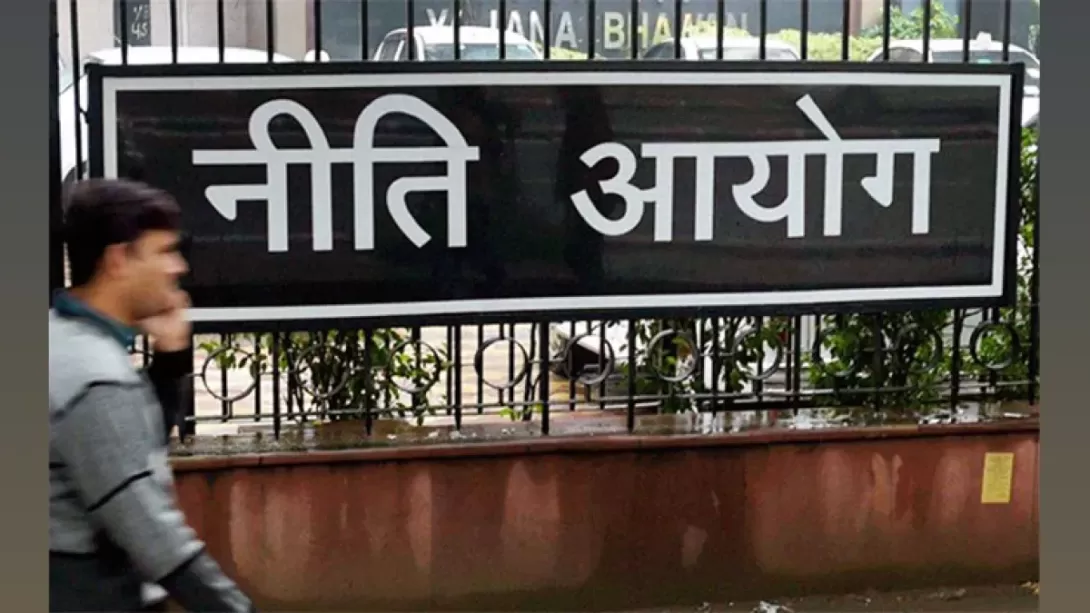
At the 10th NITI Aayog Governing Council Meeting, Andhra Pradesh Chief Minister N. Chandrababu Naidu proposed an ambitious roadmap to accelerate India's journey toward becoming a developed economy by 2047. Backed by strategic reforms and tech-driven governance, Naidu introduced the formation of three thematic sub-groups among states—targeting GDP growth, demographic management, and digital administration. Highlighting Andhra Pradesh’s Swarna Andhra @2047 vision, the chief minister emphasized inclusive development, innovation, and intergovernmental collaboration. The proposal was lauded by Prime Minister Narendra Modi, who encouraged other states to examine Andhra Pradesh’s blueprint as a potential model for India’s transformation into a USD 30 trillion economy.
India’s Economic Ascent: A Decade of Momentum
India’s rapid transition from the 10th to the 4th largest global economy over the last decade marks a defining chapter in the nation’s developmental narrative. At the center of this transformation lies a series of foundational reforms—ranging from Digital India and GST to Startup India, PM Gati Shakti, and the Jal Jeevan Mission—which have significantly enhanced infrastructure, governance, and citizen empowerment.
Chief Minister Naidu, speaking at the NITI Aayog meeting chaired by Prime Minister Modi, commended this upward trajectory. He emphasized that India’s rise is a result of visionary leadership aligning with timely execution, pointing to initiatives such as Operation Sindoor that reflect the country’s global stature.
Three Sub-Groups to Drive Viksit Bharat Vision
In an effort to deepen state participation in the national vision of Viksit Bharat @2047, Naidu proposed the creation of three inter-state sub-groups in collaboration with NITI Aayog and the Union government:
1. Sub-Group on Accelerating GDP Growth
Focused on investment facilitation, manufacturing scale-up, export competitiveness, and job creation, this group would aim to mobilize Public-Private Partnership (PPP) projects with central viability gap funding. It seeks to unlock productivity gains and position India as a global economic leader.
2. Sub-Group on Population and Demographic Transition
Recognizing the dual nature of India’s demographic advantage, this group would address both current opportunities and emerging challenges like ageing populations and fertility declines. Policy frameworks would aim to ensure sustainable workforce planning and intergenerational equity.
3. Sub-Group on Technology-Enabled Governance
This group would promote the integration of emerging technologies—such as AI, quantum computing, and drone-based systems—into administrative functions. The objective is to create a responsive, real-time, and citizen-centric governance model that strengthens institutional agility.
Swarna Andhra @2047: A Scalable Model for National Development
Naidu’s address detailed Andhra Pradesh’s Swarna Andhra @2047 vision—a comprehensive framework targeting zero poverty, technological leadership, and sustainable development.
Key Components Include:
- P4 Model for Inclusive Growth: Combining public, private, and citizen-led initiatives, this model supports vulnerable families with targeted economic assistance, aiming to eliminate poverty by 2029.
- Digital Welfare Delivery: Through the Family Benefit Management System, the state digitally maps and monitors household-level welfare, ensuring real-time transparency and precise targeting.
- Entrepreneurship-Driven Employment: The One Family, One Entrepreneur initiative promotes skill development and self-reliance at the grassroots, encouraging widespread micro-enterprise growth.
- Technology Ecosystem: Andhra Pradesh is fostering sectoral innovation with initiatives like Quantum Valley in Amaravati, Drone City in Orvakal, and a biomedical manufacturing cluster in Visakhapatnam. The Ratan Tata Innovation Hub and AI-driven platforms are further catalyzing startup activity and job creation.
- Sustainable Development: In alignment with the Prime Minister’s Mission Circular Economy, the state has adopted integrated waste management and balanced regional planning through specialized economic zones.
National Endorsement and Path Forward
The comprehensive presentation was met with commendation from Prime Minister Modi, who urged other states to explore Andhra Pradesh’s reforms for potential replication. Describing Naidu’s blueprint as a “growth manual,” the Prime Minister highlighted the strategic foresight and execution embedded in the state’s development plan.
Naidu, reaffirming Andhra Pradesh’s commitment to national transformation, emphasized the importance of cooperative federalism. He noted that the path to a USD 30 trillion economy by 2047 hinges on synergistic efforts between state and central leadership—grounded in innovation, equity, and inclusiveness.
Conclusion: Redefining State Leadership in India's Century Milestone
As India approaches the centenary of its independence, Andhra Pradesh has positioned itself at the vanguard of visionary governance. The Swarna Andhra @2047 roadmap—rooted in digital infrastructure, family-centric welfare, and sustainable industrialization—offers a replicable model for states aspiring to contribute to Viksit Bharat.
More than a state plan, it is a call to action for India’s federal structure: to harness diversity, distribute opportunity, and embrace innovation. In doing so, it lays the foundation for a resilient, inclusive, and prosperous India ready to lead in the global arena by 2047.
Comments