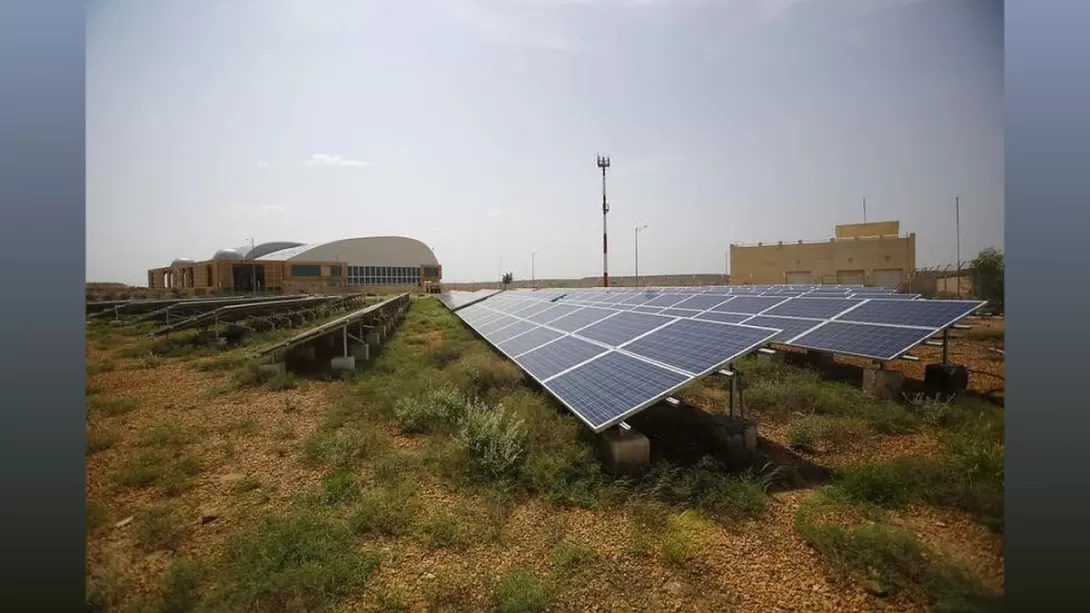
India’s renewable energy sector has experienced exponential growth over the past decade, with installed green power capacity soaring from 75.52GW in 2014 to 232GW in 2025, positioning the country as a global leader in clean energy. Solar and wind capacities have multiplied manifold, complemented by a burgeoning domestic solar manufacturing industry that aims to achieve 150GW of solar module production by 2030. The nation’s ambitious 500GW renewable energy target signals a transformative shift toward sustainability, energy independence, and technological self-reliance, underscored by record additions in 2024 and strategic policy interventions driving a green energy revolution.
Rapid Expansion of Renewable Capacity
India has demonstrated remarkable progress in renewable energy infrastructure, witnessing a threefold increase in installed capacity over the past decade. Official data confirms that total renewable energy capacity, including large hydropower, has surged from 75.52GW in March 2014 to an impressive 232GW today.
Solar power capacity alone has grown from a modest 2.82GW in 2014 to over 108GW, reflecting a dramatic expansion aligned with government priorities to promote clean energy. Similarly, wind power capacity has more than doubled, rising from 21GW to 51GW within the same timeframe.
This surge in capacity is complemented by an 80% reduction in tariff rates for grid-connected solar power, with costs plummeting to Rs. 10.95 per unit for a 170MW plant in Neemuch, Maharashtra, enhancing the competitiveness of renewable power against conventional sources.
Transformation of Solar Manufacturing Ecosystem
A decade ago, India’s solar manufacturing sector was virtually non-existent, producing only 2GW of solar modules. Domestic solar cell and wafer production were negligible, reflecting significant policy gaps during the UPA regime.
Today, India has established itself as a global powerhouse in solar manufacturing, scaling production to 90GW of solar modules in 2024. Ambitious targets set for 2030 envision production capacities of 150GW for solar modules, 100GW for solar cells, and 40GW for wafers, aiming to drastically reduce import dependency and build a self-reliant energy sector.
Fully integrated solar module manufacturing has reached 3.2GW capacity in 2024, with projections to escalate to 24GW by 2030, signalling a robust domestic value chain development.
Diversification and Innovation in Renewable Energy
Beyond solar and wind, India has expanded biopower generation capacity by 42% in the last decade, increasing from 8.1GW to 11.5GW. The Compressed Biogas (CBG) sector has seen exponential growth from a single 8-tonne per day project in 2014 to 150 operational projects with a combined capacity of 1,211 tonnes per day in 2024.
Government initiatives like the PM-Surya Ghar Muft Bijli Yojana have extended renewable energy access to nearly 13.3 lakh households, with 12 lakh installations reported in the past ten months alone, highlighting the inclusive nature of India’s renewable transition.
Ambitious Targets and Market Momentum
In 2024, India added a record 25GW of renewable capacity, marking a 34.63% increase over the previous year’s 18.57GW. This accelerated growth trajectory is critical to meeting the country’s aspirational goal of 500GW renewable capacity by 2030.
Achieving this target necessitates annual capacity additions of approximately 50GW in the next five to six years, a challenge that India is addressing through robust procurement by key renewable energy agencies — SECI, NTPC, NHPC, and SJVN — which collectively tendered around 44GW for the fiscal year 2024-25.
Notably, India overtook Germany in 2024 to become the world’s third-largest producer of electricity from wind and solar, a milestone reflecting the efficacy of its renewable energy policies and market dynamics.
Conclusion
India’s renewable energy journey over the past decade exemplifies a transformative model of rapid capacity expansion, industrial self-reliance, and sustainable development. With significant strides in solar and wind deployment, burgeoning domestic manufacturing, and ambitious long-term targets, India is not only securing its energy future but also positioning itself as a global leader in the transition to clean energy. The coming years will be pivotal as the nation intensifies efforts to meet its 500GW renewable capacity goal, ensuring environmental stewardship alongside economic growth.
Comments