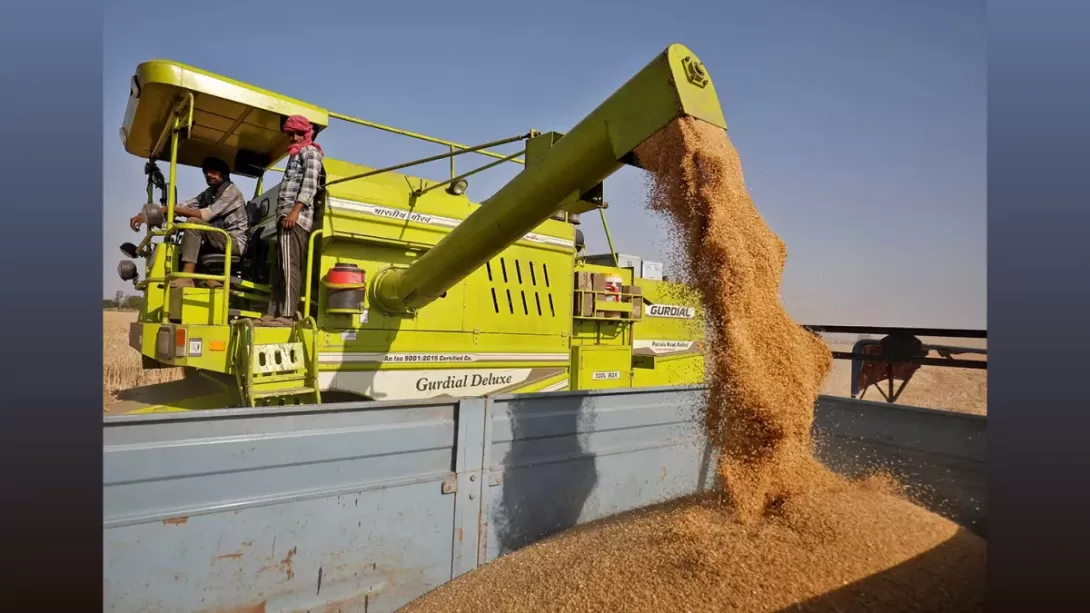
India’s agricultural sector has delivered an exceptional performance in the 2024-25 crop year, with the government revising its foodgrain production estimate to an unprecedented 353.95 million tonnes. Wheat output alone is projected at 117.50 million tonnes, reflecting robust growth alongside gains in rice, maize, pulses, and oilseeds. Agriculture Minister Shivraj Singh Chouhan highlighted the role of enhanced sowing, favorable yields, and supportive government policies in driving this record harvest. This comprehensive update underscores India’s strengthening food security and expanding agricultural productivity amidst ongoing efforts to bolster pulses and oilseed production.
Record-Breaking Foodgrain Output in 2024-25
India’s foodgrain production for the 2024-25 crop year has been revised upwards to an all-time high of 353.95 million tonnes, signaling another year of strong agricultural output. The latest government projections reveal a significant boost in key staples such as wheat, rice, and maize, underscoring the country’s position as a global agricultural powerhouse.
The third advance estimate indicates wheat production will reach 117.50 million tonnes, surpassing the earlier forecast of 115.3 million tonnes and improving on the previous year’s 113.3 million tonnes. Paddy output is expected to touch a record 149.07 million tonnes, up sharply from 137.82 million tonnes in 2023-24. Maize production is also projected to grow robustly to 42.28 million tonnes, contributing to the overall foodgrain surge.
Gains Across Pulses, Oilseeds, and Coarse Cereals
Beyond cereals, the government’s revised figures highlight positive trends in pulses and oilseeds, critical to India’s nutritional security and farm incomes. Pulses production is estimated at 25.23 million tonnes, edging higher from 24.24 million tonnes last year. Among pulses, tur is forecast at 3.56 million tonnes, moong at 3.81 million tonnes, and gram at 11.33 million tonnes.
Oilseeds production is similarly buoyant, with a projected output of 42.60 million tonnes, up from 39.66 million tonnes in the previous crop year. Groundnut production is set to hit a record 11.89 million tonnes, while soybean is estimated at 15.18 million tonnes. Rapeseed-mustard production is forecast at 12.60 million tonnes, reflecting a diversified growth across oilseed varieties.
Coarse cereals also showed gains, with output estimated at 6.21 million tonnes, an increase from the previous year, indicating broad-based agricultural expansion.
Robust Performance in Cash Crops
Cash crops have mirrored this upward trend, further enhancing the agrarian economy’s vitality. Sugarcane production is projected at a substantial 450.16 million tonnes, reinforcing India’s role as a leading sugar producer. Cotton output stands at 30.69 million bales (each bale weighing 170 kg), while jute production is estimated at 8.43 million bales (180 kg each), showcasing strength in textile and fiber sectors.
Policy Support and Agricultural Drivers
Agriculture Minister Shivraj Singh Chouhan attributed the record yields to a combination of increased sowing area during the kharif season, favorable climatic conditions, and improved crop yields across the board. He emphasized that government initiatives—such as assured minimum support prices, compensation mechanisms for crop loss, concessional loans, and targeted agricultural schemes—have been instrumental in bolstering farmers’ incomes and productivity.
Chouhan also noted ongoing efforts to further enhance pulses and oilseed production, critical for dietary diversification and reducing import dependency.
Implications for Food Security and Economy
The revised production estimates reflect India’s continued commitment to achieving food self-sufficiency while addressing domestic demand and export potential. The record harvest is poised to strengthen food reserves, stabilize commodity prices, and support rural livelihoods. Moreover, the diversification across cereals, pulses, oilseeds, and cash crops indicates a resilient agricultural sector adapting to evolving economic and environmental challenges.
As India advances toward its agricultural targets, the synergy of technological innovation, policy frameworks, and farmer engagement remains pivotal to sustaining growth and ensuring long-term food security.
Conclusion
India’s upward revision of the 2024-25 foodgrain output to a historic 353.95 million tonnes underscores a year of remarkable agricultural success. Bolstered by supportive government policies and favorable agronomic conditions, the country has achieved notable gains across staples, pulses, oilseeds, and cash crops. This milestone not only fortifies India’s position as an agricultural leader but also reinforces its commitment to food security and rural prosperity in the years ahead.
Comments