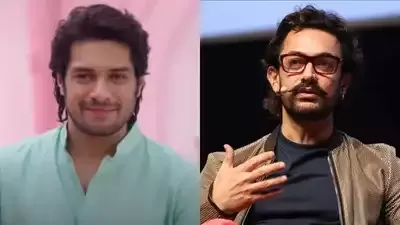
In a rare, introspective interview, veteran Bollywood actor Aamir Khan addressed the commercial failure of his son Junaid Khan’s debut film Loveyapa and spoke candidly about the contentious issue of nepotism in the Hindi film industry. While expressing unwavering support for his son, Khan insisted that public backlash and preconceived notions of privilege heavily influenced the film’s reception. He also emphasized his own boundaries as a parent and professional, stating that talent and fate ultimately determine success in cinema, not familial ties. His reflections offer a nuanced critique of the cultural and commercial weight of celebrity lineage in modern Bollywood.
A Father's Perspective: Defending Talent Beyond the Bloodline
In an emotionally grounded conversation with entrepreneur and content creator Raj Shamani, Aamir Khan opened up about his role as a father navigating the choppy waters of fame, criticism, and generational expectations. Speaking about Loveyapa, a romantic comedy headlined by his son Junaid Khan and Khushi Kapoor, Khan admitted the film did not perform well at the box office. However, he stood firmly by his son's artistic merit.
“I liked the film,” he confessed, adding that Junaid’s portrayal of a character markedly different from his own personality was one of the film’s standout achievements. As a seasoned performer known for his methodical approach to cinema, Khan’s endorsement of his son’s work seemed both heartfelt and discerning, offering more than just paternal pride.
Nepotism, Public Sentiment, and the Weight of Legacy
Khan did not shy away from addressing the elephant in the room—nepotism. He suggested that Loveyapa suffered not due to its content or performances, but because of a pervasive bias in public discourse. “The film was trolled heavily,” he said, linking its reception to ongoing resentment toward industry insiders and so-called “nepo-kids.”
Although Junaid Khan had not previously courted media attention nor enjoyed visible advantages, the mere fact of his parentage seemed to undermine audience goodwill. Khan criticized this one-dimensional narrative, stating bluntly that both he and his son are not emblematic of the nepotism stereotype. He supported this assertion by referencing his sister, Nikhat Khan, who only began acting in her 50s and has consistently earned roles through meritocratic auditions, without any assistance from him.
The Ethical Boundaries of Familial Support
Aamir Khan also reflected on his past efforts to assist his younger brother, Faisal Khan, whose cinematic career faced setbacks despite shared opportunities. He recounted producing and acting alongside Faisal in Mela, an attempt to revive his sibling’s career after an unsuccessful debut. Despite his best intentions, the experience taught him a humbling truth: no amount of personal support can replace natural aptitude and the unpredictable elements of audience reception.
Khan now applies this lesson to his approach with Junaid. He has taken deliberate steps to avoid intervening in his son’s professional choices. “I have not interfered in Junaid’s career, nor do I want to,” he stated unequivocally, drawing a clear line between familial encouragement and professional overreach.
Redefining Nepotism: A Call for Nuance
Khan’s remarks come at a time when nepotism remains a divisive topic in Indian cinema. His reflections invite a more nuanced understanding of the issue—one that distinguishes inherited opportunity from earned success. While access may indeed come easier to star children, sustained achievement, he argues, is still predicated on skill, perseverance, and audience validation.
By publicly distancing himself from industry favoritism and upholding the value of merit, Khan implicitly challenges Bollywood’s entrenched hierarchies while also questioning the oversimplified narrative that equates familial association with privilege and entitlement.
Final Thoughts: Fame Is Not Inherited—It's Negotiated
Aamir Khan’s candid reflections are more than just a father's defense of his son; they offer a rare glimpse into the vulnerabilities of even the most established names in Indian cinema. His insights reveal the limits of legacy in an era where public scrutiny often outweighs individual effort. As Bollywood continues to grapple with questions of access, equity, and authenticity, Khan’s voice underscores the complexities beneath the surface—a reminder that behind every famous surname lies a uniquely personal struggle to be seen, heard, and judged fairly.
Comments