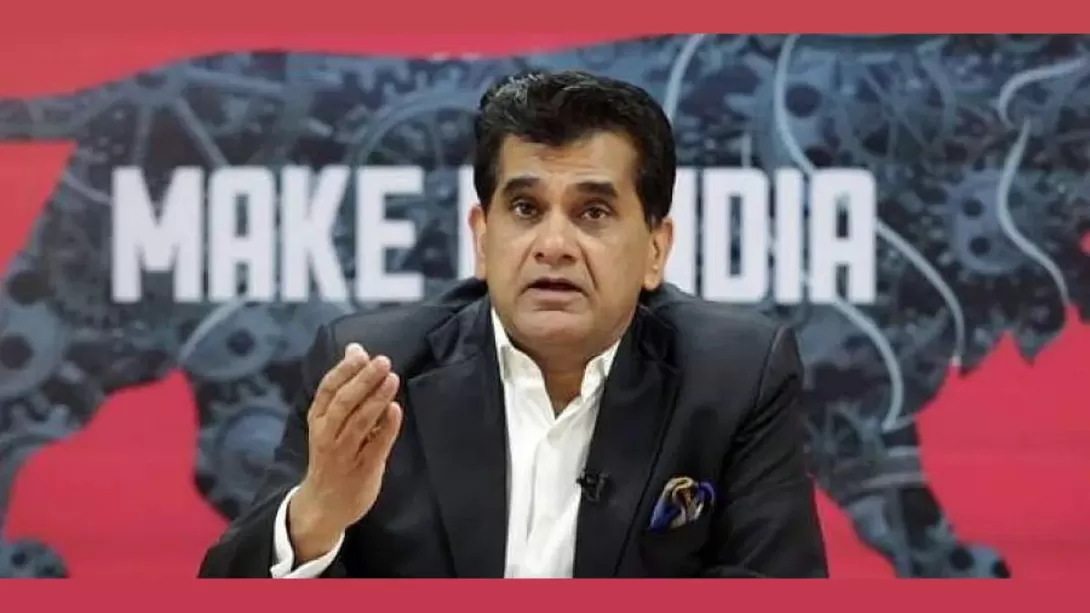
India is poised to undergo a dramatic economic transformation, with projections placing its GDP near USD 30 trillion by 2047, up from USD 4 trillion today. At the heart of this trajectory lies a potent combination of a youthful population, rapid urbanization, and bold infrastructure ambitions. Speaking at an international aviation event, G20 Sherpa Amitabh Kant outlined how India's demographic dividend, need for 500 new cities, and plans to build 400 airports could reshape the global economic order. His remarks underscore the scale of India’s development agenda and its aspiration to lead on both economic and mobility fronts.
India’s Youthful Edge in a Rapidly Aging World
India’s demographic profile is increasingly seen as a strategic asset in an aging global economy. With a median age of just 28 years, India stands in sharp contrast to regions such as Europe, Japan, and even China, where aging populations are beginning to constrain productivity and innovation.
According to Amitabh Kant, India’s average age will remain a youthful 35 even a century after independence. This youthful demographic not only enhances workforce potential but also fuels consumption and innovation—a potent combination for sustained growth. Unlike economies struggling to maintain a working-age population, India’s baby boom generation is just getting started.
From USD 4 Trillion to USD 30 Trillion: A Long-Term Vision
India recently became the world’s fourth-largest economy, with a GDP of approximately USD 4 trillion. Kant projected that this figure could approach USD 30 trillion by 2047, the year marking 100 years of India’s independence.
Such exponential growth will require structural reforms, consistent capital investment, and an environment conducive to entrepreneurship and technological adoption. The scale of ambition reflects India’s intent to transition from an emerging market to a global economic powerhouse over the next two decades.
This transition will also necessitate a reimagining of infrastructure, public services, and industrial policy—areas in which government intervention and private sector partnerships will play crucial roles.
Urbanization on a Historic Scale
A critical enabler of this economic leap is urbanization. Kant emphasized that India is expected to see around 5 million people migrating to urban areas annually, demanding the creation of nearly 500 new cities.
To illustrate the scale of this transformation, he likened the challenge to building "two new Americas" in the coming 50 years. In his words, “India needs to build a Chicago every five years.” This metaphor speaks not only to the physical infrastructure requirements but also to the planning, sustainability, and resource management challenges that such growth will entail.
India’s urban development will need to be inclusive, sustainable, and technologically forward-looking to avoid the pitfalls of unplanned expansion.
The Future of Aviation: Competing on a Global Stage
Aviation is expected to be a critical enabler of economic mobility and global competitiveness. Kant revealed that India aims to expand its network of operational airports from the current 150 to more than 400 in the coming decades. This aviation push will support regional connectivity, facilitate international trade, and cater to an increasingly mobile middle class.
He challenged domestic carriers like IndiGo and Air India to scale up their ambitions and compete with global giants such as Emirates and Qatar Airways. Long-haul, wide-body aircraft will be essential for Indian airlines to project themselves as global players rather than just regional operators.
India’s air traffic growth is already among the fastest in the world, and building a robust aviation infrastructure is integral to sustaining that momentum.
Conclusion: A Nation in Motion
India’s development path to 2047 is as ambitious as it is complex. The convergence of favorable demographics, accelerated urbanization, and infrastructure expansion—particularly in aviation—sets the stage for a once-in-a-century economic leap. However, this will require meticulous planning, visionary leadership, and unwavering execution.
If managed effectively, India’s youthful population and infrastructure goals could serve not just domestic needs but also position the country as a central node in the global economy. The task ahead is monumental—but so is the opportunity.
Comments