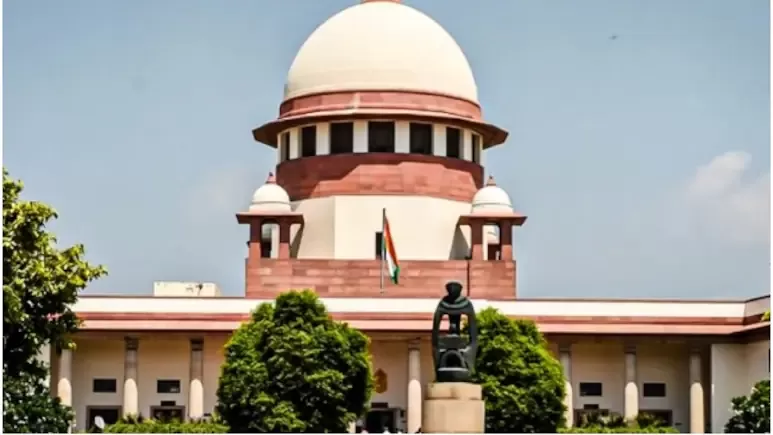
The National Eligibility cum Entrance Test for Postgraduate courses (NEET PG) 2025 has been officially postponed, following a Supreme Court directive aimed at standardizing the examination format. The Court has instructed the National Board of Examinations in Medical Sciences (NBEMS) to abandon its earlier two-shift model and conduct the exam in a single session. This mandate was issued in response to concerns over fairness and consistency in exam difficulty across different shifts. However, this shift in structure has presented considerable logistical challenges for NBEMS, including the need for hundreds of additional test centers and stricter security protocols nationwide.
Supreme Court Intervenes: The Case for Exam Uniformity
In a landmark decision, the Supreme Court of India has intervened in the scheduling and format of NEET PG 2025, a pivotal examination for aspiring medical postgraduates across the country. The Court found the previously proposed two-shift model problematic, asserting that it introduced an unavoidable element of subjectivity in terms of exam difficulty. While normalization procedures were in place, the Court deemed them insufficient to ensure true equity.
Criticizing the two-shift format as arbitrary and inherently flawed, the Court emphasized that all candidates should be assessed under identical conditions. In doing so, it reinforced the constitutional principle of equal opportunity in competitive exams, especially those with high stakes for professional futures.
Postponement and Operational Ramifications
As a direct consequence of the Supreme Court's ruling, NEET PG 2025—initially scheduled for June 15—has been deferred. The National Board of Examinations in Medical Sciences must now reorganize the exam to fit a single-day, single-shift structure.
While this change addresses issues of fairness, it also imposes complex logistical demands. To accommodate all registered candidates in one session, NBEMS will need to arrange for approximately 900 new testing centers across the country. The expansion not only adds to infrastructure requirements but also raises the bar on administrative coordination.
Security and Infrastructure Enhancements
Transitioning to a one-shift format doesn't merely demand more space—it necessitates greater scrutiny. With the increase in exam centers comes the need for reinforced security protocols to ensure the sanctity of the test. NBEMS is expected to deploy signal jammers, install advanced surveillance systems, and tighten coordination with local law enforcement agencies.
Moreover, the Board must ensure that every newly added venue meets rigorous standards for accessibility, technical readiness, and candidate support services. From biometric verification to real-time CCTV monitoring, the logistical overhaul is as much about maintaining integrity as it is about scaling operations.
Implications for Candidates and Stakeholders
For candidates, the shift offers both relief and uncertainty. On one hand, a uniform single-shift examination enhances fairness—eliminating the psychological and academic disparities between early and late test-takers. On the other, the postponement has disrupted preparation timelines and introduced an element of unpredictability in their academic planning.
Coaching institutes, educational platforms, and stakeholders in the private tutoring economy must also recalibrate their schedules and offerings. Meanwhile, hospital administrators and residency program heads may need to adjust timelines for intake and orientation, depending on the final exam date and result declaration.
Broader Impact on Examination Policy
The Supreme Court’s intervention signals a growing judicial inclination toward structural fairness in national competitive exams. This development could serve as a precedent for other exams currently conducted in multiple shifts, including those managed by agencies like NTA and UPSC. With public trust in examination systems under increased scrutiny, this move may catalyze a broader overhaul in exam governance.
The insistence on single-shift assessments could also prompt further digital innovation, such as AI-enhanced monitoring and dynamic scheduling models that ensure both fairness and feasibility.
Conclusion: Balancing Equity with Execution
While the decision to delay NEET PG 2025 in favor of a single-shift format prioritizes equity, it also presents a significant operational undertaking. The NBEMS now faces the dual challenge of implementing the Supreme Court’s directive without compromising the quality, security, or integrity of the examination process.
In the broader context, this ruling underscores the judiciary's role in shaping educational policy and protecting meritocracy. As the examination landscape continues to evolve, the emphasis will increasingly lie in harmonizing fairness with feasibility—a challenge not just for NBEMS, but for the entire architecture of India’s competitive testing ecosystem.
Comments